 Languages
-
-
PVDF Extrusion Screw and Barrel: Why HF Decides the Metallurgy
PVDF is the easiest fluoropolymer to run and still destroys a standard screw. The mechanism is chemical, and no surface treatment answers it.
PVDF extrusion · Fluoropolymer duty · Nickel alloy · HF corrosion
-
1. What PVDF asks of the hardware
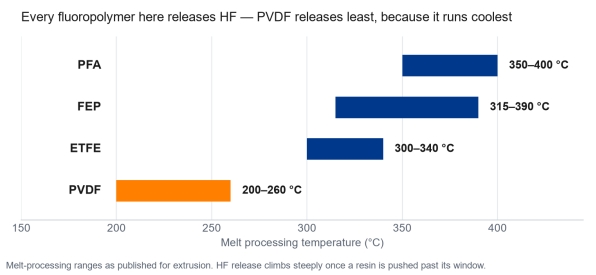
PVDF melts in the high 160s and is normally extruded somewhere between 200 and 260 °C. That is a comfortable window on paper: the quoted decomposition temperature sits above 300 °C, so there appears to be a hundred degrees of slack. There is not. Sustained residence above roughly 240 °C starts a slow dehydrofluorination at chain ends and defect sites, and the product of that reaction attacks the metal it is sitting in. The useful distinction between melting and degrading is covered in melting versus glass transition , and on a fluoropolymer line the gap between the two is what the hardware has to survive.
-
Melt-processing ranges for the four common melt-processable fluoropolymers. PVDF is called the mild one only because it runs coolest; it still releases HF.
-
Three demands follow, and only one of them is mechanical. PVDF melt viscosity is high, so the screw needs torque and generous channel depth rather than a high-compression profile. The thermal window is narrow in practice, so shear heat has to be removable rather than merely tolerable. And the resin releases hydrogen fluoride at temperature, which turns an ordinary wear question into a corrosion question. Unfilled PVDF is not abrasive at all, which is exactly why buyers are surprised when the screw comes out pitted after a year.
The starting point for the material itself is the PVDF extrusion range ; the screw geometry side follows the same logic as any high-viscosity, shear-sensitive job , except that the compression profile is deliberately gentler and the L/D and compression ratio are chosen to give residence time without giving shear. Whether the line is single or twin screw changes the geometry but not the chemistry — the architecture comparison is the place to start, and the application index groups PVDF duty by product form.
-
2. HF is not a wear problem
The carbon–fluorine bond is the strongest single bond in organic chemistry, which is what makes finished PVDF parts so inert. It is also why the polymer is never perfectly stable at melt temperature: trace decomposition at chain ends releases fluoride, which meets any available hydrogen — from moisture, from the polymer itself — and forms hydrofluoric acid in the melt and in the vapour above it.
HF is one of the very few acids that dissolves a chromium-oxide passive layer. That single fact invalidates most of the surface engineering buyers reach for first. Hard chrome plating depends on that oxide layer, so the plating is undermined from underneath and then flakes. Stainless steel depends on the same passivation, so 316 is not an answer either, however good its reputation is on food and pharmaceutical lines. Nitriding produces a hard case and no chemical immunity whatsoever. The same logic runs through PVC and HCl corrosion , just at a lower temperature and a slower rate.
Melt-contact surface What HF does to it Verdict Bare tool steel Attacked directly; pits within hours to days of molten contact at the hot end Not suitable Hard chrome plating Attacks the oxide layer, plating lifts and flakes; steel beneath pits Not suitable Stainless steel (316 class) Relies on the same chromium-oxide passivation HF dissolves Not suitable Nitrided / through-hardened steel Hard, not chemically immune; case pits and spalls at edges Not suitable Nickel alloy (Inconel 625, Hastelloy C-276) Nickel-chromium-molybdenum matrix resists the acid Correct for screw, die, adapter Nickel-based bimetallic liner Alloy layer is metallurgically bonded, not a coating Correct for the bore KEY INSIGHT Hardness does not stop an acid. On PVDF duty the specification that matters is the alloy, and every melt-contact part has to be in it — not just the screw.The common shortcut is to buy a nitrided screw and a bimetallic barrel and call it done. That works when the corrosive load is mild, and it is the reasoning behind bimetallic versus nitrided on ordinary resins. On fluoropolymer duty the screw is the part that fails first, because it presents the most surface at the highest temperature with the thinnest cross-section. The selection logic for choosing a nitrided barrel is still worth reading — if only to see where it stops applying. What a bimetallic screw actually is becomes the more relevant question on this duty.
-
3. Reading the attack before it reaches the product
Corrosion on a PVDF line has a signature, and it is visible long before output falls. Fine pitting or an orange-peel dullness appears on the flight lands and the root first, in the hottest zones: metering section, screw tip, and the die end of the barrel. It looks like a surface finish problem. It is the first stage of a chemical chain reaction.
Every pit is a rough spot where melt hangs up, sits longer, overheats and degrades, which releases more HF precisely where the surface is already wounded. Clearance then opens faster than the filler's abrasiveness could possibly explain. Once plating blisters or dark specks appear in the product, the damage is no longer cosmetic and the parts are usually past saving.
What you see Where it shows first What it means Fine pitting, dull orange-peel finish Flight lands and root, metering section HF attack underway, still early Chrome blistering or flaking Anywhere plated Plating undermined; steel beneath already involved Dark specks or metal contamination in the melt Screw tip, die end, high-purity tube Corrosion products shedding — a product defect, not just wear Clearance opening faster than filler wear predicts Whole working length Corrosion is doing the ‘wear’; pits are being wiped away The practical consequence is that PVDF hardware has to be inspected on a schedule, not on a symptom. The method for checking screw wear without a teardown applies here too, but the reading is different: you are looking for a change in surface texture, not a change in dimension. By the time the dimension moves, the decision has already been made for you, and repair versus replacement usually resolves to replacement on fluoropolymer duty because weld repair of a nickel alloy is a different job from hardfacing carbon steel. The same routine belongs in any maintenance plan for these lines. If the parts are new rather than worn, the checks in acceptance inspection for a new screw and barrel are what stop a corroded shipment from entering the line in the first place.
-
4. Where PVDF runs, and why the application changes the spec
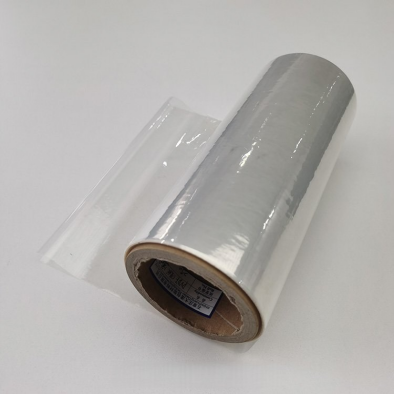
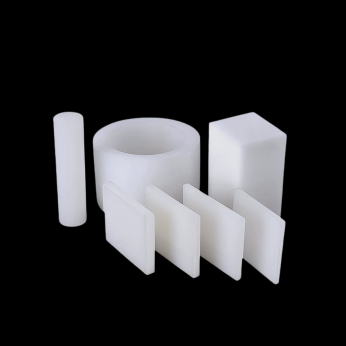
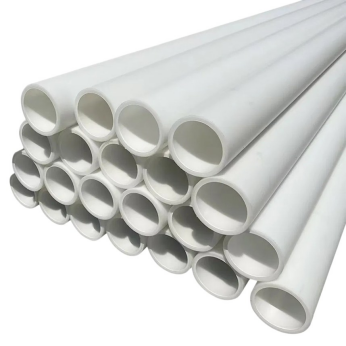
PVDF is bought for chemical resistance, UV stability and purity, in three product families that stress the hardware differently. PVDF film goes into photovoltaic backsheets and architectural membrane, where gel and specks show up as optical defects and long uninterrupted runs matter more than peak output. PVDF panel and board goes into semiconductor wet benches and chemical tanks, where the acceptance criterion is surface purity rather than dimensional tolerance. PVDF pipe covers high-purity water and chemical transfer, where a corrosion pit upstream becomes a contamination event downstream.
-
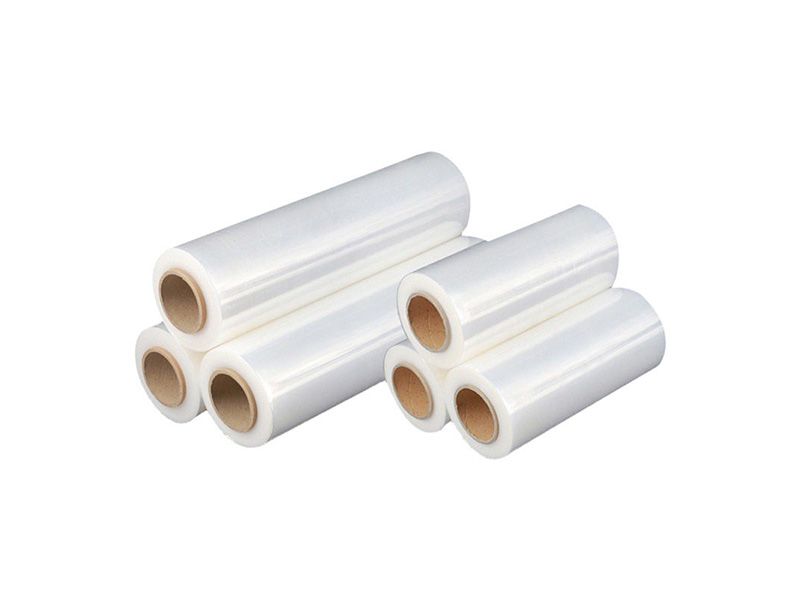
PVDF film for photovoltaic backsheet and membrane duty. At this thickness a corrosion pit upstream prints as an optical defect rather than a dimensional one.
-
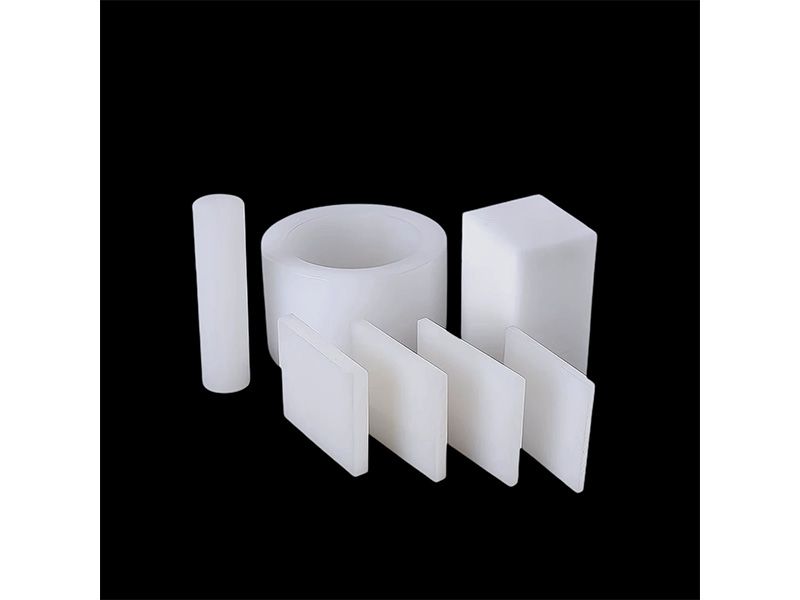
PVDF panel and board stock. Semiconductor and chemical-tank duty judges the part on surface purity, so the melt path has to be free of pits and dead spots.
-
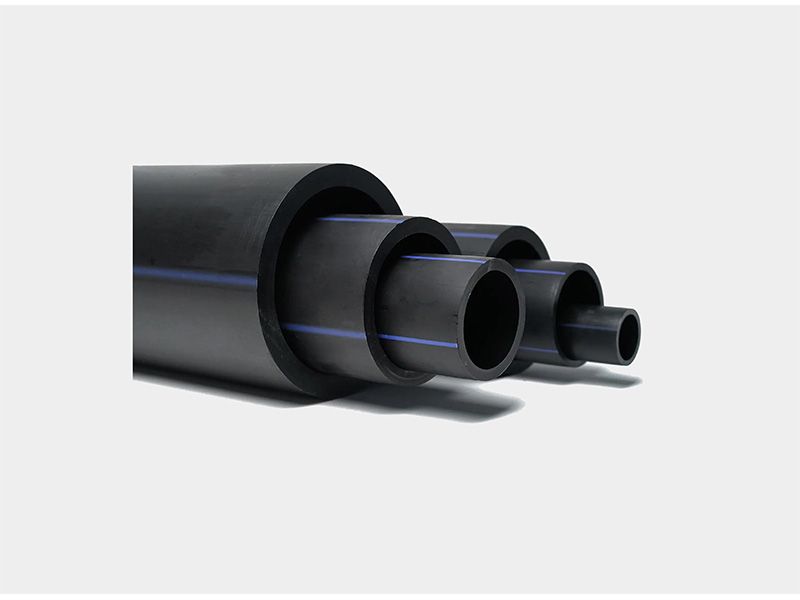
PVDF pipe. A pit in the barrel becomes a contamination source in the finished line, not merely a worn component.
The fourth application is the one that changes the specification most: PVDF as the cathode binder in lithium-ion electrodes. There the concern is not that the screw wears out, but that iron, chromium or nickel ions from the wear enter the slurry and degrade cell performance. A corrosion product is a contamination source before it is a maintenance cost, which is why ‘food-grade stainless’ reasoning fails on this duty and why the whole wetted path has to be considered as one alloy decision. The same purity reasoning, at a much lower temperature, runs through stainless and sanitary design .
-
5. The alloy decision, part by part
Industry practice on fluoropolymer lines is specific about the wetted path, and it is not a single material choice. The screw, die, adapter and breaker plate are made from a high-nickel corrosion-resistant alloy in the Inconel 625 or Hastelloy C-276 class. The barrel takes a nickel-based bimetallic liner, or a tungsten-carbide/nickel-based liner where fillers add abrasion to the corrosion.
Melt-contact part Usual specification Why Screw Inconel 625 or Hastelloy C-276, full body Largest hot surface area; thinnest section at the flight root Barrel bore Nickel-based bimetallic liner; WC/Ni where filled Metallurgical bond survives thermal cycling better than any coating Die, adapter, breaker plate Same nickel-alloy class as the screw Every melt-contact part is part of the same corrosion cell Flow surfaces Streamlined, radiused, polished Hang-up is a corrosion accelerant, not only a quality issue Within the nickel-alloy class there is a real trade. Hastelloy C-276 offers the highest corrosion resistance; Inconel 625 is somewhat stronger with marginally less resistance. The choice weighs the chemistry against the torque the line actually applies. What is not negotiable is the family: a bimetallic barrel with a nickel-based liner and a bimetallic screw in the same class, or an internal liner sleeve where the design calls for a replaceable bore. The wider comparison of alloy families sits in the bimetallic material selection guide .
-
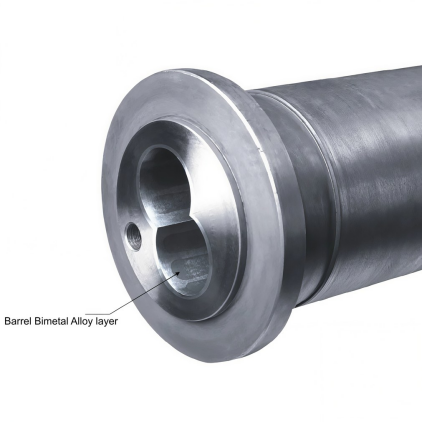
A bimetallic barrel end face with the alloy layer called out. The liner is bonded into the bore metallurgically — on PVDF duty that is the difference between a barrier and a coating.
-
6. The trade-off that gets left out of the quotation
Nickel alloys in the Inconel 625 and Hastelloy C-276 class yield at roughly 359 MPa. A quenched-and-tempered screw steel of the 4140 class, core hardness 28–32 HRC, is about twice that. Buyers compare corrosion resistance and price and never compare torsional strength, which is the property that decides whether the screw survives its first cold start.
A nickel-alloy screw turning against unmelted PVDF can exceed its torsional limit easily. On a small extruder, starting cold is a realistic way to break a Hastelloy screw on the first shift. The failure signature is the one described in screw breakage failure analysis : fracture in the feed section, crack running inward from the flight surface, and a screw that has wound up tight with the pitch shortened. The same mechanism is worked through in why extruder screws break , and the practical conclusion there holds here with more force, because the material has half the margin.
KEY INSIGHT A nickel-alloy screw is a corrosion decision and a strength compromise at the same time. Soak discipline is part of the specification, not an operator preference.This is also why the service life question has no clean answer on PVDF duty. The usual lifespan guidance assumes abrasive wear on carbon steel; a fluoropolymer line can lose a screw to either corrosion or a cold start long before that clock runs out, whichever comes first. Filled grades add the ordinary abrasion question on top of the corrosion question, which is the trade covered under tungsten carbide for filled plastics and, for the single-screw case, in the bimetallic single screw selection guide .
-
7. Geometry for a high-viscosity, shear-sensitive melt
The geometry follows from two facts: PVDF is viscous, and heat generated by shear is harder to remove than heat applied by a band heater. Typical line practice is an L/D of 32:1 or more, a compression ratio around 2.5:1, a barrier or wave profile for plasticating capacity, deep feed channels, and internal cooling through the screw.
The long L/D is not there to raise output. It buys melting length at a lower specific work input, so the melt reaches temperature through residence and conduction rather than through shear spikes. The reasoning behind feed, transition and metering zones is the same on any polymer, but on PVDF the transition has to be gentle enough that the pressure rise does not arrive with a temperature rise attached. A barrier screw is one way to get that separation; a conventional three-zone profile with a long, shallow transition is the other.
Because the compression decision drives both melting and torque, it is worth fixing it against the numbers that actually decide the screw rather than copying a PE screw and shortening the metering section. For the single-screw architecture itself, the single screw barrel range covers the variants, and a line running PVDF film is closest in form to a cast film screw and barrel . Pipe and tube duty borrows the pipe and tube geometry , and the liner decision sits alongside the bimetallic alloy selection notes .
-
8. Moisture and the 0.02 % line
PVDF is hygroscopic enough that drying is a process requirement rather than good practice. The target is a moisture content around 0.02 % — roughly 200 ppm — reached with a desiccant dryer at a dew point below –40 °C, running 120–150 °C for four hours or more. Conveying after drying has to be closed, or the resin picks the moisture back up on the way to the hopper.
Wet resin produces bubbles and silver streaking in the product, which is the visible half of the problem. The invisible half is that water is a hydrogen source in the melt, and hydrogen is what turns released fluoride into HF. Moisture control is therefore a corrosion measure as much as a quality measure. The drying logic described for PLA and other moisture-sensitive resins transfers directly; only the numbers change. Sheet and film lines that share a drying room with other resins also share the risk, which is why the sheet extrusion hardware is usually specified with the same closed conveying.
-
9. Purging, shutdown and restart
The corrosion hours that never appear in a maintenance log are the ones after the line stops. Resin left in a hot barrel, a screw tip cavity or an adapter corner does not cool harmlessly — it sits at temperature with no flow, degrades, and releases HF exactly where it is hardest to clean. A weekend shutdown can do more chemical damage than a month of running.
The discipline is straightforward once it is written down. Purge before stopping, using a compound compatible with the resin and with the alloy, following the same sequence as the PVC purging and changeover routine . Do not leave the barrel hot and idle for long periods. On restart, soak to temperature slowly and never start against cold resin. The wider maintenance and troubleshooting routine should carry these steps explicitly, and a replacement project is the moment to write them into the handover. Where the line is vented, the vent port checks belong in the same walk-round, because a vent is the one place a dead spot is designed in.
-
10. What to put on the purchase order
A PVDF screw and barrel order that specifies only dimensions will be filled with dimensions, and the alloy will be whatever the supplier had in stock. The specification has to name the material for each melt-contact part, the bore construction, and the test that proves the liner is bonded rather than applied.
Item What the PO should state Screw base material Alloy grade by name (Inconel 625 / Hastelloy C-276), with mill certificate Barrel bore Bimetallic liner type and thickness; bonding method; hardness of the alloy layer Geometry L/D, compression ratio, feed depth, barrier or wave profile, screw internal cooling Flow path Die, adapter and breaker plate in the same alloy class; surface finish requirement Documentation Material certificates, dimensional report with measuring points, liner bond record Acceptance Bore ID and ovality, flight OD, root diameter, straightness, surface inspection The information a supplier needs to quote this properly is the same list that makes a custom screw and barrel project work: machine model, screw diameter, L/D, the product being run, target output and the existing drawing if there is one. What comes back should be checkable against a written acceptance inspection procedure, and the supplier's own claims should survive the checks in the exporter verification guide . The same discipline applies to choosing the supplier at all — how to choose a screw manufacturer — and to the eight details that have to be confirmed before a twin screw replacement goes into production.
-
11. What we need from you
For a PVDF line the useful starting information is short: machine make and model, screw diameter, L/D, the PVDF grade and its filler content, the product form, the target output, and whether the existing screw is nickel alloy or something that was expected to survive. A photograph of the worn screw, particularly of the flight lands in the metering section, tells us more about the failure mode than a dimensional report does.
PIPLL manufactures screw and barrel assemblies in bimetallic and nickel-alloy construction, and the custom engineering route starts from a drawing or from a measured part. Capacity and lead time are on the manufacturing page , and the process from drawing to dispatch is set out under our process . If the line is down, the contact page is the fastest route to an answer on what can be built and when.
-
✔ Melt-contact alloy specified part by part | ✔ Bore liner bonded, not coated, with a bond record
✔ Geometry quoted against your resin and output | ✔ Bimetallic & Nickel-alloy screws and barrels for fluoropolymer duty