Extruder Screw Breakage Failure Analysis and Prevention
For a component review, explore PIPLL custom screw barrel design , manufacturing and inspection process , bimetallic screw barrels .
Preserve the evidence before ordering a replacement
Extruder screw breakage failure analysis should connect the fracture location with the machine condition and the production history. A broken screw is an outcome, not a complete diagnosis. Replacing it with the same geometry and starting the line under unchanged conditions can leave the original cause in place. The useful first question is what changed immediately before the failure and whether the evidence indicates a sudden overload, repeated bending or another mechanism.
Stop the machine and follow the equipment isolation procedure before inspection. Keep both fracture halves, identify their orientation and protect the fracture surfaces from rubbing, grinding or aggressive cleaning. Photograph the assembly before disassembly, including deposits, the drive connection and the position of the break. A close photograph alone cannot establish the cause; retain the component for examination when the consequence justifies a formal investigation.
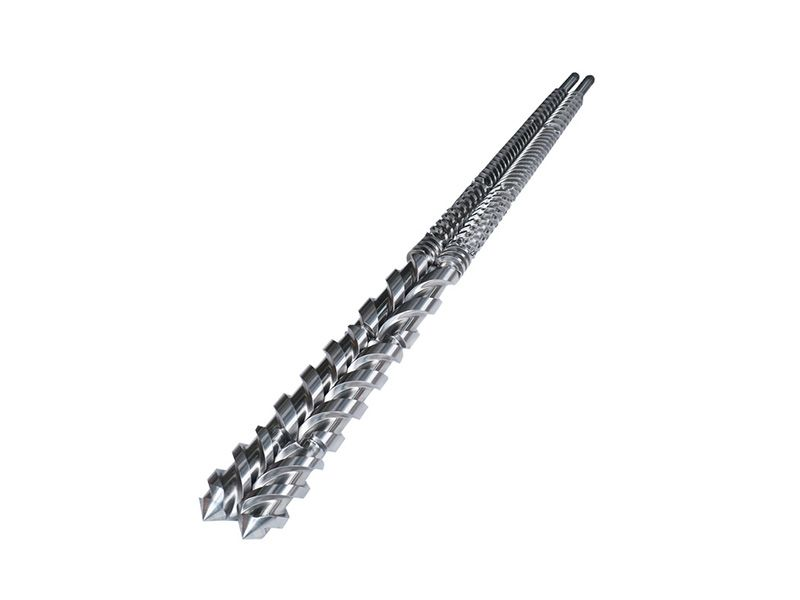
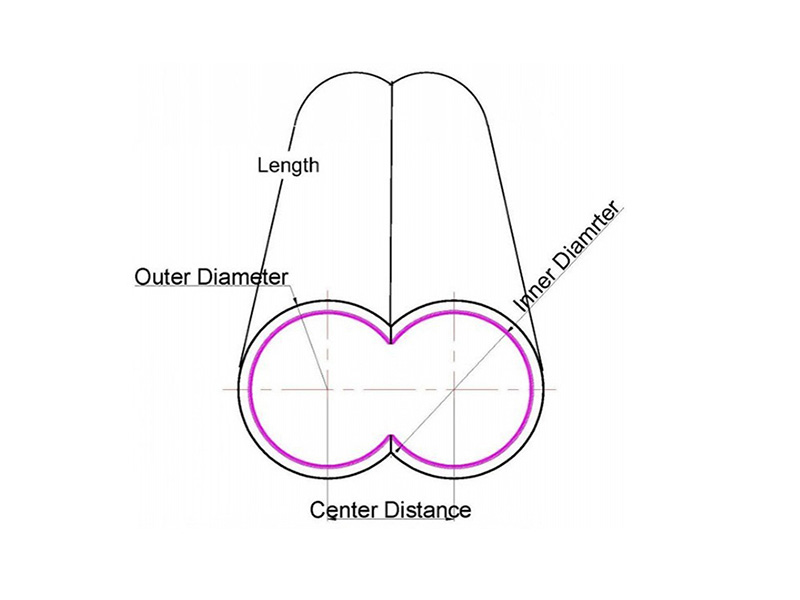
PIPLL twin screw barrel component reference
Build a timeline from operating records
Collect the resin grade, additives, recycled content, throughput, screw speed and recent maintenance history. Save the available motor load, torque, pressure and temperature trends with their timestamps. Record a feeder interruption, screen change, unexpected shutdown or restart even when it appeared unrelated. A synchronized timeline helps distinguish a change that preceded the failure from an alarm triggered by the failure itself.
For a cold start screw failure investigation, review the actual warmup and soak procedure against the machine and resin instructions. A barrel thermocouple reading does not by itself confirm that the material throughout the assembly is ready for rotation. Do not adopt a universal soak time from another machine. Verify heater performance, sensor location and the approved startup sequence before returning the line to service.
Separate overload from repeated mechanical loading
A sudden obstruction or high resistance can create a torsional overload. Repeated misalignment or contact can also load the screw over many cycles. These possibilities require different corrective actions. Examine the drive end, coupling, supports and barrel alignment, and compare the actual assembly with the approved drawing. Review any change in adapters, fasteners or installation practice.
Wear marks and a fracture position are clues, not proof. A break near a diameter transition may justify checking the local geometry and loading, while repeated contact marks justify an alignment and clearance review. Have a qualified examiner assess suspected fatigue, inclusions or heat treatment defects. Surface appearance alone cannot reliably distinguish all failure mechanisms or assign responsibility to a supplier.
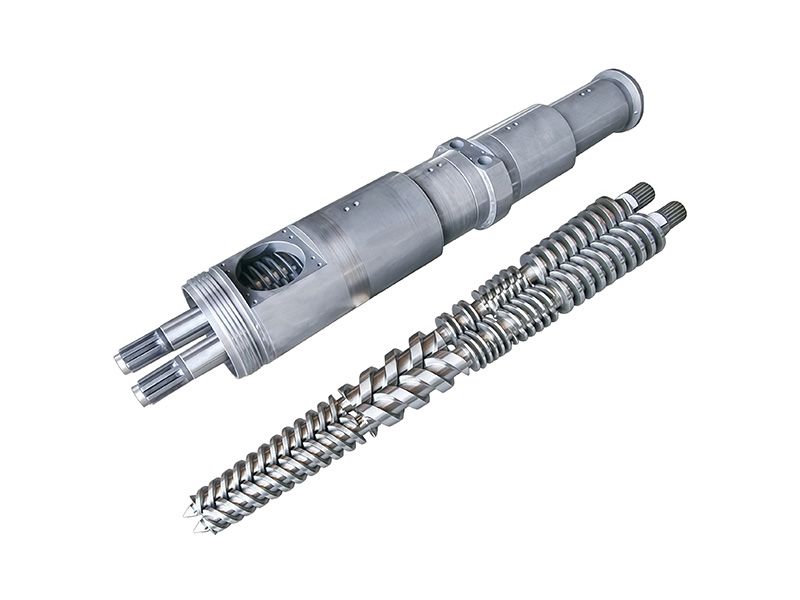
PIPLL twin screw barrel component reference
Inspect the complete assembly
Check the barrel bore and remaining screw over the relevant working length using a defined measurement method. Record axial positions and directions so that the results can be compared with the drawing and earlier inspections. Inspect the drive connection and adjacent components for damage before fitting a new screw. A replacement must suit the actual machine interfaces as well as the polymer formulation.
A stronger material is not a complete answer to a mechanical fault. Material selection must consider wear, corrosion, toughness, treatment and the geometry of the part together. Avoid increasing hardness without reviewing the loading and service conditions. For segmented twin screw assemblies, identify the damaged shaft and elements separately and obtain the equipment specific assembly and torque requirements.
Turn the diagnosis into a restart plan
Use an action register that gives each finding an owner and a verification method. An alignment finding needs a recorded alignment check; a heating problem needs heater and sensor verification; a suspected obstruction needs a documented inspection of the affected flow path. Keep torque and pressure protections active and use the machine manufacturer limits for the controlled restart.
Establish a new baseline after the corrective work: actual operating conditions, accepted product quality, component measurements and the approved startup procedure. Review the initial run for abnormal noise, unstable pressure or rising load. Stop and investigate an unexplained change rather than repeatedly attempting to push through it. A failure review is complete when the corrective action has been verified, not when the replacement part has arrived.
PIPLL twin screw barrel component reference
Related PIPLL resources: screw wear checks ; maintenance and troubleshooting ; pipe extrusion screw barrels ; compounding twin screw barrels .
Technical and Sales Contact
Young | PIPLL | Screw and Barrel Solutions for Plastic Extrusion
Supporting extrusion manufacturers with customized screw and barrel solutions for PVC, PE, PP, PET, and other polymer processing applications.
Email: Young@pipll.com | WhatsApp: +86 150 5840 4692
Website: www.pipll.com


+86 15267878906

1306 W building , NB-IoT Industrial Park, No. 199 Changxing Road, Jiangbei, Ningbo.
 Languages