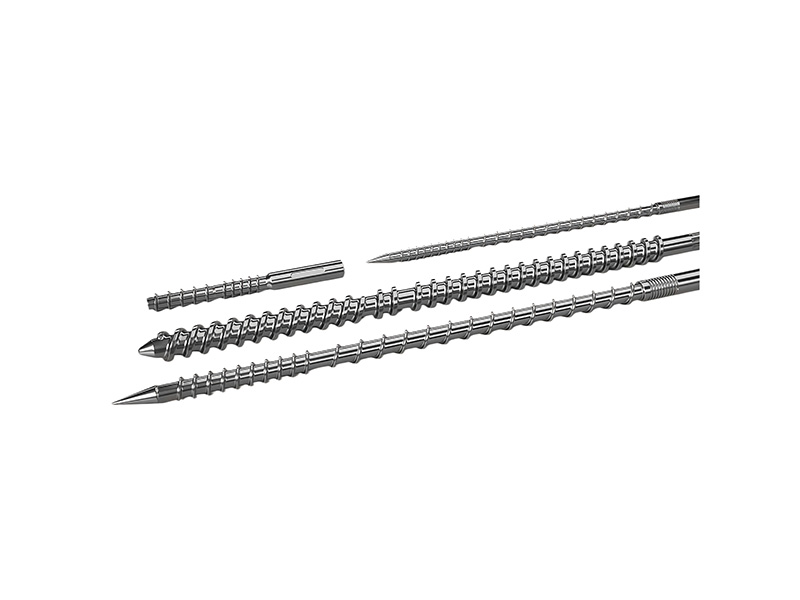
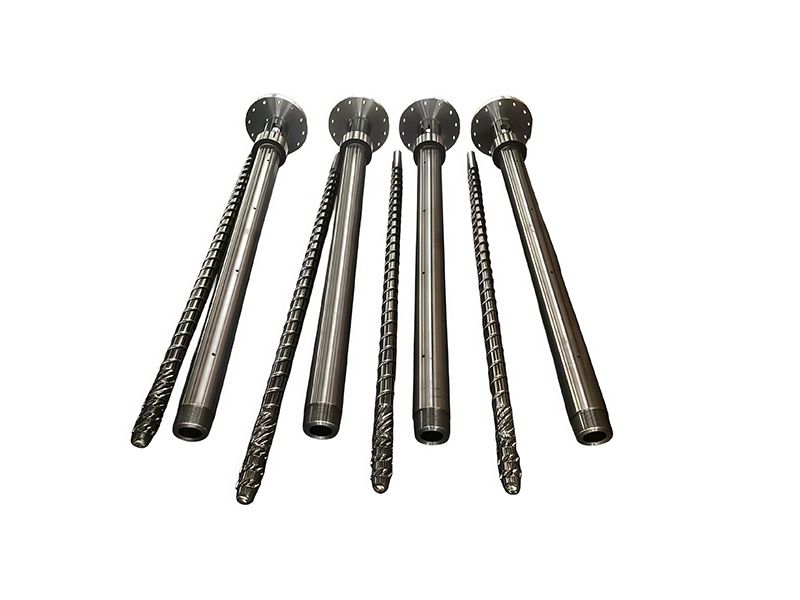
A nitrided screw and barrel remains a widely used solution in plastic extrusion because it can provide a hard, wear-resistant surface while keeping the component design practical for many standard processing conditions.
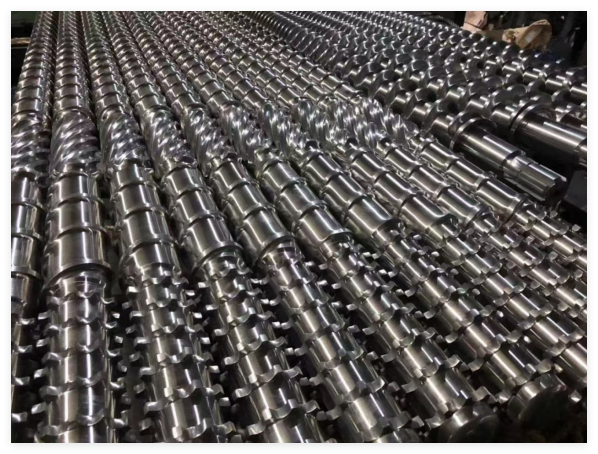
Nitriding is a thermochemical surface-treatment process applied to suitable steel components. Nitrogen is diffused into the surface layer to improve surface hardness and resistance to sliding wear. In screw and barrel manufacturing, the treatment is used to support the working surfaces exposed to material flow, pressure, and repeated contact during processing.
A nitrided screw and barrel is therefore a matched mechanical solution, not just a treated part. Screw geometry, barrel bore, flight clearance, heating and cooling arrangement, connection details, and surface condition must all fit the installed machine and process.
For many conventional plastic materials and moderate wear conditions, nitrided components offer a balanced combination of useful surface protection, manufacturability, and cost control. They are often considered for general extrusion applications where the formulation does not create unusually severe abrasive or corrosive exposure.
Performance still depends on the complete processing environment. High mineral loading, glass fiber, recycled contamination, corrosive additives, or extreme operating conditions may require a different material or barrel construction.
Nitrided and bimetallic barrels are not interchangeable labels. Each can be appropriate when selected for the right duty. The table below is a general screening guide; final selection should use the actual formulation, machine data, and wear history.
| Consideration | Nitrided Screw and Barrel | Bimetallic Barrel Solution |
|---|---|---|
| Working surface | Surface-hardened steel through a nitriding treatment. | Wear-resistant alloy layer on the barrel bore. |
| Typical fit | Conventional formulations and moderate wear conditions. | More demanding abrasive-wear conditions or a need for a longer wear interval. |
| Selection priority | Machine match, material compatibility, and stable operating conditions. | Filler level, wear history, alloy selection, and matching screw condition. |
| Important note | A practical choice when the process duty supports it. | Not automatically necessary; it should solve a defined wear-related requirement. |
Start with the actual material formulation rather than the polymer name alone. PVC, PE, PP, PET, ABS, and other polymers may be processed with fillers, pigments, stabilizers, reinforcing fibers, recycled content, or other additives that change abrasion, corrosion, and flow behavior.
A useful inquiry should state the resin grade or application, approximate filler percentage, recycled content, and any known processing difficulty. This helps determine whether a nitrided solution is suitable or whether an alternative wear-resistant configuration should be reviewed.
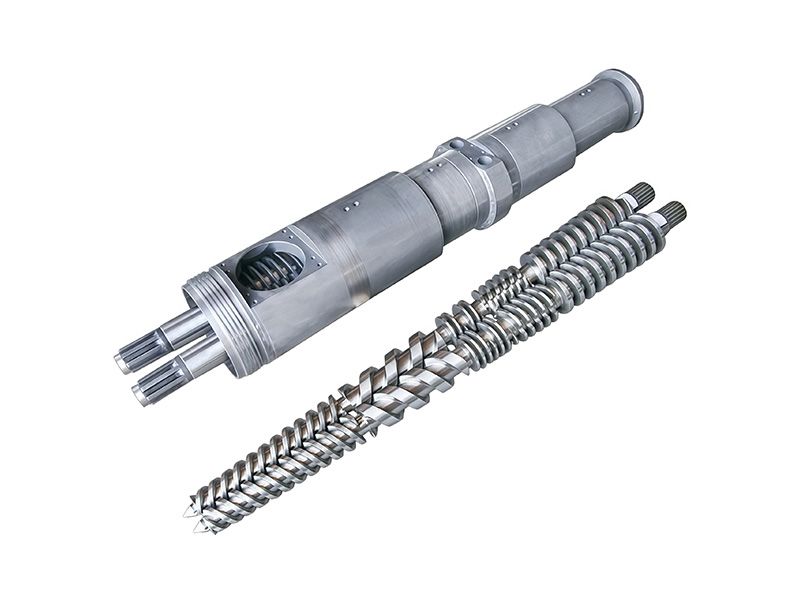
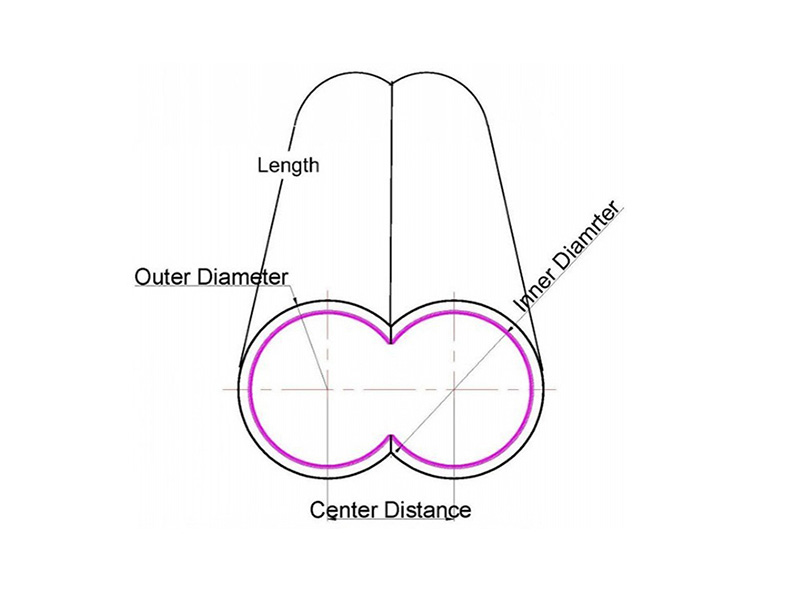
A replacement component must fit the original extruder precisely. The machine maker and model, drawing, screw diameter, L/D ratio, feed opening, barrel zones, heater and cooling layout, and drive-end connection all matter. For twin-screw systems, center distance and screw-pair geometry are also essential.
Current output, screw speed, melt pressure, temperature settings, and daily running hours show how the component is being used. If a line only achieves its target by increasing screw speed or operating outside a stable window, the cause may involve wear, design, feeding, material condition, or several factors together.
Replacing only one worn component can limit the result. A new barrel paired with a severely worn screw, or a new screw paired with an oversized bore, may not restore the intended clearance or process stability. Flight diameter, bore condition, local damage, and connection wear should be checked as a set.
A nitrided screw and barrel is often a reasonable starting point when the application uses standard or moderately demanding formulations, wear is not repeatedly severe, and the replacement goal is to restore proper mechanical fit and stable production. It can be suitable for many routine extrusion projects when the component dimensions and process conditions are correctly matched.
It is wise to review other options when the line processes heavily filled compound, reinforced material, difficult recycled feedstock, corrosive additives, or has a repeated pattern of fast bore wear. The decision should be based on evidence from the line, not on a single material name or a general hardness claim.
These symptoms are not proof that the screw barrel is the only cause. Check feeding, temperature control, die condition, tooling, and downstream equipment too. Nevertheless, measurement of screw-to-barrel condition should be part of a structured troubleshooting process.
When a full drawing is unavailable, a machine nameplate, sample component, accurate measurements, and photos can support an initial evaluation. The more complete the input, the easier it is to avoid an incorrect replacement match.
PIPLL supplies customized screw and barrel solutions for plastic extrusion. Nitrided screw and barrel projects can be reviewed according to the machine design, polymer formulation, output requirement, and observed wear condition.
The goal is to recommend a technically suitable replacement configuration — not to apply the same material solution to every application.
A nitrided screw and barrel can be a dependable choice for many standard plastic-processing applications. The correct selection depends on material formulation, machine geometry, operating conditions, and the condition of both the screw and barrel.
Before ordering, provide the drawing or measurements and explain the actual production issue. This allows the replacement to be matched to the extruder and helps determine whether nitriding is the appropriate surface solution for the project.
Need help with a screw or barrel project? Send your extruder model, material formulation, or current production problem for an initial technical evaluation.


+86 15267878906

1306 W building , NB-IoT Industrial Park, No. 199 Changxing Road, Jiangbei, Ningbo.
 Languages
