How to compare barrel linings screw protection and material pairings
A tungsten carbide screw barrel is worth evaluating when abrasive fillers shorten the useful life of an otherwise suitable plasticizing assembly. Start with the construction options in the bimetallic screw barrel range, review the material distinctions in bimetallic alloy selection , and prepare a custom screw and barrel inquiry using your measured wear and formulation. The specification must identify where the carbide is used, how it is supported, and which mating screw or barrel material will run against it.
For buyers processing glass filled nylon, mineral filled compounds, or abrasive masterbatch, the useful comparison is between defined material systems at the same production duty. A carbide label by itself leaves too many differences unresolved. This guide explains what to ask before approving a replacement and how to assess its value in production.
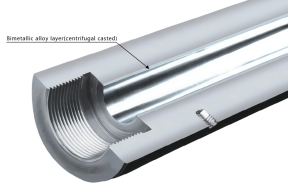
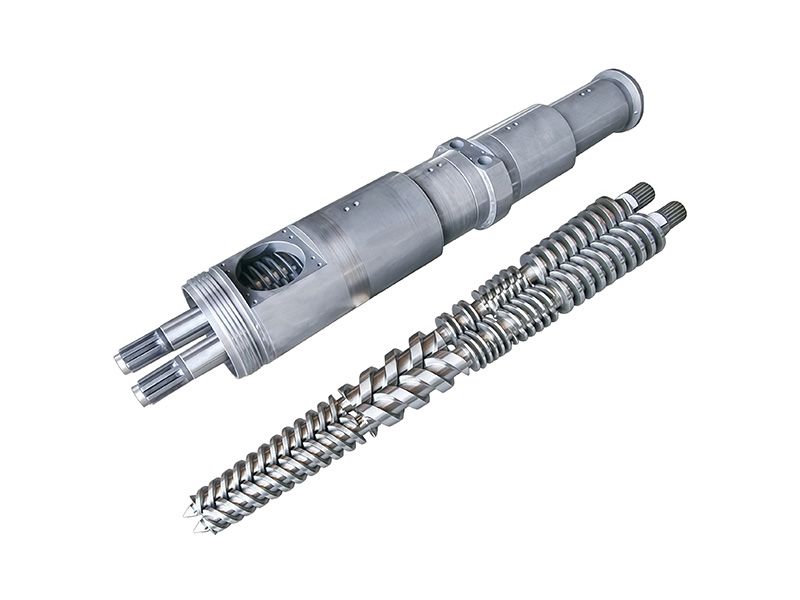
Figure 1. Barrel cutaway showing the location of an alloy lining. The lining composition must be specified separately.
What the Tungsten Carbide Description Should Specify
In a carbide containing bimetallic barrel, hard particles are distributed within a metallic matrix at the bore surface. A screw may instead receive a surface coating or protection limited to selected working areas. Those constructions protect different surfaces and use different manufacturing routes. Ask whether the offer covers a barrel lining, screw flight hardfacing, broader screw encapsulation, or a complete matched assembly.
The hard phase contributes abrasion resistance, while the surrounding matrix and the way the layer is produced also affect performance. Two tungsten carbide barrel lining offers can therefore differ in composition, finished thickness, finish, and suitability for corrosive additives. A photograph or a single hardness value cannot establish these properties.
Choose Protection from the Actual Filler Duty
Processing duty | Selection question | Information to send
Glass filled PA or PBT | Which screw and barrel material pairing suits the abrasive formulation? | Resin grade, fiber content, temperature and measured wear locations.
Mineral filled compounds | Which surfaces lose dimensions fastest under the present recipe? | Filler type and loading, throughput, running hours and bore measurements.
Abrasive masterbatch | Is damage caused by the formulation, contamination, or another mechanical problem? | Pigment and carrier details, cleaning history, photos and process trends.
Filled flame retardant grades | Does the proposal address both abrasion and the actual chemical exposure? | Additive system, resin supplier guidance and evidence of pitting or corrosion.
A tungsten carbide screw barrel for glass filled plastics should be specified around the exact compound. Fiber loading alone does not describe every operating condition. Include temperature, screw speed, throughput, prior surface construction, and the locations where dimensions were lost. Keep machine geometry and running clearance in the review when evaluating a material upgrade.
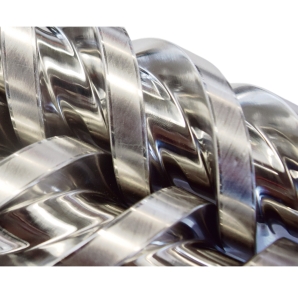
Figure 2. Close view of screw flights and channels. Coverage, surface finish, and final dimensions should be defined on the approved specification.
Confirm the Screw and Barrel Material Pairing
When a barrel alloy changes, review the mating screw surface at the same time. Some unproven combinations of hardfacing and barrel alloy can gall or suffer severe wear. Ask the manufacturer to confirm the intended combination, operating limits, and finishing requirements. Replacing one component while leaving the other unmeasured makes the condition of the running pair uncertain.
Through hardened screw materials, nitrided constructions, and carbide protected surfaces are different engineering choices. Compare them using the formulation and the full assembly, including toughness and corrosion demands. For a stable line whose current material already meets the required maintenance interval, an additional wear upgrade may offer limited economic benefit.
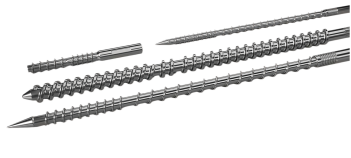
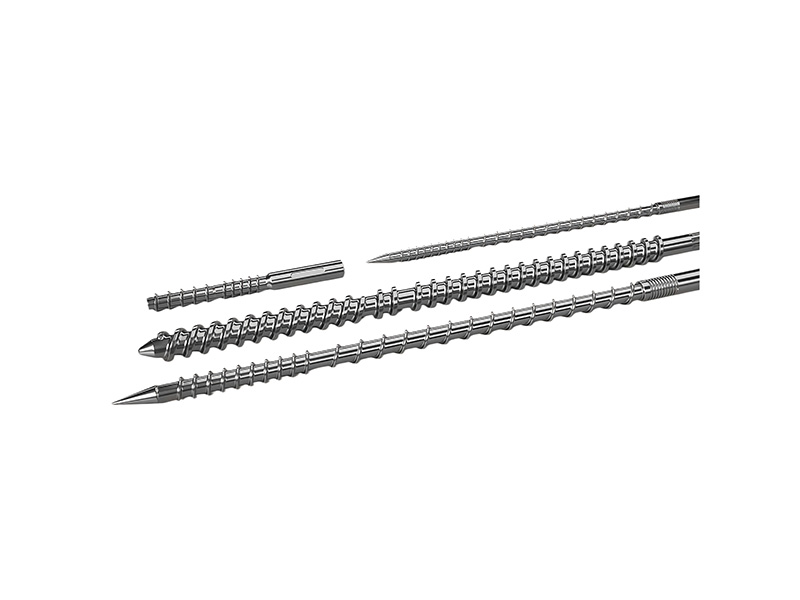
Figure 3. Through hardened screw examples provide a material construction comparison. Their appearance does not identify a carbide coating.
Define the Quote and the Production Comparison
For a tungsten carbide coated screw or carbide lined barrel inquiry, include the installed machine drawing, polymer and filler data, dimensions of worn parts, production history, and the reason for replacement. Request a clear statement of the protected area, material designation, manufacturing route, finished dimensions, surface finish, and inspection documents. Any thickness or hardness requirement should be agreed for that construction rather than copied from an unrelated product.
Compare total ownership cost using purchase cost, installation downtime, inspection effort, and the useful running interval. Record the date and hours at installation, then compare wear and operating stability at similar formulations and settings. A promised lifetime multiplier has little purchasing value without a comparable duty and a defined end of service criterion.
Conclusion
A tungsten carbide screw barrel is a specific wear protection proposal for a measured processing duty. Identify the construction, confirm the mating materials, and agree on inspection before comparing prices. For abrasive filled plastics, these details make it possible to evaluate whether the proposed surface system addresses the wear that actually limits the line.
Related PIPLL Pages
• Bimetallic or Nitrided Screw Barrel
- Compare the baseline construction options.
• PIPLL Manufacturing Process
- Review machining treatment and inspection stages.
• Extruder Screw Wear Diagnosis
- Collect operating evidence before teardown.
• Screw Barrel Maintenance
- Review causes of wear and process instability.
Technical and Sales Contact
Young | PIPLL | Screw and Barrel Solutions for Plastic Extrusion
Supporting extrusion manufacturers with customized screw and barrel solutions for PVC, PE, PP, PET, and other polymer processing applications.
Email: Young@pipll.com | WhatsApp: +86 150 5840 4692
Website: www.pipll.com


+86 15267878906

1306 W building , NB-IoT Industrial Park, No. 199 Changxing Road, Jiangbei, Ningbo.
 Languages