How Tg and Tm guide drying melt preparation cooling and material selection
A PLA part can soften long before its crystals melt. A PMMA datasheet can give a processing temperature without listing a crystalline melting point. Both make sense once you understand glass transition vs melting temperature.
For extrusion and injection molding, Tg describes a change in molecular mobility within amorphous regions. Tm describes melting of crystalline regions. Neither number, on its own, tells you how to set the dryer, barrel, mold or finished product temperature.
This PIPLL guide connects those transitions to practical decisions, from PLA extrusion applications to the screw and barrel conditions that determine whether a resin actually reaches a uniform, stable melt.
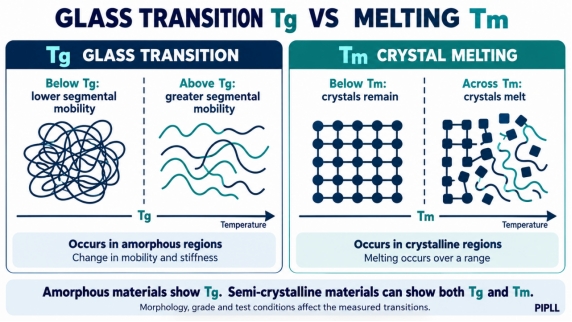
Figure 1. Tg changes mobility in amorphous regions. Tm describes melting of crystalline regions.
Start with the Structure of the Thermoplastic
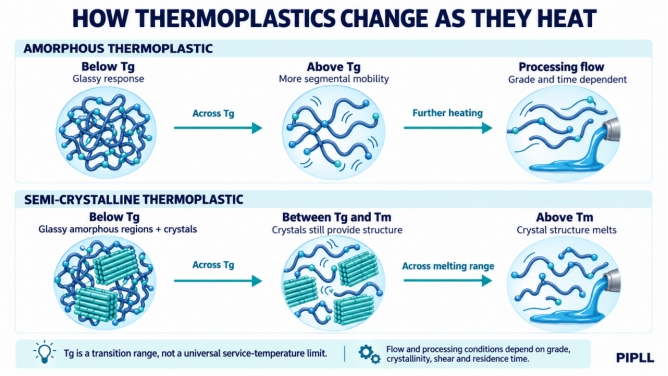
Common amorphous thermoplastics, including ordinary PS, PMMA and PC, lack the ordered crystals that produce a crystalline melting transition. They soften through Tg and become easier to process with further heating. Calling the flowing material a polymer melt is still normal shop floor language.
Semi-crystalline thermoplastics, such as PE, PP, PA and POM, contain both ordered crystals and disordered regions. They can therefore show both Tg and Tm. Crystallizable PET and PLA may be largely amorphous or partly crystalline depending on grade and processing history. Some PLA grades do not crystallize under practical conditions.
These categories describe melt-processable thermoplastics. Blends and multiphase materials, including ABS, can have more than one glass transition.
Glass Transition vs Melting Temperature at the Molecular Level
Tg changes how readily chain segments move
Across Tg, cooperative movement of chain segments becomes much easier. Stiffness generally decreases and deformation becomes more time dependent. The transition occupies a temperature range; its reported value depends on the test method, heating rate and material condition. Moisture and plasticizers can also shift the response. NETZSCH explains the measurement of Tg .
That does not make every plastic brittle below Tg or rubberlike immediately above it. Impact behavior also depends on formulation, structure and loading rate. PC, for example, can remain tough well below its Tg. For PC extrusion applications , softening behavior must be considered alongside melt viscosity and the required surface quality.
Figure 2. Amorphous and semi-crystalline thermoplastics follow different heating paths. These are conceptual schematics.
Tm describes the loss of crystalline order
Heating a semi-crystalline resin through its melting range removes the crystal structure that helps support the solid. Melting absorbs energy, so heating rate, residence time and heat transfer affect whether melting is complete. A reported DSC peak is a material measurement, not proof that every pellet inside a production barrel has melted. See NETZSCH on melting temperature and enthalpy .
Above Tm, the polymer remains a viscous, elastic melt. Its viscosity still depends on temperature, shear rate and molecular weight; it does not automatically become waterlike.
Use Different Logic for Each Temperature Decision
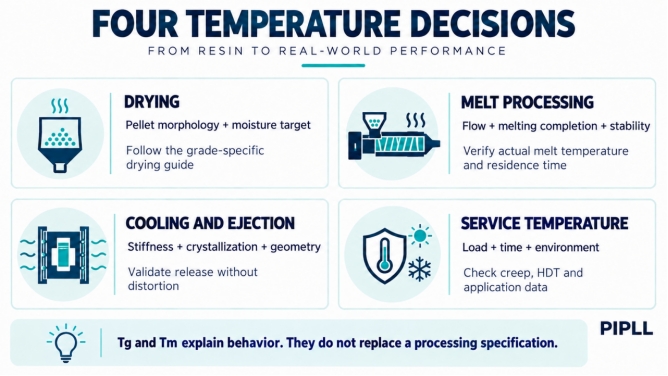
The same resin passes through several very different jobs. In the dryer, pellets must remain free flowing while moisture is removed. In the barrel, they must melt and flow without excessive degradation. At ejection, the part needs enough stiffness to release. In service, it must carry its intended load for the intended life.
Figure 3. Match each temperature decision to its purpose and validate it using the resin grade and operating conditions.
Drying depends on pellet condition as well as resin name
“Always dry below Tg” is too broad. Amorphous pellets may soften and stick near Tg, while adequately crystallized pellets can tolerate a higher drying temperature.
NatureWorks illustrates this clearly for Ingeo PLA: its guide lists 43–55°C for amorphous material and 65–90°C for crystallized material, under the conditions described in that guide. These are material-specific examples, not a recipe for every PLA grade. Use the latest grade instructions for temperature, time, dew point and moisture target. NatureWorks crystallizing and drying guide .
For amorphous PET regrind, a controlled crystallization step with agitation may be needed before higher temperature drying to prevent clumping. Check the actual feed condition rather than assuming every PET flake behaves alike. motan describes why crystallizers are used .
Set Melt Conditions Around the Grade and the Process
Start with the supplier window and check the actual melt
For a semi-crystalline resin, the plasticizing system must supply enough energy and time to melt the crystalline fraction and deliver the required flow. For an amorphous resin, the processing window depends on achieving suitable viscosity while maintaining stability. There is no single universal flow transition temperature, Tf, that replaces this assessment.
Avoid a blanket rule such as “set everything to Tm plus 20–50°C.” The margin depends on the resin grade, additives, throughput and equipment. Equally, a barrel or nozzle setpoint is not the same measurement as the temperature of the material flowing through it.
At a steady operating condition, record actual melt temperature using the approved plant method, together with output, rpm, pressure and recovery time. Check heater and cooling performance if the melt does not respond as expected. A colder display can coexist with excessive shear heating or a poorly melted solids fraction.
Give the part enough stiffness to release
For many amorphous molded parts, cooling sufficiently below Tg helps establish ejection stiffness. The necessary cooling also depends on wall thickness, core temperature, draft and ejector loading. A cold surface alone does not guarantee that a thick section can support ejection forces.
Semi-crystalline parts can retain substantial structure above Tg because crystals still provide support. Some processes deliberately use a warmer mold to promote crystallization. Therefore, “every part must be below Tg before ejection” is not a general rule. Validate release, distortion and dimensions for the actual part. NETZSCH demonstrates the separate effects of crystallization and Tg in PEEK .
Evaluate service temperature under the real load
Tg is useful for understanding softening, but it is not a universal maximum operating temperature. Creep can become unacceptable below Tg under sustained stress. HDT and Vicat values describe specified tests; neither automatically provides a long term service rating.
For example, NETZSCH reports a Tg of about 147°C in its PC DSC example. A PC component at 130°C has not crossed that particular Tg, yet suitability still requires grade-specific load, time and environmental data. NETZSCH PC thermal analysis .
For PLA, crystallinity can change heat performance substantially. NatureWorks reports different HDT values before and after crystallization for one specified modified PLA formulation. The practical lesson is to evaluate the actual formulation and thermal history, rather than assign one temperature limit to all PLA. NatureWorks high heat PLA example .
Connect Temperature Behavior to Screw and Barrel Selection
Tg and Tm help define the plasticizing task. Channel depth, compression ratio, mixing features, rpm and throughput determine how the screw delivers melting, energy input and residence time.
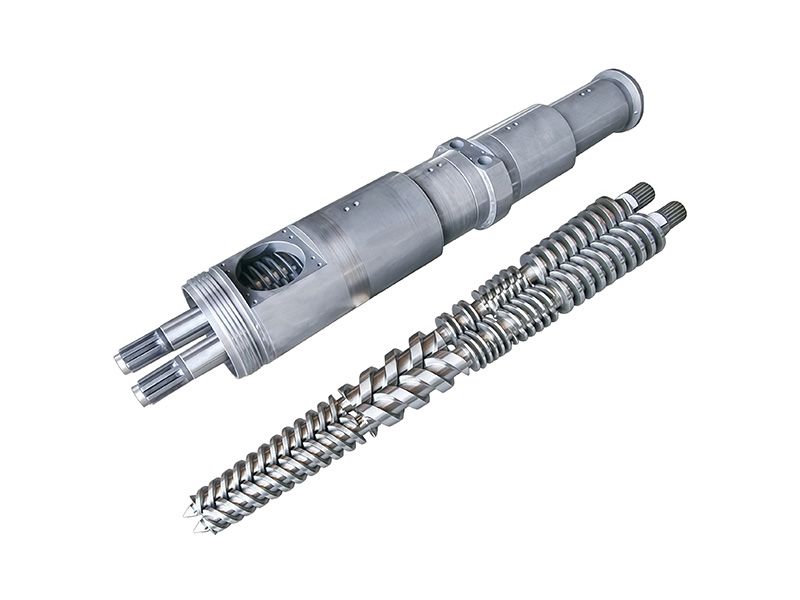
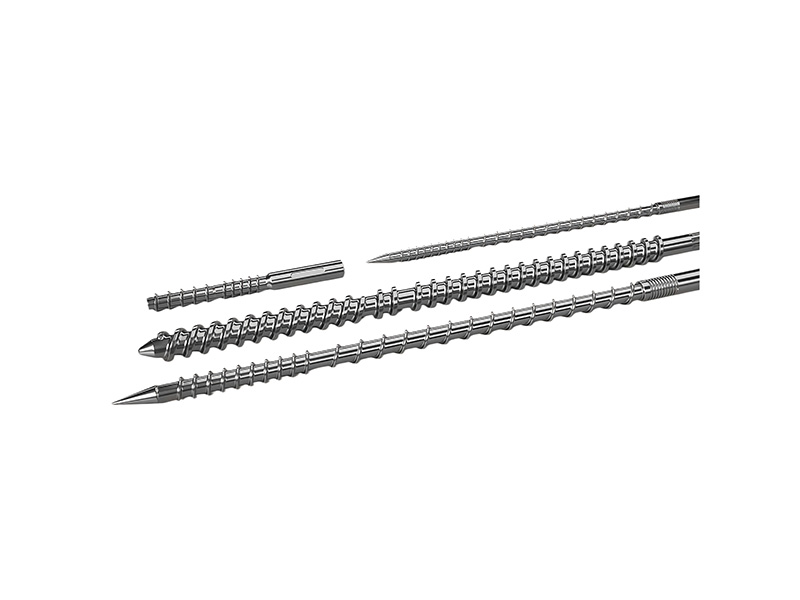
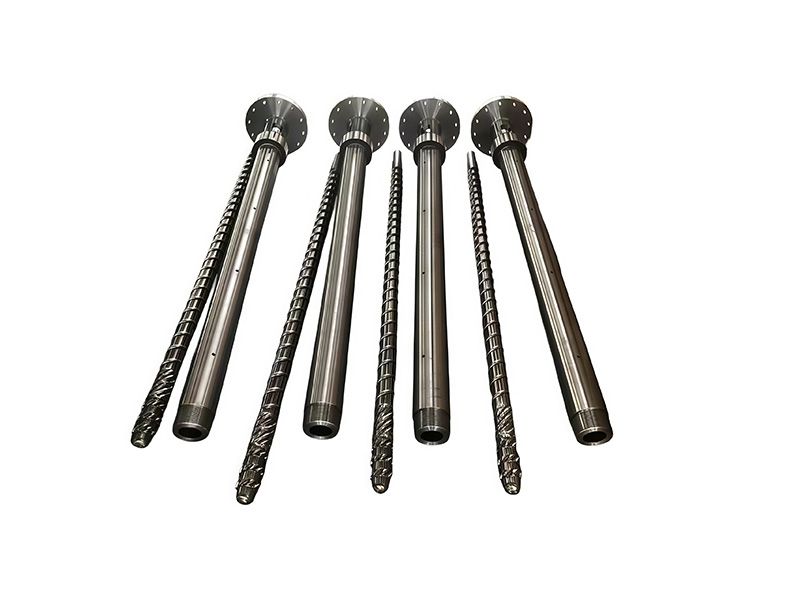
For custom screw geometry design, bring the resin grade and operating data to the PIPLL custom screw service . An injection molding machine screw barrel inquiry should include shot weight, cycle time and recovery behavior; an extrusion inquiry should include output and downstream pressure.
With filled engineering plastics, wear can change clearances and plasticizing performance. Assess bimetallic screw and barrel options or a PIPLL through hardened screw against the abrasive or corrosive formulation. Metallurgy selection still needs correct drying and a suitable processing window.
Use a short check before changing the hardware
• Identify the grade, filler content, regrind proportion and pellet morphology.
• Verify dryer operation and measured residual moisture against the grade requirement.
• Compare actual melt temperature, pressure and output at steady conditions.
• Check residence time, recovery behavior, wear and possible material hang-up.
• Change one operating variable at a time, allow the process to stabilize and compare the result.
PIPLL can use this information for a focused screw and barrel engineering support discussion. It also helps distinguish a material preparation problem from a plasticizing or component condition problem.
Frequently Asked Questions
Why does a PMMA datasheet sometimes omit Tm
Ordinary PMMA is amorphous, so it has no crystalline melting transition. Use its grade-specific processing guidance to establish the required flow and stability window.
Can PLA soften well below its melting temperature
Yes. A largely amorphous PLA part can lose stiffness around its glass transition while remaining far below the melting range of crystallizable PLA. Crystallinity, formulation and loading determine the response.
Can a semi crystalline part be ejected above Tg
Yes, if its crystal structure and geometry provide sufficient stiffness. The release temperature must be validated for the grade, mold and cycle; Tg alone cannot set it.
Bring the Material Data to the Next Process Review
Understanding glass transition vs melting temperature gives each temperature decision a purpose: prepare the pellets, produce a uniform melt, release a stable part and verify performance in service.
For a PIPLL application review, send the resin grade, machine model, screw drawing or dimensions, drying conditions, output or shot weight, and photos of the defect. Contact PIPLL about the screw and barrel application to discuss a suitable next step.
Technical and Sales Contact
Harry Jiang | PIPLL
Email: harry@pipll.com | WhatsApp: +86 182 6854 1152
Website: www.pipll.com


+86 15267878906

1306 W building , NB-IoT Industrial Park, No. 199 Changxing Road, Jiangbei, Ningbo.

 Languages