Extruder Screw Barrel Repair or Replacement Guide
Extruder screw barrel repair is worth considering when damage is limited, the component remains structurally sound, and a documented restoration can meet the line’s required dimensions and service duty. The first step is to compare current symptoms with this screw barrel replacement guide , then identify whether the installed single screw barrel or other assembly has a local repairable defect or system-wide wear. A custom screw and barrel review becomes necessary if the formulation, output target, or geometry is changing as part of the job.
This article focuses on the workshop decision after the line has been diagnosed: what to measure, which repair methods may be considered, where replacement is the safer specification, and what to verify before restart. It does not treat a loss of output or a scratch in a photograph as proof that the screw itself is the cause.
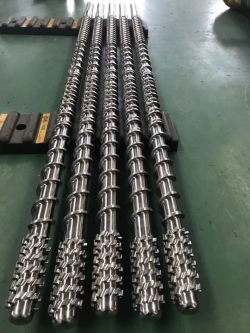
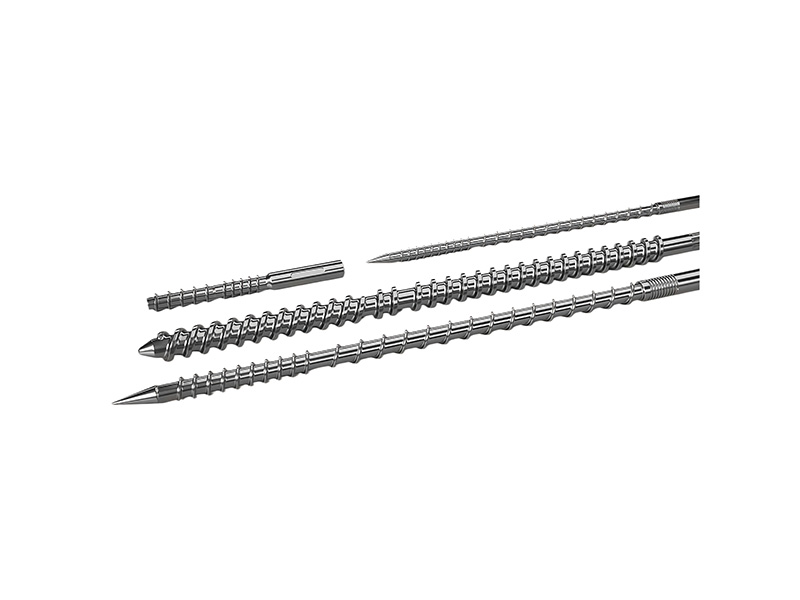
Figure 1. Finished extrusion screws shown for comparison. A repair decision requires measured flight, core, and matching barrel condition; appearance alone is insufficient.
Confirm the Problem Before Quoting a Repair
Start with a stable reference run if one exists. Record resin and additive changes, output, screw speed, melt pressure, temperatures, motor load, screen changes, product quality, and running hours. Check feedstock contamination, heaters, sensors, die restriction, and downstream settings before attributing every variation to wear. If the process record points to the screw barrel, schedule safe disassembly and dimensional inspection.
Clean the parts without hiding damage, then map wear by location. Measure screw flight outside diameter at multiple axial positions and orientations; measure barrel inside diameter at corresponding positions. Record scoring depth, pitting, cracks, shaft runout, drive-end damage, feed-zone condition, and the state of any liner or alloy layer. Compare the results with the approved drawing and the machine maker’s acceptable clearances. A single maximum-wear reading is not a complete condition report.
When a Repair May Be Reasonable
| Condition found | Possible route to evaluate | Evidence required |
| Localized flight wear | Controlled flight rebuild and finish machining, if the base screw remains sound. | Base-metal condition, final profile, diameter, and runout. |
| Limited surface scoring | Polishing or machining only if working clearance remains acceptable. | Depth and location of damage, remaining surface condition. |
| Replaceable liner damage | Liner replacement where the barrel was designed for it. | Bore, liner seat, joint condition, and finished dimensions. |
| Severe bore wear or cracking | Replacement or engineering review rather than cosmetic repair. | Full dimensional map and structural inspection. |
These routes are options for assessment, not promises that every screw or barrel can be restored. Rebuilding a flight changes the heat and finishing history; polishing removes material; a liner must be supported by the original barrel design. The repair supplier should state the proposed process, the dimensions it will achieve, and any remaining limits before work starts.
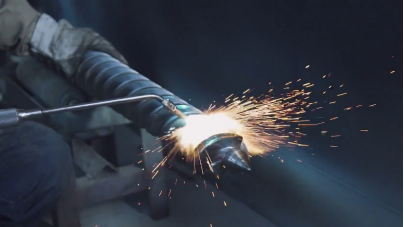
Figure 2. Example of alloy being applied to a screw surface. A similar treatment may be evaluated for a suitable component, subject to base-metal inspection and approved finishing dimensions.
Where Replacement Is the Better Specification
Replace the affected component when the core or barrel body has a crack, the geometry cannot be restored within approved tolerances, widespread wear leaves insufficient material, or repeated repairs no longer meet the desired service interval. Replacement should also be reviewed when the old construction is incompatible with a new abrasive or corrosive formulation. A new barrel alone is not a complete answer if the mating screw flights are worn, and a new screw alone is not a complete answer if the barrel bore is out of tolerance.
For filled or recycled materials, a proposed bimetallic or other wear-resistant construction must be matched to abrasion and corrosion evidence. The quotation should say exactly which surface receives protection and how finished clearance will be checked. Compare the total cost of repair, downtime, expected remaining life, and a matched new set rather than choosing by purchase price only.
Define Acceptance Before the Workshop Starts
· Record the original drawing revision, measured wear map, component identification, and the proposed repair area.
· Agree on the restoration method, base-material suitability, heat or surface treatment, and finishing route.
· Set inspection points for flight diameter, barrel bore, straightness or runout, surface finish, and screw-to-barrel clearance.
· Document the required reports and photographs before shipment; preserve the final dimensional record for the next maintenance cycle.
· Restart with a controlled trial and compare output, pressure, motor load, melt temperature, and product quality with the stable baseline.
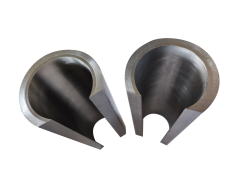
Figure 3. Barrel liner components shown as a construction example. Replacing a liner is only an option where the original barrel design and inspection results support it.
Information to Send for a Repair Assessment
Provide the machine make and model, drawings or verified dimensions, polymer and filler details, the operating and wear history, dated damage photographs, the screw and barrel measurement map, and the required production schedule. Ask the supplier to respond with a repairability assessment, proposed method, finished-condition criteria, lead time, and a separate replacement option if the measured condition makes repair uncertain.
Conclusion
Extruder screw barrel repair is an engineering decision based on measured remaining structure, achievable geometry, and the line’s required duty. Limited localized wear may justify controlled refurbishment. Severe, widespread, or structurally significant damage points toward replacement. In either case, inspect the screw and barrel as a pair and keep a clear dimensional and operating record so the next decision is faster and better supported.
Related PIPLL Pages
· Bimetallic Screw Barrel - Wear-resistant construction options for demanding duty.
· PIPLL Manufacturing Process - Machining, treatment, and inspection stages.
· Extruder Screw Wear Diagnosis - Process signals to review before teardown.
· Bimetallic or Nitrided Screw Barrel - Material choice when replacement is required.
Technical and Sales Contact
Young | PIPLL | Screw and Barrel Solutions for Plastic Extrusion
Supporting extrusion manufacturers with customized screw and barrel solutions for PVC, PE, PP, PET, and other polymer processing applications.
Email: Young@pipll.com | WhatsApp: +86 150 5840 4692 | Website: www.pipll.com


+86 15267878906

1306 W building , NB-IoT Industrial Park, No. 199 Changxing Road, Jiangbei, Ningbo.
 Languages