 Languages
Bimetallic Alloy Selection
Engineering Guide to Bimetallic Screws and Barrels: Metallurgy, Alloy Selection, Polymer Compatibility, and Lifetime TCO Analysis
1. Executive Summary & Metallurgy Overview
The rapid growth of high-performance engineered thermoplastics—such as PA66 reinforced with 30%–50% glass fibers, PBT/PET compounds, halogen-free flame retardants (HFFR), and ultra-high-temperature polymers like PEEK, LCP, and PEI—has exposed the performance limits of conventional nitrided steels.
Standard nitrided components (such as 38CrMoAlA / SACM645) feature a thin surface hardened layer (0.4–0.7 mm deep, HV 850–950). In abrasive or corrosive environments, this thin layer wears away within 2 to 6 months of continuous operation. Once breached, the soft underlying substrate (HRC 28–32) degrades rapidly, leading to severe dimensional loss, product contamination, and costly unscheduled downtime.
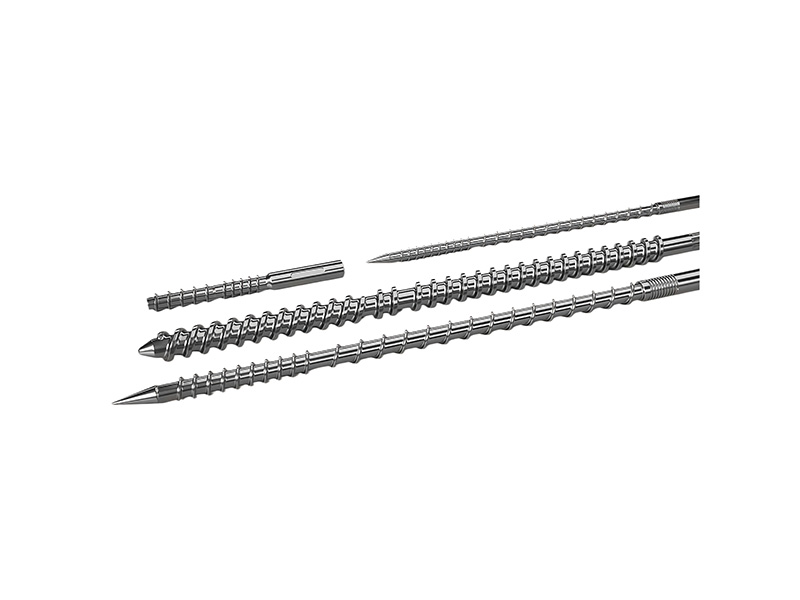
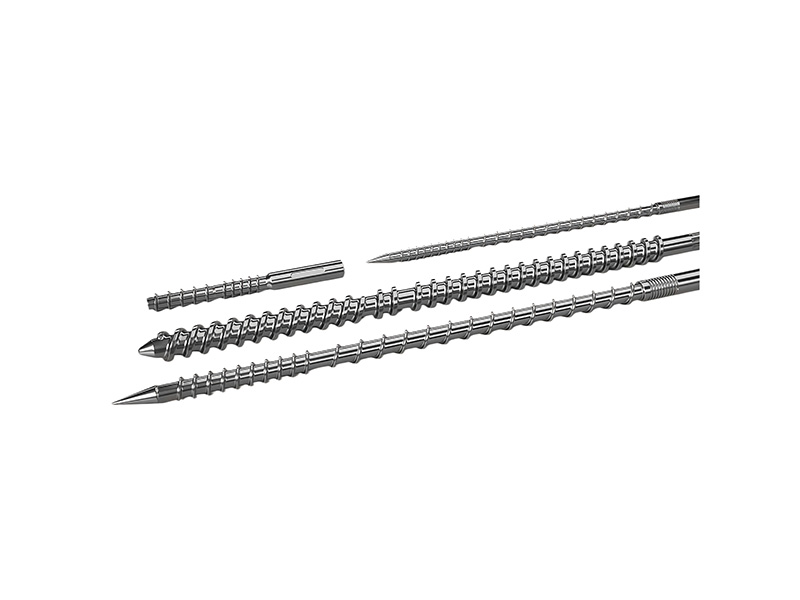
Bimetallic technology solves this issue by metallurgical bonding a thick (1.5–2.5 mm), highly wear- and corrosion-resistant alloy layer onto a tough, shock-resistant steel substrate. This composite structure provides exceptional wear resistance while maintaining structural toughness.
3. Chemical and Metallurgical Analysis of Four Major Bimetallic Alloy Systems
Selecting the optimal bimetallic alloy requires matching the material's microstructure and chemical composition to the specific wear and corrosion conditions of the processing application.
Alloy Matrix System Hardness Range Abrasion Resistance Corrosion Resistance Core Metallurgy & Microstructure Typical Processing Application Fe-Base Alloys (Iron Matrix) HRC 58 – 64 ★★★☆☆ ★★☆☆☆ Fe-Cr-C matrix reinforced with primary chromium carbides (Cr7C3). Excellent value for non-corrosive, moderate wear environments. General commodity plastics (PP, PE, PS) with <15% mineral or glass filler. Ni-Base Alloys (Nickel Matrix) HRC 52 – 58 ★★★★☆ ★★★★★ Ni-Cr-B-Si matrix containing borides and nickel silicides. Exceptional resistance to acidic corrosion and chemical attack. Corrosive plastics: Rigid PVC, CPVC, fluoropolymers (PVDF), flame-retardant resins. Co-Base Alloys (Stellite Matrix) HRC 46 – 52 ★★★☆☆ ★★★★★ Co-Cr-W matrix providing exceptional thermal red-hardness up to 650°C and resistance to corrosive off-gassing. High-temperature engineering resins: LCP, PEEK, PEI, PPS processed above 350°C. Tungsten Carbide (WC Composite) HRC 62 – 68 ★★★★★ ★★★★☆ 60%–85% micro-grade Tungsten Carbide (WC/W2C) particles embedded in a tough Ni-Cr matrix. Ultimate wear protection. Extreme abrasion: 30%–50%+ glass-filled PA66, carbon fiber, ceramic compounds. 4. Comprehensive Polymer Resin to Metallurgy Selection Matrix
Matching the correct screw and barrel metallurgical pair to the processed resin grade prevents premature wear and ensures predictable equipment service life.
Resin Category Example Polymer Compounds Recommended Screw Metallurgy Recommended Barrel Metallurgy Expected Lifespan Multiplier Unfilled Commodity Resins PP, PE, PS, ABS, PET resin Standard Nitrided Steel (38CrMoAlA / SACM645) Standard Nitrided Steel (38CrMoAlA / SACM645) 1.0× (Baseline 12–18 Mos) Low/Mid Glass Fiber Reinforced PA6/66 + 15% GF, PBT + 15% GF Screw Flight PTA Cladded with Fe-Base / Ni-Base Alloy Fe-Base Centrifugally Cast Bimetallic Barrel 2.5× – 3.0× High GF / Highly Abrasive Filled PA66 + 30%–50% GF, PBT + 40% GF, Carbon Fiber Bimetallic Screw (30%–50% WC Tungsten Carbide PTA Cladded) Tungsten Carbide (WC 40%) Centrifugal Bimetallic Barrel 4.0× – 6.0× Corrosive / Acid Generating Rigid PVC, CPVC, Fluoropolymers (PVDF), HFFR Ni-Base PTA Cladded Screw or 9Cr18Mo Stainless Steel Screw Ni-Base (Ni-60) Centrifugally Cast Bimetallic Barrel 3.5× – 5.0× High-Temp / Corrosive / Abrasive LCP + 40% GF, PEEK + 30% GF, PEI, PPS Cobalt-Base (Stellite) or WC Bimetallic Screw Cobalt-Base / Tungsten Carbide Bimetallic Barrel 4.0× – 5.5× 2. Manufacturing Processes: Centrifugal Casting and PTA Cladding
Achieving a defect-free metallurgical bond between the base alloy and the protective lining requires specialized manufacturing processes for both the barrel and the screw.
-
2.1 Centrifugal Casting for Barrels
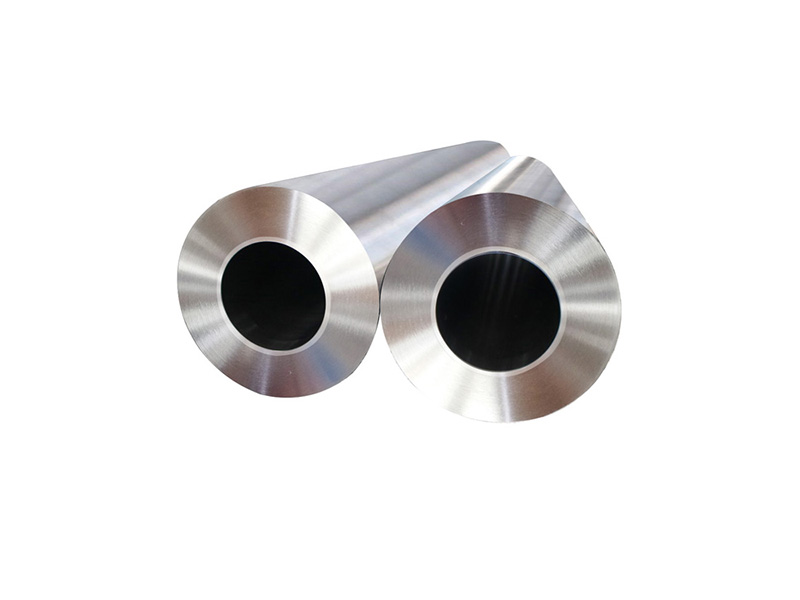
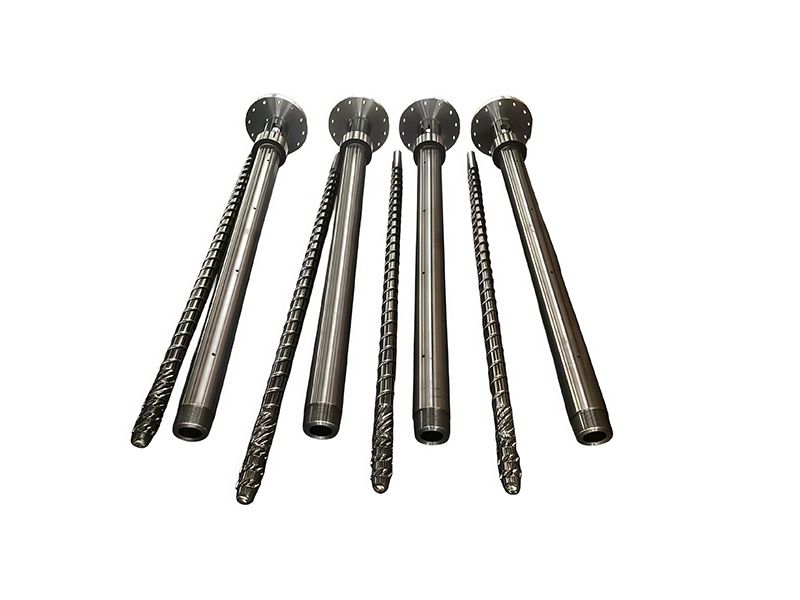
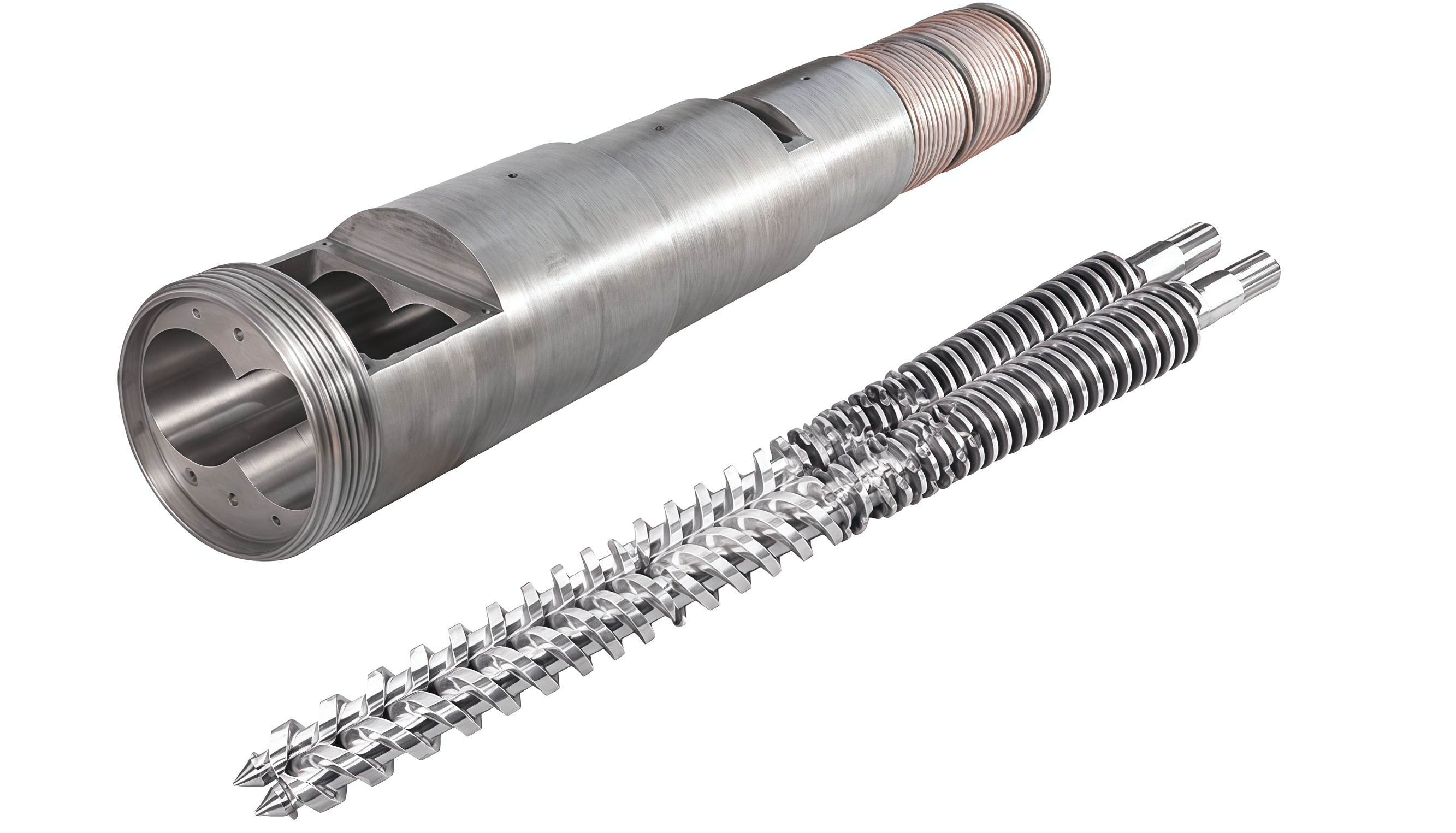
Bimetallic barrels are produced using high-temperature centrifugal casting. Precision alloy powders (Fe-base, Ni-base, Co-base, or WC-composite) are evenly distributed inside a seamless alloy steel backing tube (e.g., 4140 or 38CrMoAlA).
The assembly is sealed, placed in a specialized furnace, and heated to 1050°C–1250°C to fully melt the alloy powder. The furnace spins the tube at high rotational speeds, generating centrifugal forces exceeding 50G. This force drives high-density alloy liquid outward against the inner wall, squeezing out gases, slag, and impurities. As it cools, a dense, pore-free lining (1.5–2.5 mm thick) forms, fused to the steel shell.
-
2.2 PTA Plasma and Laser Cladding for Screws
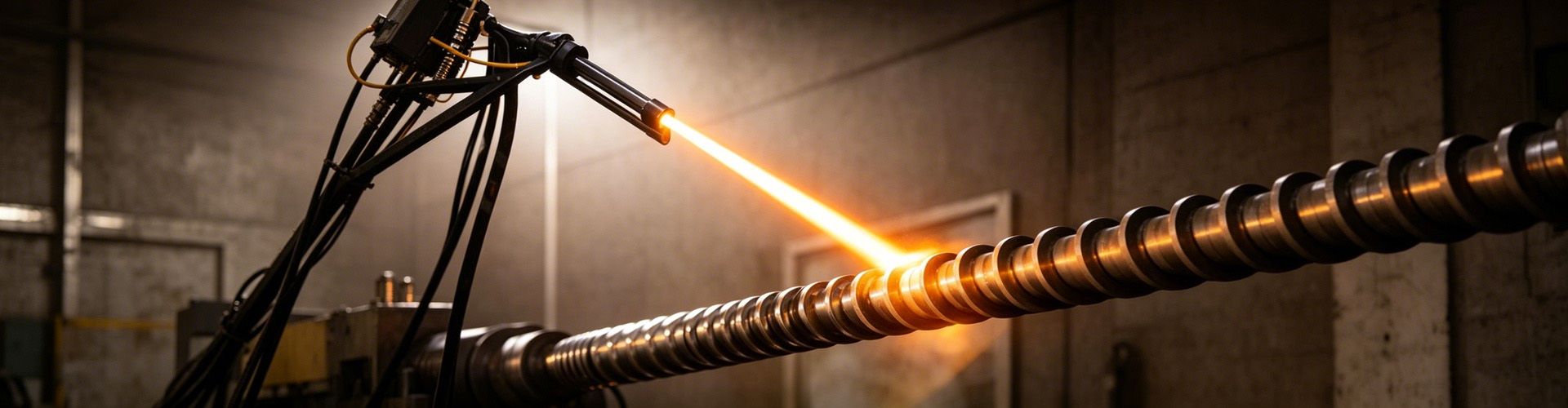
Bimetallic screws are manufactured using Plasma Transferred Arc (PTA) hardfacing or high-power laser cladding. An arc plasma torch or focused laser beam melts both the screw substrate surface and atomized alloy powder (containing tungsten carbide particles suspended in a nickel or cobalt matrix).
This process deposits a dense wear layer (1.5–2.0 mm thick) onto the screw flight crests or across the entire channel surface. Low heat input minimizes dilution with the base metal, preserving the high hardness and corrosion resistance of the deposited alloy coating.
-
5. Financial Total Cost of Ownership (TCO) & ROI Analysis
While bimetallic components require a higher initial investment than nitrided units, their extended operating life and reduced downtime yield lower overall operating costs.
Below is a 3-year TCO financial analysis for a Ø55mm injection molding machine continuously processing PA66 reinforced with 30% glass fiber (PA66 + 30% GF):
Cost Category Standard Nitrided Assembly PIPLL Tungsten Carbide Bimetallic Unit Cost Impact & Net Savings Initial Hardware Purchase Price $1,200 $2,800 Initial investment premium: +$1,600 Replacement Frequency (36 Months) 3 Replacements required (Every 9–12 mos) 0 Replacements required (36+ mos lifespan) Saves 3 complete overhaul cycles Direct Hardware Procurement Cost $3,600 ($1,200 × 3 units) $2,800 ($2,800 × 1 unit) Direct hardware savings: $800 Production Downtime Losses $5,400 (36 hours total downtime @ $150/hr) $0 (Zero unscheduled downtime) Avoided downtime cost: $5,400 Scrap & Resin Waste Costs $4,500 (2.5% avg scrap rate from cushion drift) $900 (<0.5% scrap rate with stable cushion) Material waste savings: $3,600 Total 3-Year Operational Cost (TCO) $13,500 $3,700 Net Cumulative Savings: $9,800! 5.1 Return on Investment (ROI) Payback Period
Payback Period = (Initial Bimetallic Investment Premium) / (Monthly Savings Rate)
Payback Period = $1,600 / ($9,800 / 36 months) = 5.87 Months.
Conclusion: The additional investment in a premium PIPLL bimetallic screw and barrel assembly pays for itself in less than 6 months. Over a 3-year operating window, the unit delivers a net cost reduction of $9,800 per machine.
6. Quality Assurance, Manufacturing Tolerances, and Maintenance Protocol
To maximize component lifespan, PIPLL applies strict manufacturing tolerances and quality controls to every bimetallic screw and barrel:
-
Ultrasonic Bond Integrity Inspection: Barrels undergo 100% ultrasonic flaw detection and hydrostatic pressure testing to ensure flawless metallurgical bonding with zero lining porosity or micro-cracking.
-
Precision CNC Surface Finish: Screw flight OD and barrel ID are CNC finish-ground to DIN ISO 2768-m standards, maintaining straightness within 0.02 mm/m and surface roughness below Ra 0.4 µm.
-
Polished Root Radii: Screw root radii and transition zones receive a high-polish mirror finish to prevent resin stagnation and thermal degradation.
To discuss your specific polymer processing challenges, request a custom material recommendation, or order a bimetallic replacement set, contact PIPLL technical support at Email: eric@pipll.com
Cell/Whatsapp: +86-15267878906 or visit https://www.pipll.com
-