A Practical Guide to Alloy Lining, Wear Duty, and Replacement Specification
A bimetallic screw barrel is selected when the processing duty is likely to wear, score, or corrode a standard working surface faster than the required maintenance interval allows. The decision should be based on the actual polymer, filler level, recycled content, operating temperature, and production hours, then compared with a nitrided screw barrel or another suitable baseline. For projects that also require a geometry change, a custom screw and barrel review should be completed before an alloy upgrade is specified.
The useful question is not whether bimetallic construction is universally better. It is whether the barrel bore, screw flights, and the chosen protective system will keep clearance, melt delivery, and product quality stable for the expected processing duty.
This guide explains how to match a bimetallic screw barrel material and surface solution to abrasive or corrosive plastic extrusion, what to confirm with the supplier, and which operating signals justify a more detailed review.
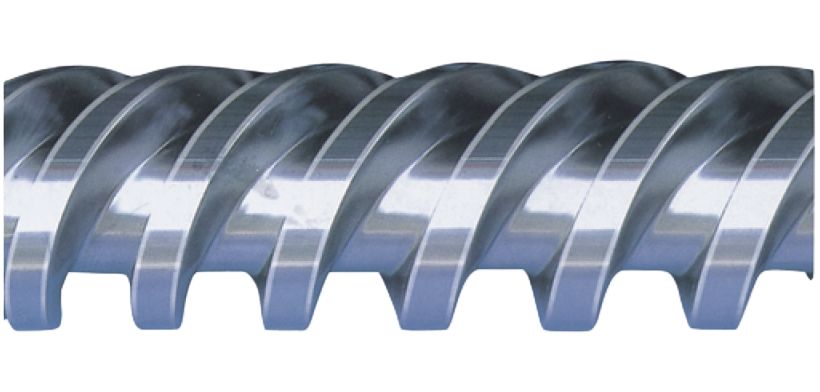
A bimetallic screw barrel uses a wear-resistant alloy at a working surface while the underlying component provides structural support. The protected area can be the barrel bore, the screw flight surface, or a matched system. The construction route and alloy choice should be stated in the quotation because the same bimetallic label can describe different components and processes.
The benefit is not simply a harder part. A suitable alloy system helps slow damage from mineral fillers, glass fiber, recycled contamination, or corrosive additives. It must still be compatible with the screw design, melt temperature, barrel zones, and required finish. A poor dimensional match or an unsuitable geometry can create process instability even if the surface has high wear resistance.
| Processing condition | Selection focus | Information to confirm |
|---|---|---|
| High mineral or glass-fiber loading | Abrasion resistance at screw flights and barrel bore | Filler type and percentage, output, running hours, wear history |
| PVC or corrosive additives | Corrosion resistance and stable bore finish | Resin grade, stabilizer system, temperature profile, observed corrosion |
| Recycled material or contamination risk | Resistance to scoring and irregular wear | Source quality, contaminants, screen changes, damage locations |
| General clean resin | Cost-effective material and heat treatment | Material grade, output requirement, maintenance interval |
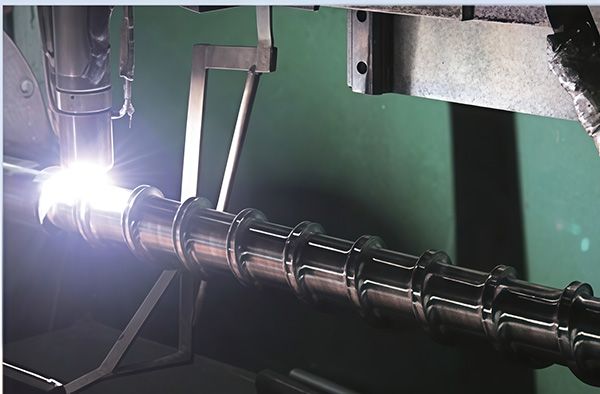
A material proposal should state which component receives the alloy protection, the intended surface or lining method, the required dimensions after finishing, and the inspection points used to confirm the finished part. Ask whether the specification addresses abrasion, corrosion, or both. These are related but not identical duties.
These signals should lead to measurement and process review, not an automatic upgrade. Check the feed system, material condition, heating and cooling, die condition, and downstream equipment before assigning all variation to the screw barrel.
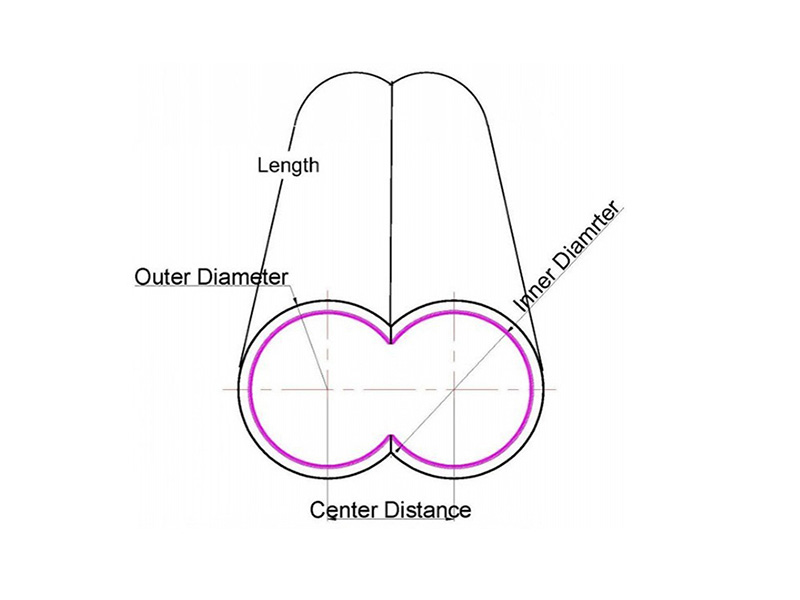
A barrel replacement should not be selected independently from the screw. Clearance, bore geometry, screw flight diameter, drive-end interface, feed opening, vent position, and heating or cooling zones, must match the installed extruder. For a replacement project, send an original drawing when possible, together with verified dimensions and photographs of the worn areas.
A bimetallic screw barrel is a material and surface-engineering choice for a defined processing duty. It becomes useful when the operating evidence supports a need for stronger protection, while its geometry and interface need to remain matched to the installed machine. A complete inquiry gives the supplier the information needed to specify the alloy system and dimensions without relying on a generic upgrade.
Young | PIPLL | Screw and Barrel Solutions for Plastic Extrusion
Supporting extrusion manufacturing with customized screw and barrel solutions for PVC, PE, PP, PET, and other polymer processing applications.


+86 15267878906

1306 W building , NB-IoT Industrial Park, No. 199 Changxing Road, Jiangbei, Ningbo.
 Languages

