A custom screw and barrel
project begins with a simple objective: make the replacement fit the machine and support the intended processing result. In practice, that requires more than matching a diameter or providing a product name.
Extruders with the same nominal size can still differ in screw geometry, barrel zoning, feed opening position, center distance, heating and cooling arrangement, drive-end connection, and material requirement. These details determine whether a replacement component will install correctly and perform as expected.
This guide outlines the technical information that helps a custom screw and barrel supplier
evaluate a new or replacement project efficiently and accurately.
A custom screw and barrel is relevant whenever an off-the-shelf component cannot be safely assumed to match the installed machine or the processing duty. This is common with older equipment, non-standard extruders, production upgrades, material changes, and replacement projects where the original OEM drawing is incomplete or unavailable.
Customization does not mean changing every detail. Often, it means reproducing the correct interfaces and functional geometry while selecting materials and surface treatment appropriate to the current processing condition.
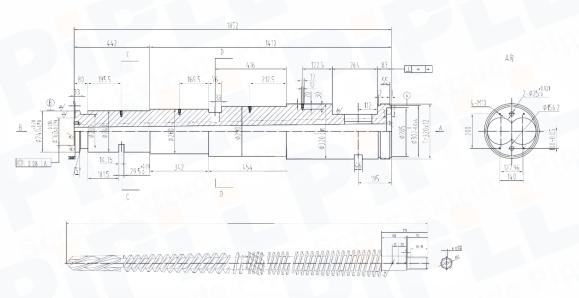
An original screw and barrel drawing is the most efficient reference for a replacement project. It can show dimensions that are difficult to confirm from a single external measurement, including stepped diameters, flight profile, feed-port location, heating zones, internal cooling passages, mounting features, splines, and coupling details.
If the original drawing is not available, the project can still move forward. Accurate measurements, clear photos, the machine nameplate, and an old sample component can provide a strong basis for an initial assessment. Any unknown dimensions should be identified early rather than assumed.
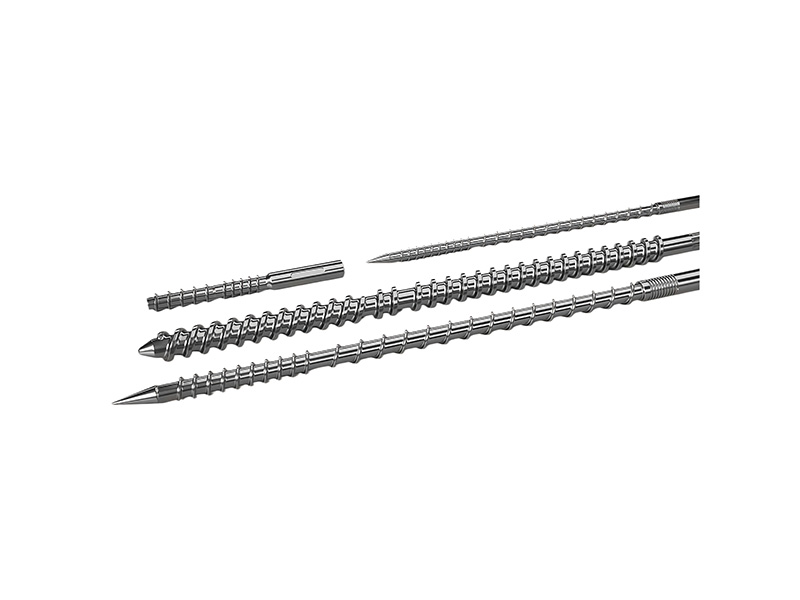
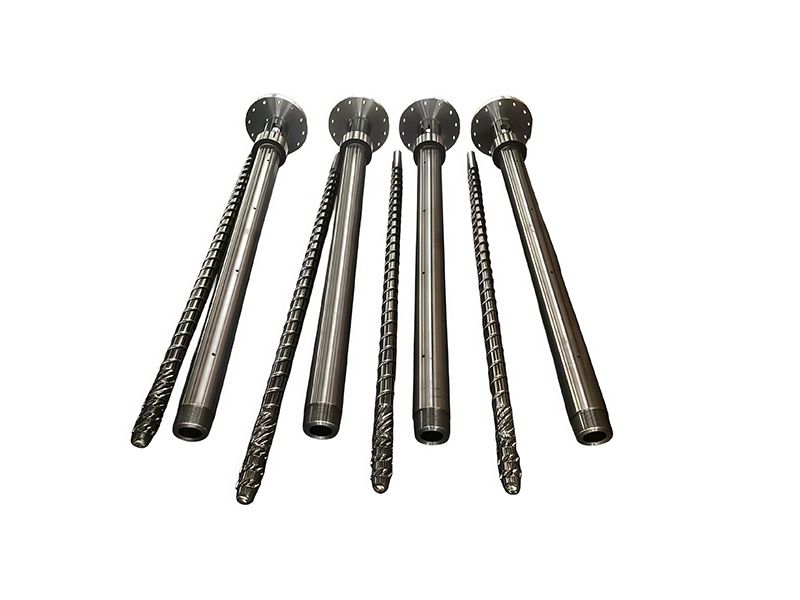
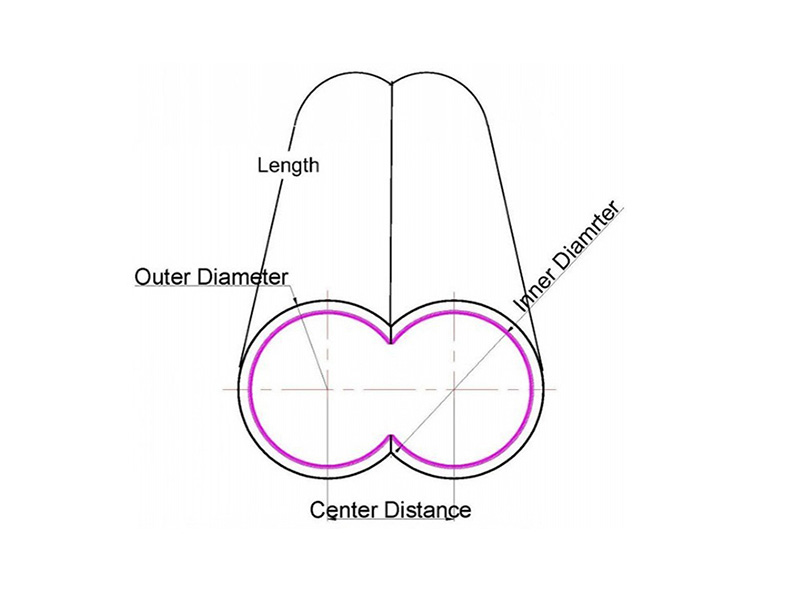
For a single screw, useful data includes screw diameter, overall length, L/D ratio, screw-end connection, barrel outer diameters, feed opening, and zone locations. For twin-screw systems, the center distance, bores, synchronized screw geometry, and gearbox-end interface must also be confirmed.
A custom screw and barrel for plastic should be evaluated with the actual material in mind. State the polymer, filler percentage, recycled content, reinforcing fibers, and additives where known. Also provide the product being made and the current output target.
This information helps determine whether the current issue is likely related to wear resistance, corrosion resistance, screw geometry, barrel configuration, or operating conditions. It also avoids selecting a component that fits mechanically but is not suitable for the processing duty.
A nominal diameter is useful, but it does not define a complete screw and barrel. Two machines with a similar diameter can have different L/D ratios, feed-zone geometry, pressure sections, drive-end interfaces, barrel zones, and twin-screw center distances.
| Information Only | Why It Is Not Sufficient | What Should Be Added |
|---|---|---|
| Screw diameter | Does not confirm length, geometry, interfaces, or barrel zoning. | Overall length, L/D, drawing, and drive-end details. |
| Machine model only | May not show changes, variants, or prior modifications. | Nameplate photo, old-part photos, and key measurements. |
| Polymer name only | Does not show filler, recycled content, or additive effects. | Formulation description, filler percentage, and processing issue. |
| One wear photo | Cannot show the complete fit or wear pattern. | Measurements at several locations and photos of both components. |
A worn component can be a useful template, but it should not always be copied without review. Wear may be uniform, localized, abrasive, corrosive, or related to a feeding or alignment issue. If the old configuration repeatedly has a short service interval, the material solution or design may need attention.
The objective is to identify the cause of the maintenance problem, not only to replace the visible worn part. A custom project can then preserve the features that work while addressing a defined weakness.
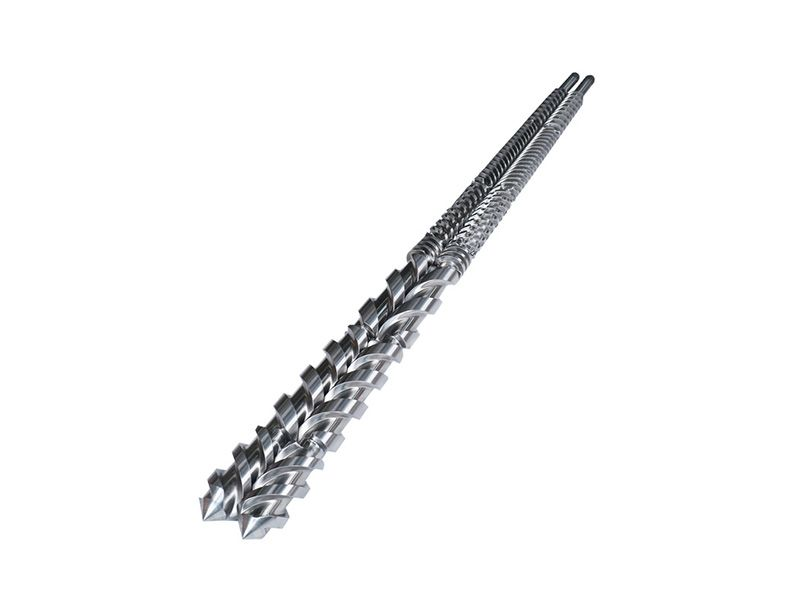
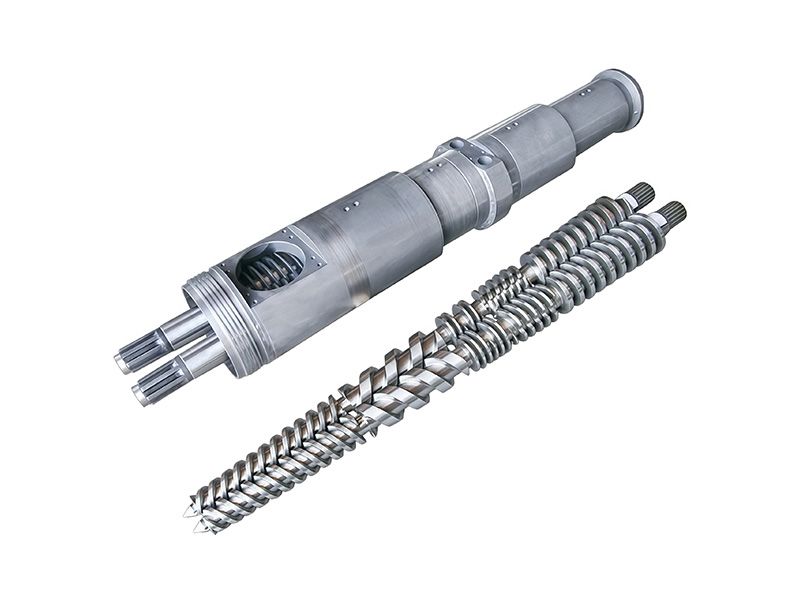
PIPLL supplies custom screw and barrel solutions for plastic extrusion projects, including single-screw, parallel twin-screw, and conical twin-screw configurations. Each inquiry can be reviewed using the machine data, drawings, material formulation, and wear history available.
For projects without a complete drawing, PIPLL can begin with a structured information review based on samples, photos, nameplate details, and verified measurements. The goal is to build a replacement specification that fits the machine and supports the intended process.
A successful custom screw and barrel project depends on good technical input. The best references are the original drawing, accurate measurements, machine information, material formulation, and a clear description of the production requirement or wear problem.
Providing this information at the start reduces uncertainty, helps confirm the mechanical match, and allows the screw and barrel material solution to be selected for the actual processing duty.
Need help with a screw or barrel project? Send your extruder model, material formulation, or current production problem for an initial technical evaluation.


+86 15267878906

1306 W building , NB-IoT Industrial Park, No. 199 Changxing Road, Jiangbei, Ningbo.
 Languages
