When replacing an extrusion screw barrel , many plastic processors face the same question:
Should we upgrade from a nitrided screw barrel to a bimetallic screw barrel?
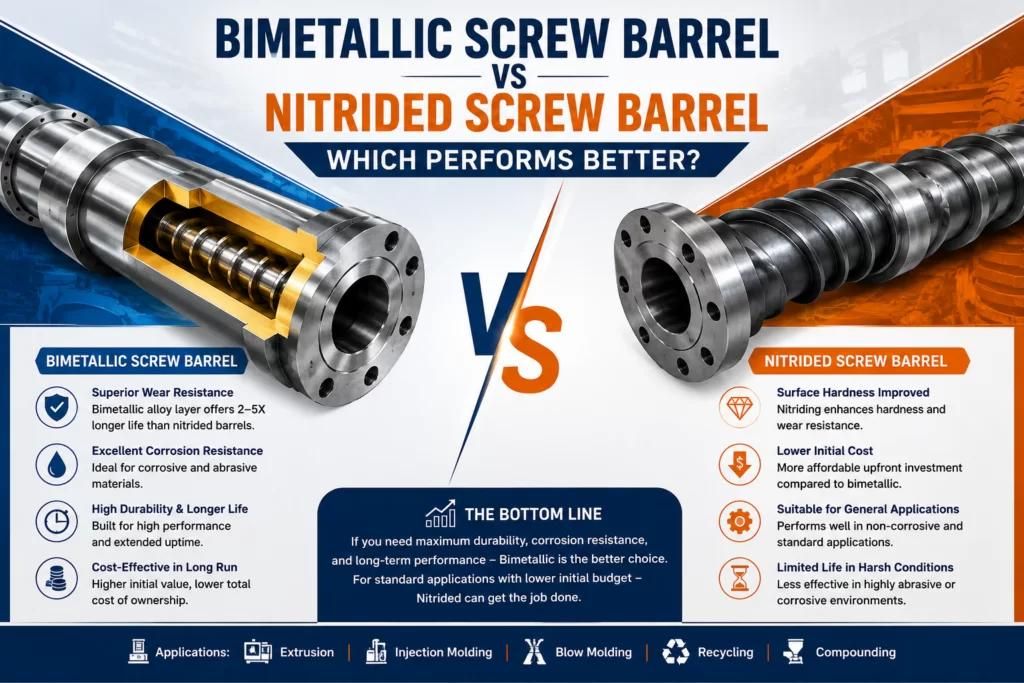
Bimetallic Screw Barrel vs Nitrided Screw Barrel Comparison
A bimetallic screw barrel is often considered a premium solution because of its excellent wear resistance and longer service life. However, upgrading to bimetallic is not always the right decision.
For some extrusion applications, a high-quality nitrided screw barrel can already provide stable performance with a better cost-performance ratio.
The real question is not:
“Is bimetallic better?”
The better question is:
“Does your extrusion application actually require bimetallic protection?”
Choosing an unsuitable screw barrel material can increase your investment cost without improving production efficiency.
Before deciding whether to upgrade, it is important to understand the differences between these two screw barrel solutions.
A nitrided screw barrel is usually manufactured from high-quality alloy steel such as 38CrMoAlA and treated through a nitriding process.
During nitriding treatment, nitrogen elements penetrate into the steel surface, creating a hardened layer that improves:
· Surface hardness
· Wear resistance
· Corrosion resistance
· Fatigue strength
· Service life
Nitrided screw barrels are widely used in standard plastic extrusion applications where materials are relatively clean and non-abrasive.
Typical applications include:
| Plastic Material | Suitability |
|---|---|
| PE | Excellent |
| PP | Excellent |
| HDPE | Excellent |
| Standard PVC | Good |
| Virgin plastics | Excellent |
For many conventional extrusion lines, a properly designed nitrided screw barrel can already provide reliable production performance.
A bimetallic screw barrel is manufactured by adding a wear-resistant alloy layer onto the working surface of the barrel or screw flight.
This special alloy layer provides superior protection against:
· Abrasive fillers
· Glass fiber materials
· Mineral additives
· Recycled plastics
· Corrosive compounds
Compared with nitrided treatment, bimetallic technology provides a thicker and more durable wear-resistant surface.
Typical applications include:
| Plastic Material | Suitability |
|---|---|
| Glass fiber reinforced plastics | Excellent |
| Calcium carbonate filled PVC | Excellent |
| Recycled plastics | Excellent |
| Flame retardant compounds | Excellent |
| Engineering plastics | Excellent |
If your production mainly uses clean virgin materials such as:
· Virgin PP
· Virgin PE
· HDPE
· Standard plastic compounds
a nitrided screw barrel may already meet your production requirements.
In these applications, wear is usually caused by normal friction rather than severe abrasion.
Upgrading to a bimetallic screw barrel may increase your initial cost without creating significant benefits.
For many standard extrusion applications, investing in correct screw design, compression ratio, and processing parameters can improve performance more effectively than simply upgrading materials.
Many customers think:
“Bimetallic lasts longer, so it must always be better.”
However, longer service life only creates value when your current screw barrel cannot meet your production needs.
If your existing nitrided screw barrel:
· Runs continuously without problems
· Maintains stable output
· Produces consistent product quality
· Has an acceptable replacement cycle
then upgrading may not provide a good return on investment.
A better evaluation method is:
Cost per production hour = Screw Barrel Cost ÷ Actual Service Life
Sometimes a high-quality nitrided screw barrel provides a better overall economic solution.
The main reason customers choose bimetallic screw barrels is usually severe material wear.
Bimetallic solutions are especially valuable when processing:
· Glass fiber reinforced plastics
· Mineral-filled materials
· Calcium carbonate filled PVC
· Recycled plastics with impurities
· Abrasive masterbatch
These materials contain hard particles that continuously damage the screw and barrel surface during extrusion.
However, if your materials do not contain abrasive fillers, a nitrided screw barrel may already provide sufficient wear resistance.
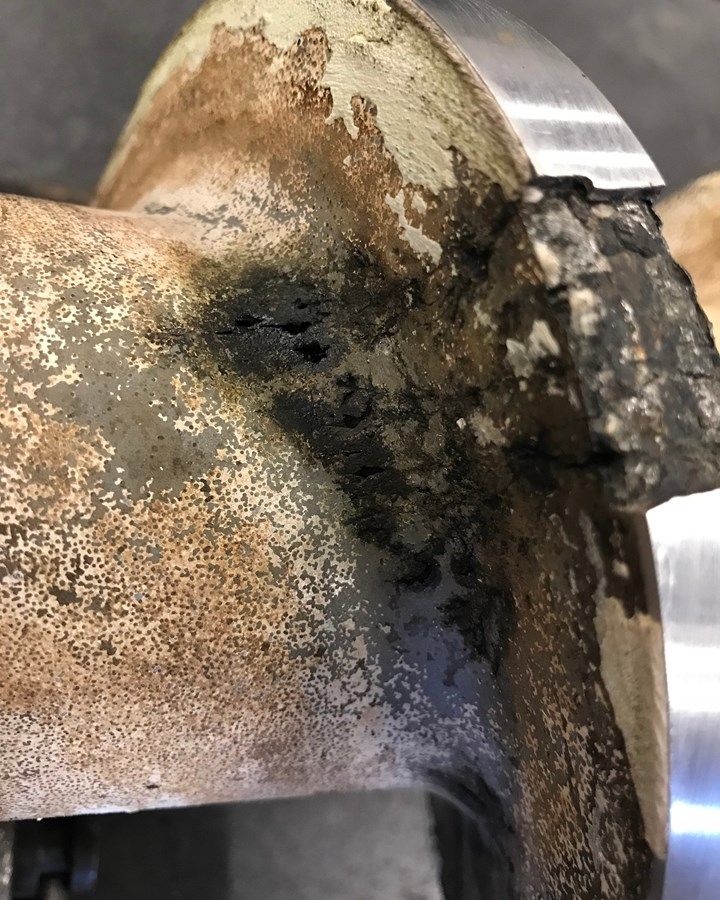
Extruder Screw Barrel Wear Problem
For companies with:
· Low production hours
· Small output requirements
· Frequent material changes
· Occasional extrusion production
the longer lifespan of a bimetallic screw barrel may not justify the additional investment.
A nitrided screw barrel can provide a better balance between:
· Equipment cost
· Production requirements
· Maintenance budget
The best choice is not always the most expensive option.
The best choice is the one that matches your actual working conditions.
Although bimetallic screw barrels are not necessary for every application, they become valuable in demanding extrusion environments.
If you experience:
· Frequent screw replacement
· Reduced extrusion output
· Increased maintenance frequency
· Unexpected production downtime
your current screw barrel material may not be suitable for your application.
A bimetallic solution can significantly improve wear resistance and extend service life.
Bimetallic screw barrels are recommended for applications involving:
· Glass-filled engineering plastics
· Highly filled PVC
· Recycled plastic extrusion
· Abrasive compounds
These materials require stronger protection against mechanical wear.
A worn screw barrel can lead to:
· Poor plasticizing performance
· Uneven material flow
· Output fluctuation
· Product quality problems
Upgrading the screw barrel material can help maintain more stable extrusion performance.
Instead of choosing only based on price, consider these factors:
| Selection Factor | Nitrided Screw Barrel | Bimetallic Screw Barrel |
|---|---|---|
| Initial Investment | Lower | Higher |
| Wear Resistance | Good | Excellent |
| Standard Plastics | Recommended | Usually unnecessary |
| Abrasive Materials | Limited | Recommended |
| Recycled Materials | Limited | Excellent |
| Long Production Hours | Depends on application | Better choice |
The correct screw barrel selection depends on:
· Plastic material
· Filler content
· Extrusion temperature
· Production hours
· Required service life
· Maintenance cost
A bimetallic screw barrel provides excellent wear resistance and is an ideal solution for demanding extrusion applications.
However, it is not automatically the best choice for every plastic extrusion line.
For standard materials and normal production conditions, a high-quality nitrided screw barrel can provide excellent performance and better cost efficiency.
For abrasive materials, recycled plastics, or applications with frequent wear problems, upgrading to a bimetallic screw barrel can reduce downtime and improve long-term production reliability.
The right screw barrel specification can help you reduce maintenance costs, improve production stability, and achieve better overall performance.
Not sure whether you need a bimetallic screw barrel or nitrided screw barrel?
Send us your:
· Extruder model
· Screw diameter
· Plastic material
· Production application
· Current wear problems
Our technical team can recommend a suitable screw barrel solution based on your actual extrusion conditions.
Contact us today for professional screw barrel selection support.


+86 15267878906

1306 W building , NB-IoT Industrial Park, No. 199 Changxing Road, Jiangbei, Ningbo.
 Languages
