 Languages
Extruder Specific Energy Consumption: What kWh per kg Tells You About Wear and Design
-
-
Extruder Specific Energy Consumption: What kWh per kg Tells You About Wear and Design
The most useful number on an extrusion line is the one nobody writes down — and it is not comparable between plants.
EXTRUDER SPECIFIC ENERGY CONSUMPTION · KWH PER KG · SPECIFIC MECHANICAL ENERGY · EXTRUSION ENERGY EFFICIENCY
-
1. One number that answers a question nobody asks
Plants measure output in kilograms per hour and power in kilowatts, then compare neither. Divide one by the other and you get specific energy consumption: kilowatt-hours per kilogram of product. It is the only figure on the line that combines what the machine does with what it costs, and it is almost never trended.
SEC = total electrical draw (kWh) ÷ output (kg). Include the motor, the heaters, the feeder, the cooling and the vacuum pump — a number that counts only the main drive will move for reasons that have nothing to do with the screw .
-
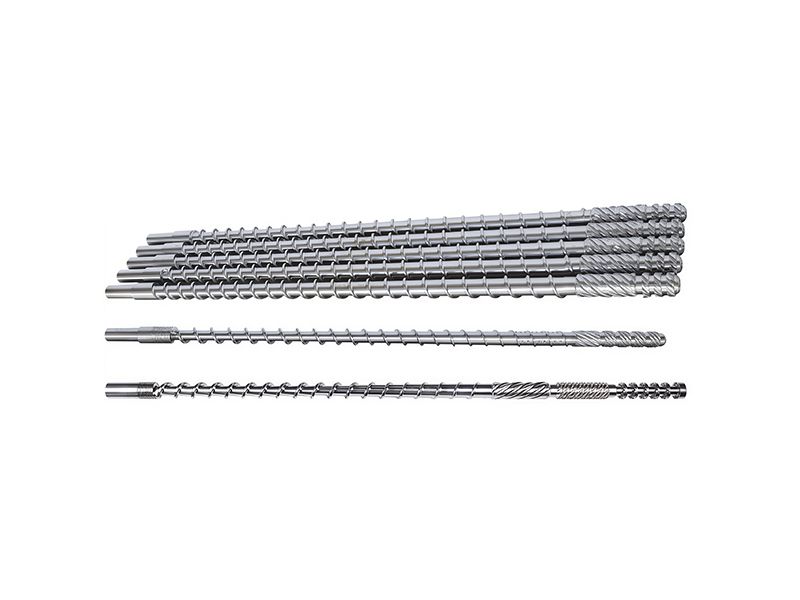
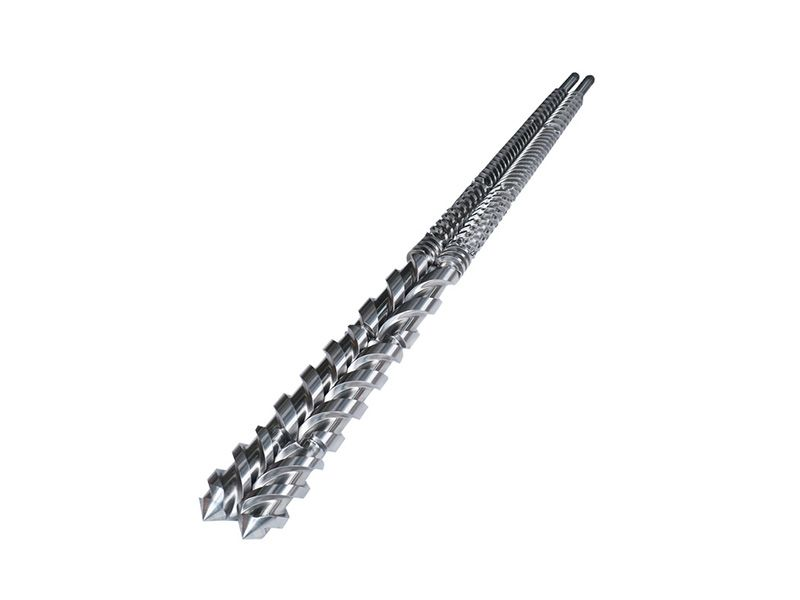
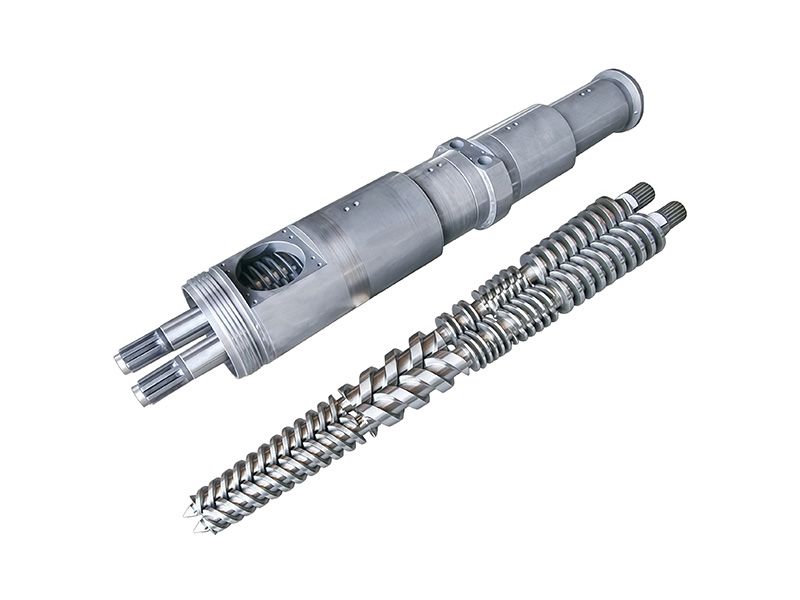
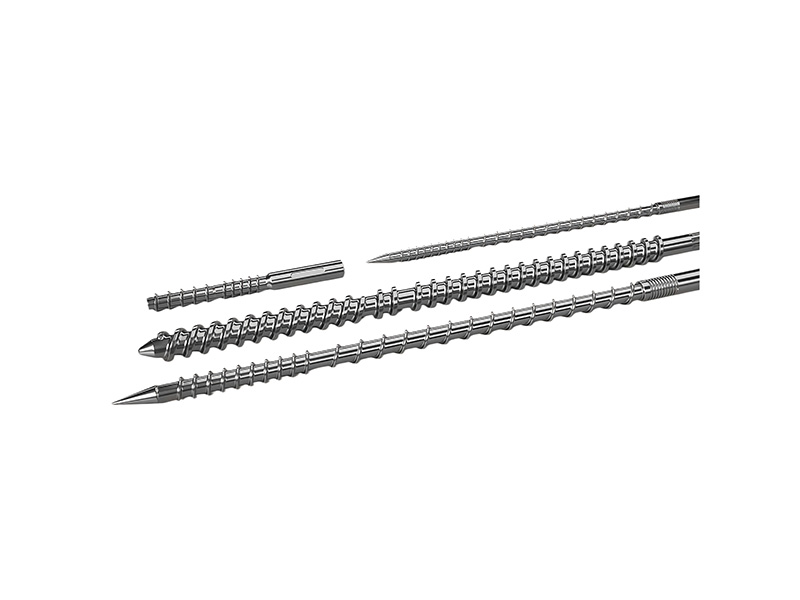
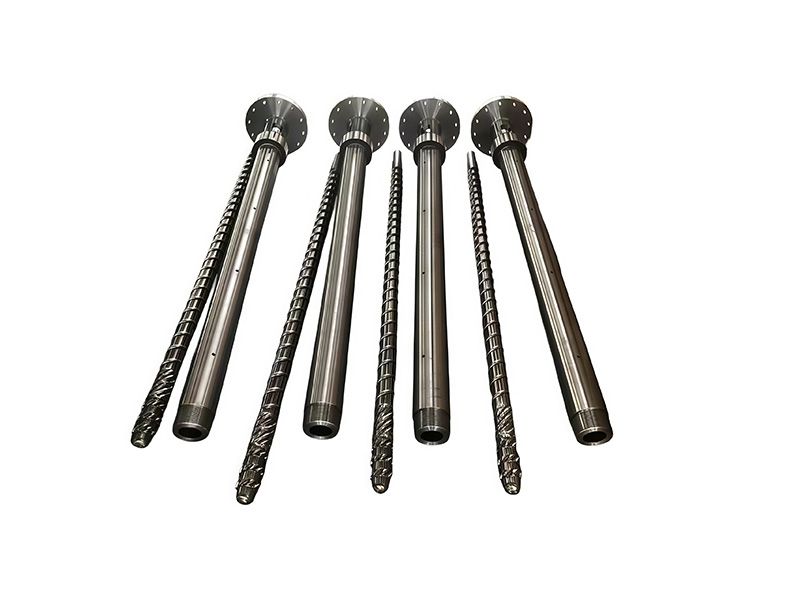
Extrusion screws of different geometries. Flight design, mixing sections and surface treatment all influence how much energy is needed to deliver a kilogram of melt.
-
KEY INSIGHT
SEC is comparable to itself over time, and to almost nothing else. A line that has drifted 12% in eighteen months is telling you something; a line that is 12% above a published benchmark is telling you almost nothing.The number also behaves differently by machine. A single screw spends most of its energy melting and pumping, while a compounding twin spends more of it mixing — so it sits higher on the same scale for a legitimate reason. Compare like with like, or a PVC pipe line will look efficient for reasons that have nothing to do with its screw.
-
2. How to measure it without buying anything
The measurement is a clamp meter and a stopwatch, plus the discipline to write the result down. The hard part is holding the conditions still, because SEC moves with output, melt temperature and material — so a comparison across two different products is meaningless.
- Same resin, same die, same screen pack, same temperature profile
- Steady state for at least twenty minutes before the reading
- Record screw rpm, output, head pressure and melt temperature alongside it
- Repeat at two or three output levels, not just at maximum
That record is the same one the no-teardown wear check asks for, which is convenient: the two diagnostics share a data set. If you already trend specific output, you are one division away from SEC.
The fields worth keeping are already listed in the PE process guide and the single screw selection note , and the single screw range describes what changes between machine types before you compare two lines at all.
-
3. Published benchmarks disagree, and that is the useful part
Search for a benchmark and you will find ranges that barely overlap. One source puts commodity compounding at 0.08–0.15 kWh/kg; another puts single-screw extrusion at 0.25–0.45. Both can be right, because the figures describe different products, different dies and different ways of drawing the system boundary.
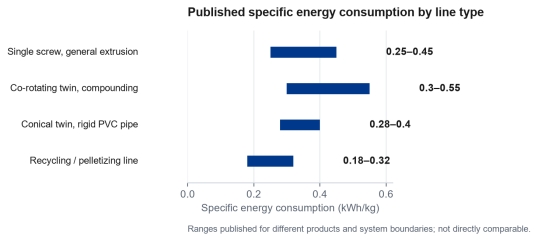
Line type Published range (kWh/kg) What is usually included Single screw, general extrusion 0.25–0.45 Motor, heaters, cooling, feeder Co-rotating twin, compounding 0.30–0.55 Motor, heaters, feeders, vacuum Conical twin, rigid PVC pipe 0.28–0.40 Motor, heaters, cooling, haul-off excluded Recycling / pelletizing line 0.18–0.32 Motor, heaters, cutter, water ring Published guidance in the United States treats anything above roughly 0.50 kWh/kg on a standard line as a retrofit candidate. That is a useful alarm line and a poor target, because a glass-filled compound in an intensive mixing duty legitimately sits near the top of its own range.
-
Published SEC ranges by line type. The bands overlap and the sources disagree — which is why this chart is a starting point for a conversation, not a procurement specification.
The comparison that does hold is between two constructions on the same line. A bimetallic barrel and a nitrided one running the same product are directly comparable, because everything except the alloy is held constant — which is the only clean way to put a price on a service interval.
-
4. What actually moves the number
Five things move SEC, and only one of them is the screw. Knowing which one is moving is the difference between an engineering decision and a shopping trip.
Lever How it moves SEC How to verify it is the cause Clearance and wear More leak-back per revolution, so more rpm for the same output Specific output (kg/h per rpm) trending down Screw geometry Poor melting forces heater compensation and extra residence time Melt temperature and heater duty rising together Drive and gearbox Lower mechanical efficiency, higher current for the same torque Motor current at matched load, gearbox temperature Heating and cooling Heat lost through uninsulated barrel, or cooling fighting heaters Heater duty at steady state, barrel surface temperature Die and screen pack Restriction converts drive power into heat, raising both pressure and temperature Head pressure and screen differential Process-side effects are easy to mistake for wear. Venting that no longer seals, a pelletizing line running its melt too hot, or a pipe barrel pushing against a restricted die all raise specific energy without any clearance change — see the vent-port checks , the transparent PVC pelletizing notes and the pipe barrel range before a part is ordered.
-
5. Rising SEC is usually a wear signal
This is the connection worth building a habit around. As the flight OD and the bore wear, the gap between them opens. Melt leaks back across the flight instead of moving forward, so the screw has to turn faster to deliver the same kilograms — and faster means more energy per kilogram, not less.
- Output holds steady while rpm climbs — the classic early signature
- Specific output falls before total output does
- Melt temperature drifts up because the extra work becomes heat
- Scrap and start-up losses rise before anyone declares a wear problem
The practical consequence: SEC often moves before the operator notices anything. It is a leading indicator, and the service-life reference gives you a rough expectation to compare against. When SEC and specific output move together, treat the pair as worn, and the replacement guide takes the decision from there.
-
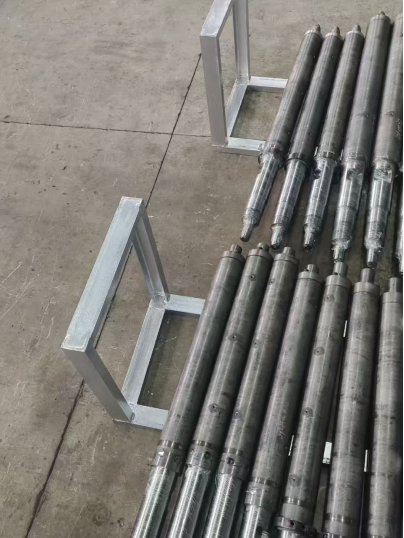
Screws on an outdoor rack awaiting dispatch. The working surface is the part that sets clearance, and clearance is what SEC actually measures over time.KEY INSIGHT
Almost every SEC argument on an extrusion line is really a clearance argument that has not been measured yet.Recycling lines show the effect most clearly, because the feedstock varies as well as the wear. The PET flake and regrind note and the high-CaCO3 compounding note both treat specific energy as a symptom to be explained rather than a target to be hit.
-
6. The drive side: efficiency you cannot inspect
A drive that has lost efficiency looks like a screw problem, because the symptom is the same: more amps for the same output. The difference is that a drive problem does not come with a worn flight.
- Compare motor current at a matched load, not at matched rpm
- Check gearbox temperature and oil condition — heat is lost efficiency
- Confirm the coupling is aligned; misalignment is a bearing and seal cost as well as a power cost
- Look at the belt or coupling condition before blaming the screw
The maintenance and gearbox guide covers the drive-end checks in order, and it is worth doing before a screw is ordered — a new screw in front of a tired gearbox changes nothing.
Drive efficiency also reflects how the machine was built. A high-speed single screw with a matched drive reaches its output at lower energy per kilogram than an oversized standard machine run slowly, which is the practical case for sizing on duty rather than on catalogue maximum.
-
7. Heaters, insulation and cooling
Heater duty is the most overlooked term in SEC, because it is invisible when it works. A barrel that needs 40% more heater power to hold the same setpoint is losing heat somewhere, or the screw is no longer generating the shear heat it used to.
- Uninsulated barrel surfaces radiate continuously; insulation pays back quickly
- A thermocouple reading low forces the zone to overheat — check it against a contact probe
- Cooling that runs continuously against a heater is a control fault, not an operating condition
- On heat-sensitive compounds, excess heater duty is also a degradation risk
For PVC in particular the balance is delicate — the PVC extrusion pages and the rigid versus flexible comparison set out why the same SEC figure means different things on two compounds.
Heat balance is also where construction earns its keep. An internal liner sleeve changes the thermal path through the barrel wall, and the how barrels are made note explains why the wall section matters to both heat transfer and stiffness.
-
8. Die, screen pack and back pressure
Restriction downstream is paid for upstream. A dirty screen pack raises head pressure, and the drive converts that into heat — so SEC climbs while the product may still look acceptable. This is one of the most common false wear signals, and the cheapest to rule out.
- Log the pressure differential across the screen pack, not just head pressure
- Change screens on differential, not on a calendar
- A die that has been polished or re-cut changes the baseline — re-baseline SEC after any die work
- Surging that follows a screen change is a filtration symptom, not a screw symptom
The surging diagnostic separates the two, and the barrier screw comparison covers the case where the die resistance is genuinely high and the screw has to be designed for it.
Film and sheet lines add a second variable, because the die and the cooling roll are inside the same energy boundary. A line that looks poor on specific energy may be losing it downstream of the screw — the film blowing and sheet ranges are specified with that boundary in mind, and a bimetallic screw moves the balance again.
-
9. Screw geometry: the lever you can actually change
If the first four levers are clean and SEC is still poor, geometry is the remaining explanation. Melting capacity, mixing intensity and residence time all show up as energy per kilogram, and they are set by L/D, compression profile and the mixing section.
- A screw that melts late forces heater compensation and raises total energy
- Excess mixing adds shear heat you then have to remove with cooling
- Grooved feed versus smooth bore changes the conveying efficiency materially
- Barrier sections trade mixing quality against pressure stability
Comparing constructions is the cheapest experiment: the bimetallic versus nitrided note sets out what a longer service interval does to lifetime SEC, and the PE design and temperature guide shows how much of the number is compound-specific. Where geometry has to change, custom screw design is the route; where it does not, a bimetallic single screw barrel may recover most of the loss.
-
1. One number that answers a question nobody asks
Plants measure output in kilograms per hour and power in kilowatts, then compare neither. Divide one by the other and you get specific energy consumption: kilowatt-hours per kilogram of product. It is the only figure on the line that combines what the machine does with what it costs, and it is almost never trended.
SEC = total electrical draw (kWh) ÷ output (kg). Include the motor, the heaters, the feeder, the cooling and the vacuum pump — a number that counts only the main drive will move for reasons that have nothing to do with the screw.
-
10. What to record, and what to do with it
A baseline taken on a healthy pair is worth more than any benchmark, because it is the only number that describes your machine. Record it once, properly, and then let the trend do the work.
- Resin and formulation, screw rpm, output kg/h, SEC kWh/kg
- Head pressure, screen differential, melt temperature
- Motor current and heater duty per zone
- Barrel surface temperature at two or three points
- Date, and the last maintenance intervention
Review it monthly. A single bad week means nothing; a monotonic drift over a quarter is a decision. Where the trend says the pair is worn, the wear measurements confirm it, and where the trend is flat but the cost is high, geometry is the place to look.
Finally, the commercial framing. SEC is the number that turns a component purchase into an operating-cost argument — and it is the reason a bimetallic barrel can be cheaper than a nitrided one over three years even though it costs more on the invoice. The alloy selection guide has the construction side; the PE , PP and PET pages cover the compound side. For a line where the number is persistently bad, the manufacturing and capacity pages show what a replacement involves.
Two more comparisons are worth keeping on file: the PVC pipe barrel case and the parallel twin PVC guide describe the same compound on two architectures, and the high-speed HDPE output case shows what happens when output is pushed to the surface-speed limit.
-
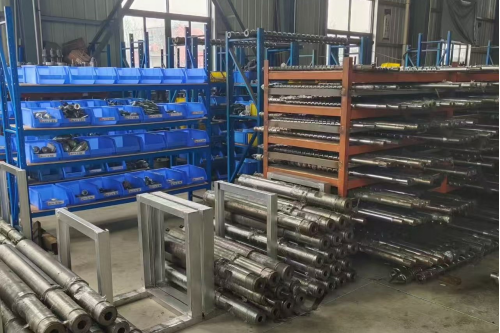
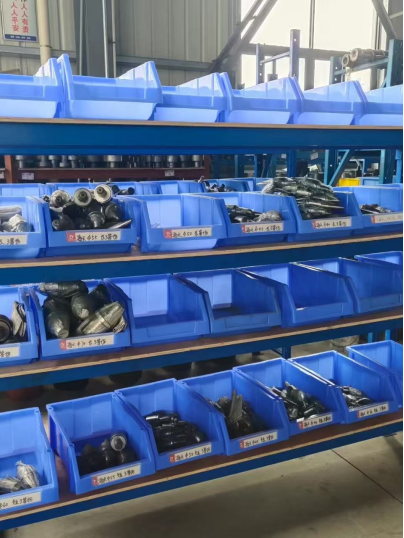
Screw tips, rings and small components held as spares. The consumable cost and the electricity cost move together — both are set by how fast the working surface wears.
None of this replaces a baseline, and the baseline is the cheapest item on the list. The maintenance routine is where the readings actually get taken, the residence-time arithmetic explains why one output can carry two different energy figures, and recycling granulation is the duty where the variance is largest.
One last note on compounds that are expensive per kilogram by design. WPC and SPC lines carry 50% filler or more, so their specific energy is high for a reason rather than by fault — compare them to themselves, not to a pipe line.
-
✔ Extruder Screw & Barrel Specialist | ✔ Specific Energy · Wear Diagnosis · Geometry Optimisation
✔ Bimetallic · Nitrided · Through-Hardened | ✔ Custom Design · Lifetime SEC Costing