A Practical Guide for PVC Pipe Machine Screw Barrel Selection and Replacement
A PVC pipe screw barrel must be selected around the actual pipe line, PVC formulation, output target, and installed extruder and not simply copied from a nominal size. For many rigid-PVC pipe lines, the target engineering question is whether the machine uses a conical twin screw barrel for PVC or a parallel twin screw barrel , because the two arrangements have different mechanical interfaces and processing characteristics.
The correct screw and barrel assembly should help the line convey and plasticize the PVC formulation steadily, maintain a workable torque and temperature window, and deliver consistent melt to the pipe die. It must also fit the original barrel zones, feed opening, screw ends, gearbox interface, heating and cooling layout, and die-side process.
This guide explains the information required to select a PVC pipe machine screw barrel, the difference between common extruder configurations, and the checks that should be completed before ordering a replacement.
PIPLL supports PVC pipe screw barrel selection by reviewing the extruder layout, PVC formulation, output target, and replacement measurements before a specification is prepared.
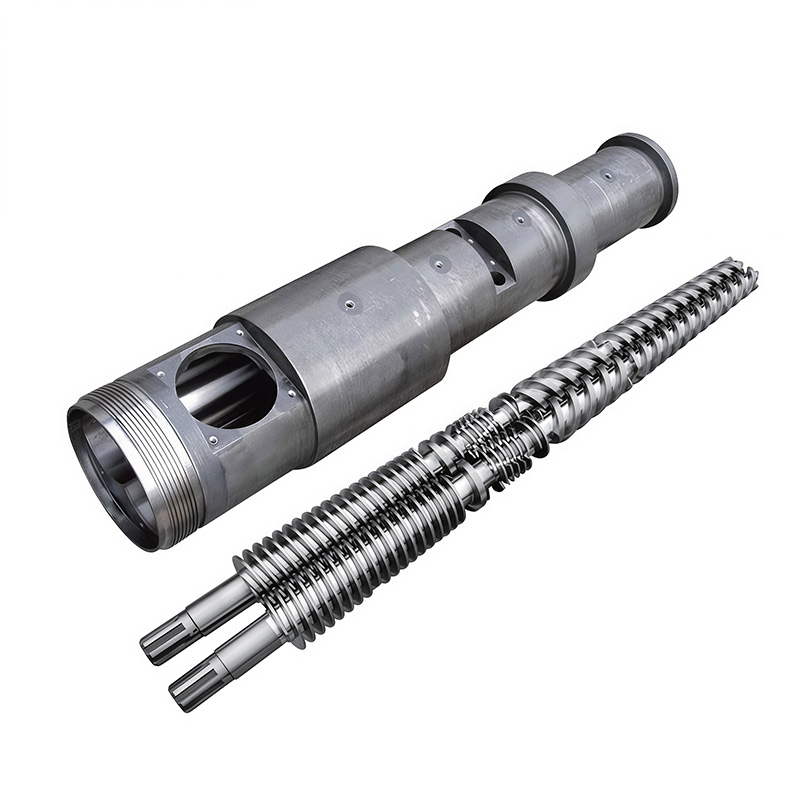
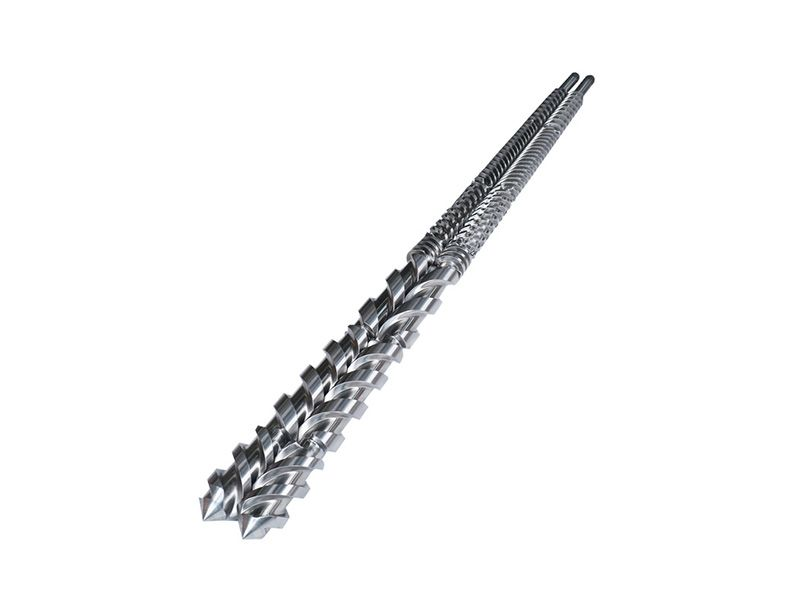
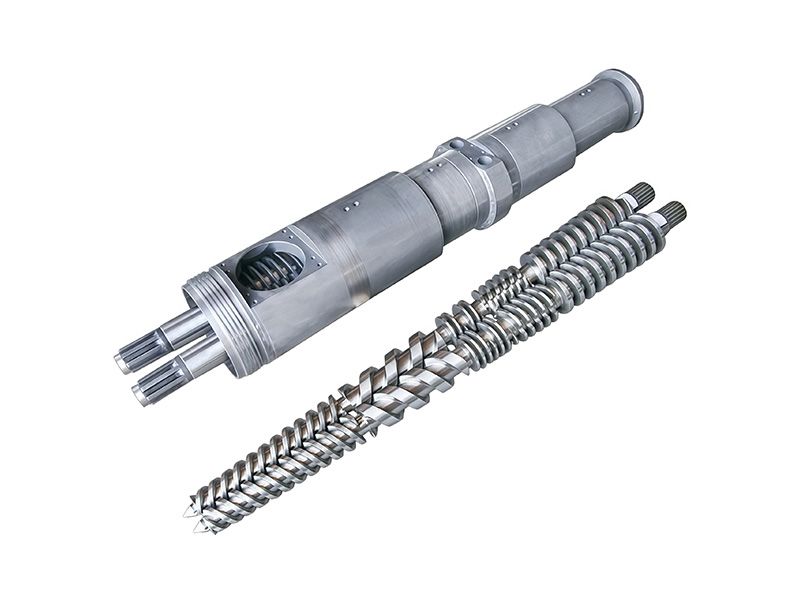
Figure 1. A conical twin screw and barrel assembly for PVC processing. Final dimensions and material choices must match the installed pipe extruder and formulation.
Rigid PVC pipe formulations are heat sensitive and may contain stabilizers, lubricants, calcium carbonate, pigments, regrind, and other modifiers. The formulation, not only the PVC label, affects friction, plasticization, torque behavior, corrosion exposure, and wear. A screw and barrel that performs acceptably with one compound may need review when the filler level, stabilizer system, pipe size, or output target changes.
The extruder is one part of a complete pipe production system. Feeding, temperature control, die design, vacuum calibration, cooling, haul-off, cutting, and wall-thickness control also influence production stability. A component replacement should therefore begin with a clear account of the actual issue and the full machine configuration.
A PVC pipe screw barrel for extrusion must reproduce the architecture of the installed machine. The most common starting point is to identify whether the equipment uses a conical twin-screw, parallel twin-screw, or single-screw arrangement. This cannot be confirmed by screw diameter alone.
For a PIPLL PVC pipe screw barrel for extrusion, the original configuration and verified interfaces are used to confirm whether the replacement is suitable for the installed line.
| Configuration | Typical Selection Focus | Data Needed Before Replacement |
|---|---|---|
| Conical twin screw | PVC formulation, cone geometry, torque condition, plasticization behavior, pipe range, and output target. | Large and small screw diameters, cone length, center distance, barrel zones, screw ends, and gearbox interface. |
| Parallel twin screw | Machine center distance, screw-pair geometry, pressure behavior, formulation, output, and process stability. | Screw diameter, center distance, length, barrel bores, zones, feed opening, and drive-end dimensions. |
| Single screw | Pipe resin grade, screw profile, melt delivery, wear condition, die requirement, and output range. | Screw diameter, L/D, barrel bore, feed section, heating/cooling zones, and screw-end connection. |
The existing machine design sets the non-negotiable mechanical framework. A conical screw barrel for PVC pipes extrusion is not interchangeable with a parallel assembly, and neither should be substituted into a single-screw line without a complete extruder redesign.
PVC processing can place both wear and corrosion demands on the screw and barrel. The appropriate material and surface treatment depend on the compound, filler percentage, operating temperature, maintenance history, and required service interval. The purpose of a material upgrade is to address an identified processing duty—not simply to select a more expensive specification.
When wear is moderate and the formulation is controlled, a conventional treated solution may be appropriate. When the line processes high mineral loading, recycled content, or has a repeated pattern of bore wear, an alloy-lined or other wear-resistant barrel construction may deserve review. The mating screw condition should be assessed at the same time because clearance depends on both components.
PIPLL can review whether a conical screw barrel for PVC pipes extrusion needs a conventional treated construction or a more wear-resistant barrel option for the actual compound and service duty.
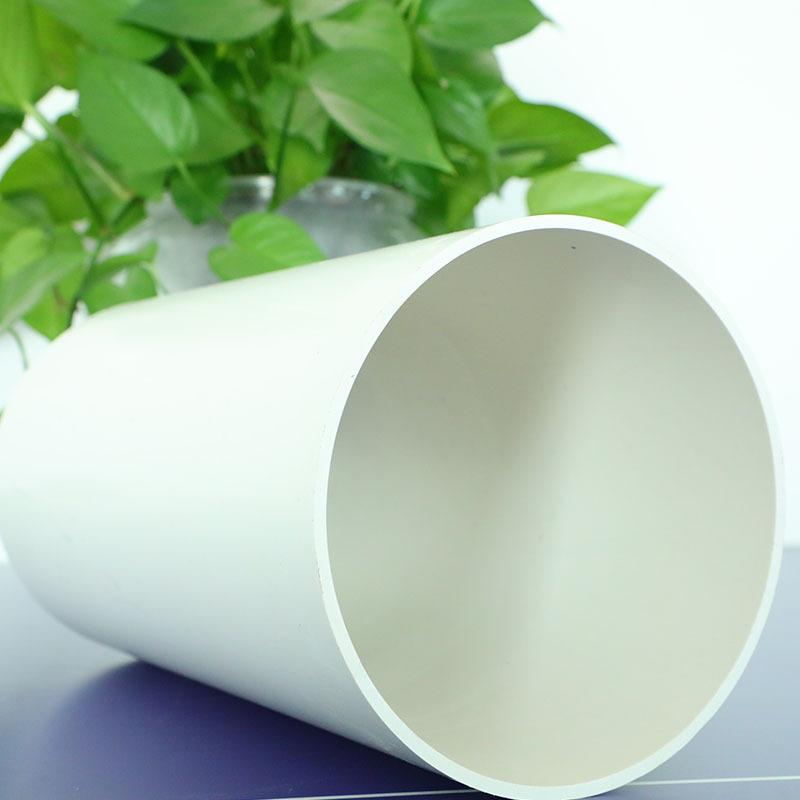
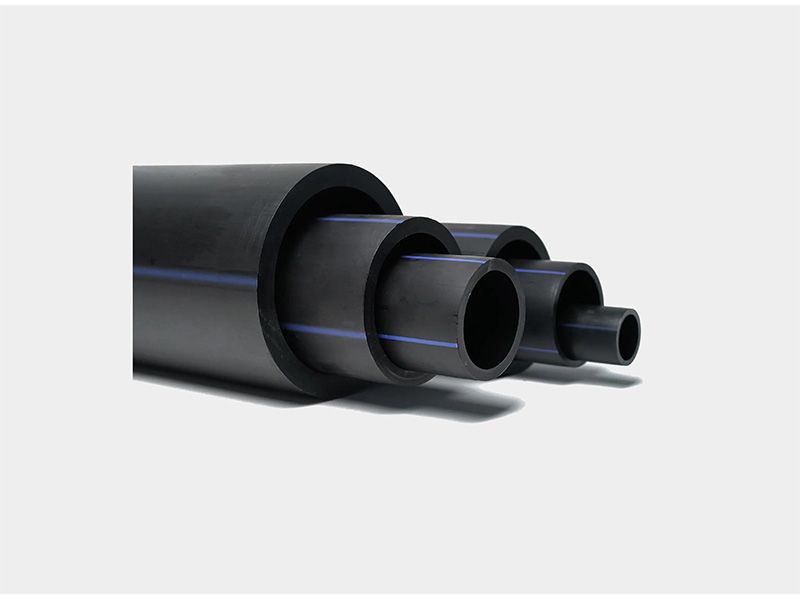
Figure 2. PVC pipe application example. Pipe diameter, wall thickness, and surface requirements provide essential context for screw and barrel selection.
State the pipe type, diameter range, wall thickness range, die arrangement, target output, and normal running hours. The production target helps determine the actual conveying and pressure demand, rather than relying on a general "PVC pipe" description.
Describe the PVC resin grade, calcium carbonate or other filler level, stabilizer and lubricant system where known, pigment, regrind practice, and any recycled content. This information gives context for wear, corrosion, heat sensitivity, and the expected process window.
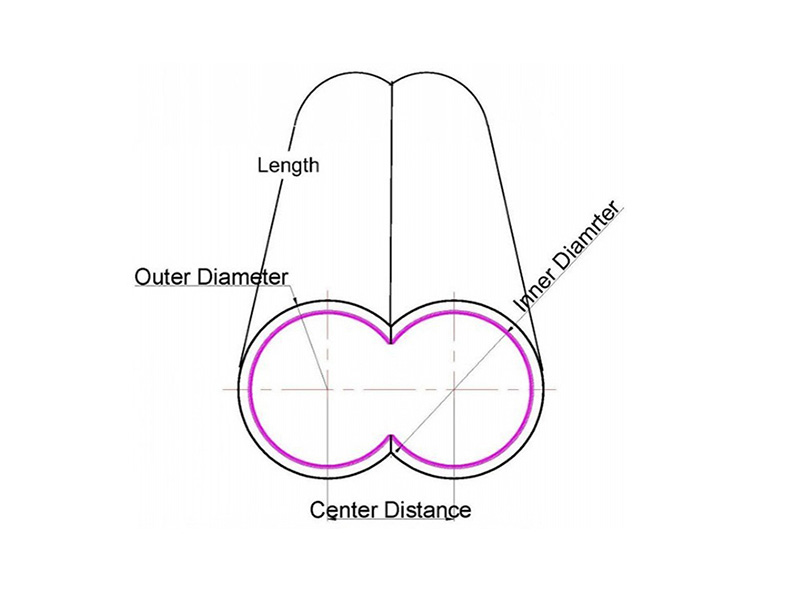
Provide the extruder manufacturer and model, original drawing where available, screw diameter or diameters, total length, center distance for twin screws, barrel zones, feed opening, heating and cooling layout, drive-end connection, and gearbox details. Clear photos of the machine nameplate and old components are useful when the drawing is unavailable.
For a PIPLL PVC pipe machine screw barrel review, clear machine photos and accurate dimensions are particularly useful when the original drawing is unavailable.
Measure screw flight diameter and barrel bore high-pressure areas. Record output, screw speed, melt pressure, temperature settings, torque behavior, and the visible pipe issue before concluding that a replacement is required.
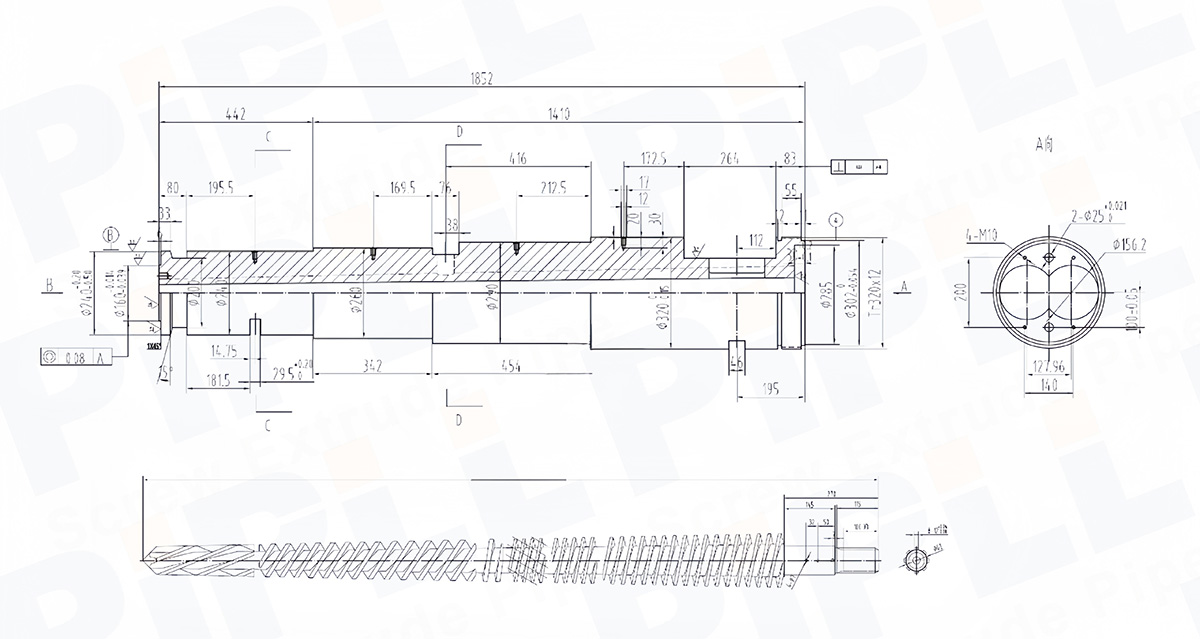
Figure 3. Example screw and barrel drawing with overall dimensions, ports, and connection details. Replacement dimensions must be confirmed against the specific extruder.
These often, or process settings. Review those factors with the screw and barrel condition, calibration, cooling, lubrication, and process adjustments. From raw materials to die condition, many variables affect the pipe, so the replacement decision is based on evidence rather than a single visible symptom.
A PVC pipe screw barrel is a machine-specific and formulation-specific component. The best replacement starts by confirming the extruder architecture, then matching the dimensions, interfaces, material duty, and screw geometry to the actual PVC compound and pipe production target.
Before ordering, provide the drawing or verified measurements, machine details, formulation information, output data, and wear observations. This allows the replacement proposal to address both installation fit and the production condition that prompted the project.
PIPLL uses these confirmed details to review a PVC pipe screw barrel replacement against the pipe application, machine connection, formulation, and operating target.
Support | PIPLL | Screw and Barrel Solutions
PIPLL supplies custom screw and barrel solutions for Plastic Extrusion and polymer processing applications. For PVC, PE, PP, PET, and other polymer processing applications.


+86 15267878906

1306 W building , NB-IoT Industrial Park, No. 199 Changxing Road, Jiangbei, Ningbo.
 Languages
