PE Polyethylene Extrusion Process Guide

2026-09-30

  • A Guide to PE Grades Screw Barrel Selection and Process Stability

  • A PE polyethylene extrusion project begins with the finished product and resin grade, then confirms whether the installed single screw barrel can provide the required melt quality and output. For pipe, film, profile, or recycled-material duty, a high speed single extruder screw barrel should be specified from verified line data rather than a nominal diameter or a generic PE label.

    Polyethylene is processed in several grades with different density, melt-flow behavior, stiffness, and application demands. HDPE, LDPE, and LLDPE do not behave as interchangeable materials on an extrusion line. The right process review combines the resin data sheet, product dimensions, output target, die and downstream configuration, and the actual condition of the screw and barrel.

    This guide explains what PE polyethylene extrusion includes, how PE grades influence pipe and film processing, which screw barrel data matters, and how to document common extrusion symptoms before requesting a replacement component or process review.

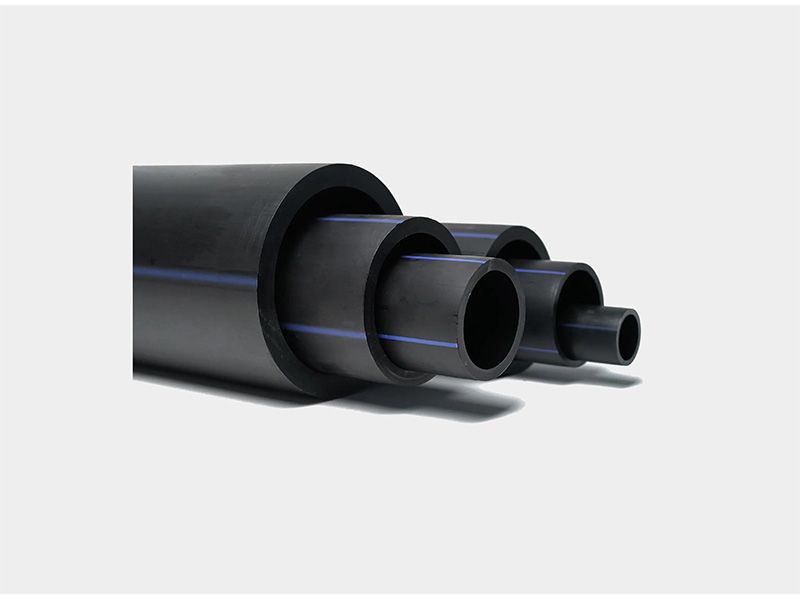
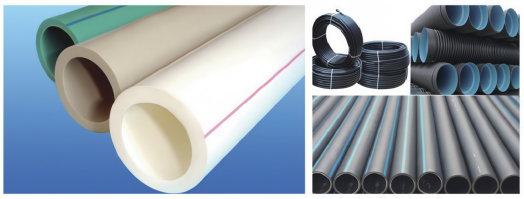
  • Figure 1. PE pipe products illustrate one polyethylene extrusion application. Product dimensions, grade, pressure class, and downstream requirements should be defined before the screw barrel is selected.

  • What Is PE Polyethylene Extrusion
    PE polyethylene extrusion is a continuous process that turns polyethylene resin into products such as pipe, film, sheet, profile, tubing, and coating. Pellets or prepared feed enter the extruder, the screw conveys and melts the material, the die forms the required shape, and downstream equipment cools, sizes, winds, or cuts the product. Each application has a different balance of melt quality, pressure stability, cooling, and line speed.

    LDPE HDPE and LLDPE Need Different Process Reviews
    PE material familyTypical process tendencyWhat to confirm before selection
    HDPEOften used where stiffness and pipe or profile performance are important.Grade, pipe or profile dimensions, output, pressure trend, cooling capacity, and downstream puller data
    LDPEOften selected for flexible film and coating applications.Film structure, thickness, die type, frost-line or cooling observations, and winding requirement
    LLDPEFrequently used in film structures and blends where toughness and process response must be managed.Blend ratio, film gauge, additives, die system, output, and observed bubble or web stability

  • The resin data sheet and the finished-product specification should guide the process setup. A nominal PE extrusion temperature guide may be useful only as a starting reference from the resin supplier. Actual barrel zones, die temperature, screw speed, melt pressure, and cooling settings must be confirmed on the installed line and for the exact grade.

    PE Pipe Extrusion Process
    A PE pipe extrusion process needs a stable material feed, uniform melt delivery, controlled die flow, effective sizing and cooling, and coordinated puller and cutting or coiling equipment. Pipe diameter, wall thickness, grade, stripe or color requirement, and intended service condition change the line review. A screw that suits one HDPE pipe size or output target may not be the right profile for another line.
    · Confirm resin grade, pipe diameter, SDR or wall target, color or stripe requirement, and output target.
    · Record screw speed, melt pressure trend, barrel and die temperatures, vacuum or sizing conditions, cooling-water condition, and haul-off speed.
    · Measure wall-thickness variation and ovality at defined points rather than relying only on a visual judgment.
    · When output becomes unstable, compare the current condition with the last stable production record before changing the screw, die, or downstream settings.

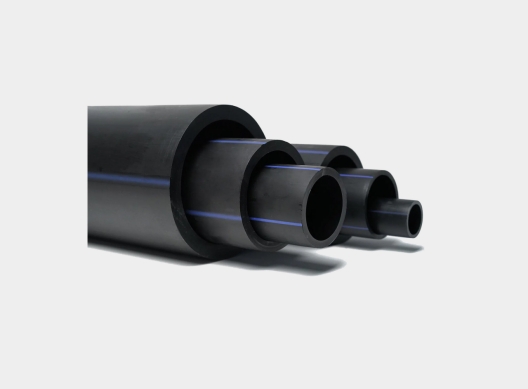
  • Figure 2. Pipe products and coiled PE tubing demonstrate the range of pipe and tubing formats that can require different polyethylene extrusion settings.

  • PE Film Extrusion Process
    A PE film extrusion process may use blown-film or flat-film equipment. Film thickness, width, layer structure, blend composition, die system, cooling, and winding all affect the operating window. Film producers should distinguish between a melt-delivery issue and a downstream handling issue. Gauge variation, melt fracture, gels, wrinkles, and winding defects can originate at different points in the process.
    For an effective review, document the exact defect, where it first appears, the resin lot and additive system, screen-change history, pressure trend, output, and any change made immediately before the issue began. This gives the line team and screw barrel supplier evidence to assess whether the problem is related to material, filtration, screw/barrel condition, die condition, cooling, or winding.

    PE Extrusion Screw Design and Barrel Matching
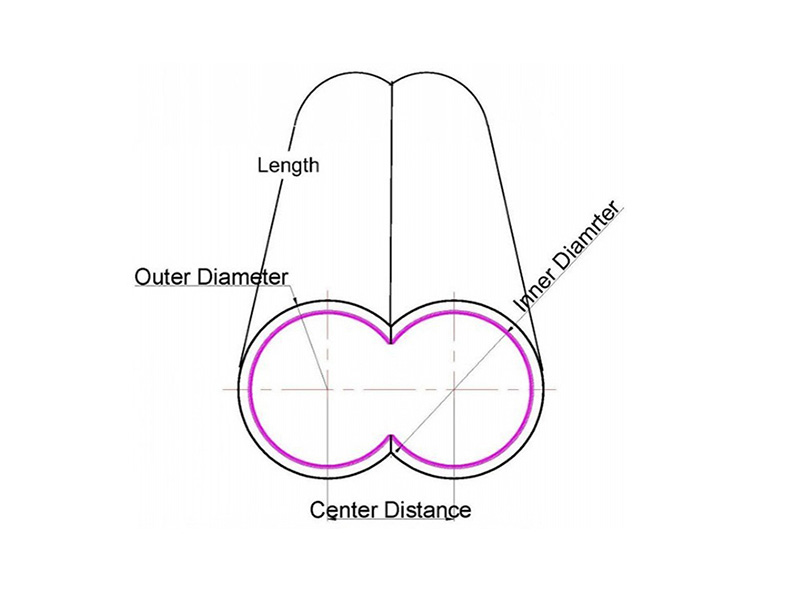
    PE extrusion screw design is more than an L D ratio or compression-ratio label. The installed machine determines diameter, effective length, barrel-zone arrangement, feed opening, drive connection, and allowable operating range. The PE grade and product define the required conveying, melting, mixing, and pressure behavior. A replacement screw must match the machine interfaces before it can be evaluated for any performance change.
    If the project aims to raise output or use a different grade or blend, provide the current process record and describe the desired result. A qualified review can then distinguish a direct replacement from a revised profile, a different surface solution, or a full screw-and-barrel replacement. For abrasive recycled streams or mineral-filled formulations, measured wear evidence is particularly important.

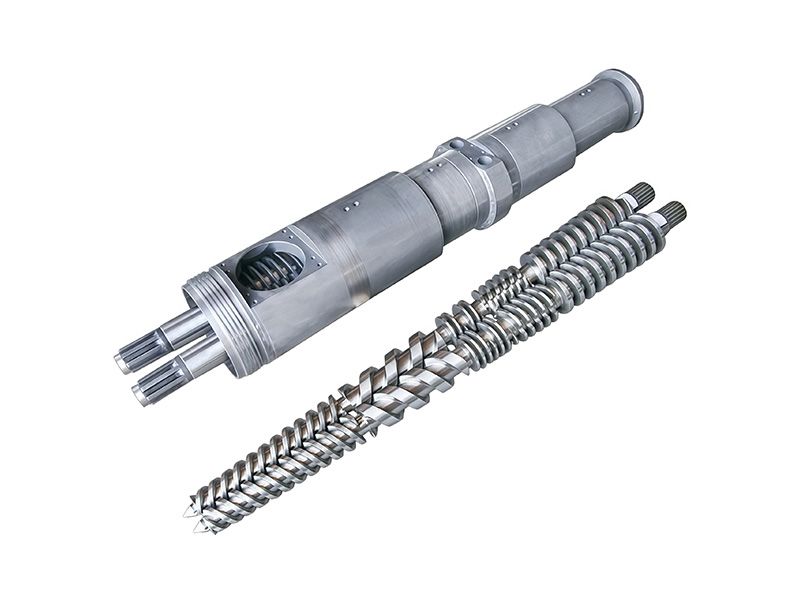
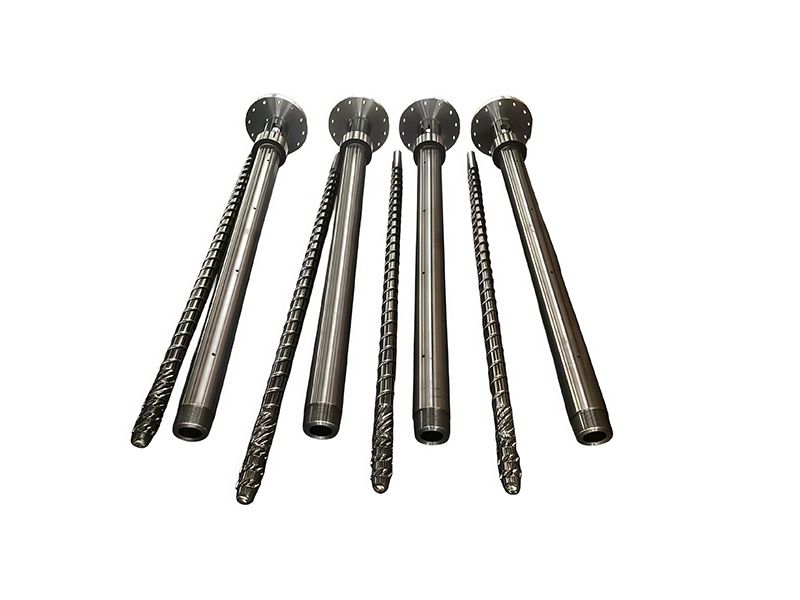
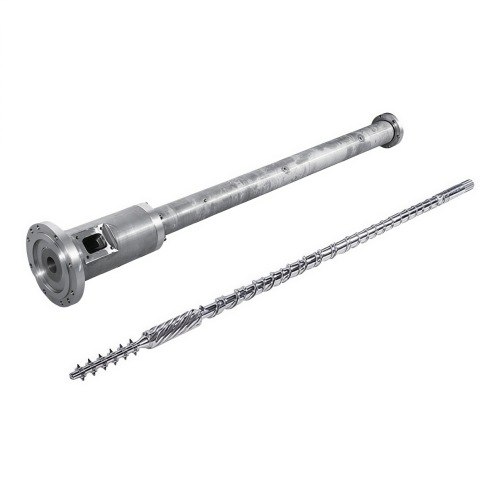
  • Figure 3. A single screw and barrel assembly for pipe-oriented extrusion. The component geometry, feed opening, barrel zones, and drive-end interface must match the installed PE line.

  • Polyethylene Extrusion Problems and Solutions
    Observed symptomFirst checks

    Useful evidence for a technical review

    Unstable output or pressureResin consistency, feed condition, screen condition, screw speed, and recent setting changes.Trend record, material lot, screen-change history, and before-after settings
    Pipe wall variation or ovalityDie centering, sizing and cooling, haul-off coordination, and melt stability.Measured wall profile, line speed, pressure trend, and cooling record
    Film gauge variation or wrinklesDie condition, cooling, web path, nip or winding condition, and material consistency.Gauge map, defect location, photos, and operating record
    Repeated wear or scoringScrew flight condition, barrel bore, contaminants, filler level, and running hours.Measurements, photos, formulation details, and replacement history

  • PE Polyethylene Extrusion FAQ
    What is polyethylene extrusion? It is the continuous processing of PE resin into products such as pipe, film, sheet, profile, tubing, and coating through an extruder, die, and downstream system.
    Which PE grade is used for extrusion? The right grade depends on the product and required performance. HDPE, LDPE, and LLDPE have different processing behavior, so provide the grade data sheet and product specification before changing equipment settings or screw geometry.
    How should a PE extrusion screw be selected? Confirm the installed machine geometry first, then provide the resin grade, product, output target, screw speed, pressure trend, temperature profile, and any wear or quality evidence.

    Information to Send for a PE Extrusion Inquiry
    · PE grade and data sheet, including HDPE, LDPE, LLDPE, blend, recycled content, color, and additive details
    · Finished product type: pipe, film, sheet, profile, tubing, or coating, with dimensions and quality requirement
    · Extruder make and model, screw diameter, L D ratio, barrel zones, feed opening, die connection, and drive-end details
    · Current output, screw speed, melt pressure, temperature profile, line speed, and cooling or haul-off conditions
    · Photos and measurements of screw flights, barrel bore, scoring, corrosion, or other damage, plus a description of the required improvement

    Conclusion
    PE polyethylene extrusion is best managed from the exact grade, product specification, and actual line data. Pipe and film each add different downstream controls, while the screw and barrel must match the installed extruder before any performance revision is considered. A complete material, machine, process, and wear record gives the supplier a sound basis for a PE replacement or customization proposal.

    Related PIPLL Pages
    · PE Polyethylene Extrusion - For PIPLL PE material and extrusion-solution information.
    · High Speed Single Extruder Screw Barrel - For high-output single-screw extrusion applications.
    · Bimetallic Screw Barrel - For wear-resistant barrel options when the process duty supports them.
    · Custom Extruder Screws and Barrels - For drawing-based and measurement-based PE extrusion projects.

    Technical and Sales Contact
    Young | PIPLL | Screw and Barrel Solutions for Plastic Extrusion
    Supporting extrusion manufacturers with customized screw and barrel solutions for PVC, PE, PP, PET, and other polymer processing applications.
    Email: Young@pipll.com | WhatsApp: +86 150 5840 4692 | Website: www.pipll.com

Copyright © PIPLL All rights reserved Designed & SEO by www.followala.com Sitemap | XML

One-stop PVC Chemicals Solution | PVC stabilizer