A practical guide to wear mechanisms, hardware selection and process stability in recyclate extrusion
PET Flake Extrusion | Regrind Extrusion | Extruder Wear Protection | Recyclate Processing
The growing use of rPET, PCR and post-industrial regrind is changing the operating environment inside recycling and extrusion lines. Recycled feedstocks can reduce raw-material cost and support circular-economy goals, but they are often less consistent than virgin resin.
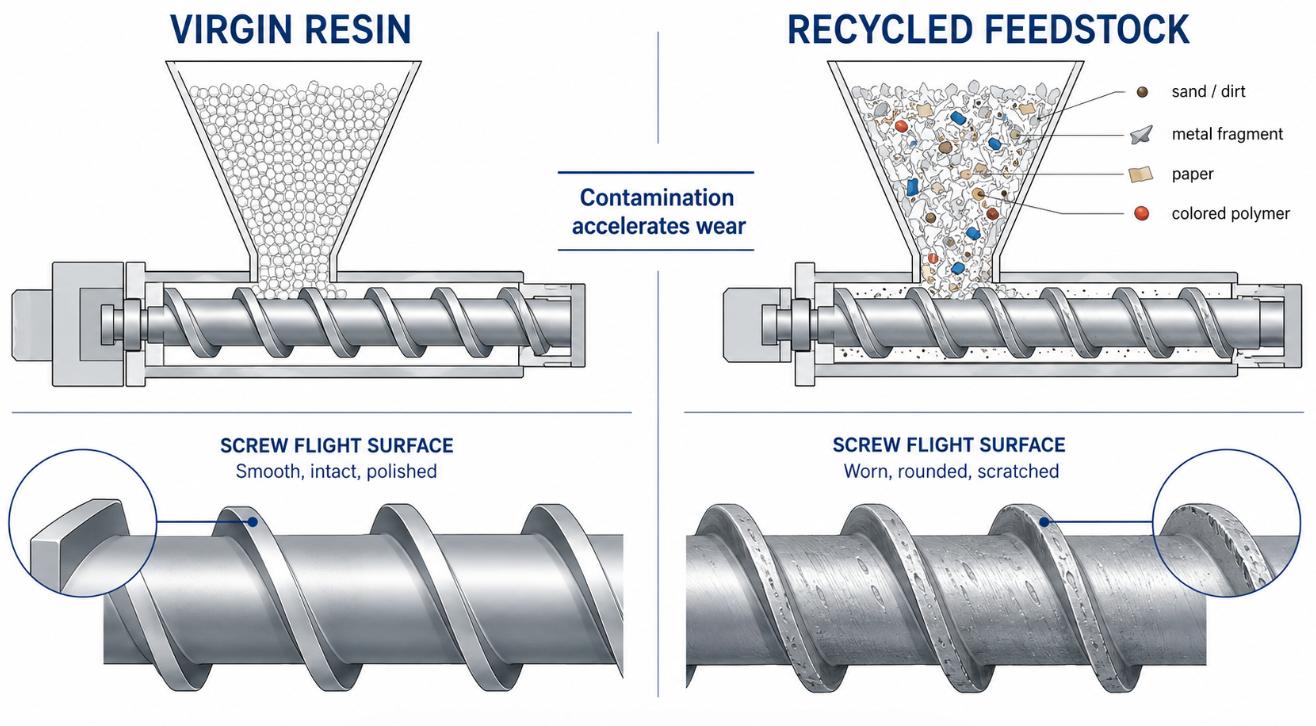
Bulk density, particle size, moisture, melt flow and contamination may vary from batch to batch. That variability places additional demands on the screw and barrel , especially when mineral dust, metal fragments or other hard particles enter the process.
KEY INSIGHT:Recyclate wear is rarely caused by one mechanism. Abrasion, moisture-related degradation, |
Washed flakes and rigid regrind may still contain mineral dust, silica, glass, aluminum fragments, pigments and other hard particles. When these particles enter the clearance between screw flight and barrel wall, they can accelerate abrasive wear. The risk increases with contamination, throughput, screw speed and operating hours.
PET is hygroscopic. Inadequate drying can promote hydrolytic degradation during processing, reducing molecular weight and intrinsic viscosity. Degraded material can also contribute to unstable processing conditions and, depending on the formulation and contaminants, chemical attack on hardware.
Bottle flakes are light and irregular compared with pellets. Poor feeding, bridging and inconsistent solids conveying can create pressure and temperature fluctuations. A suitable feed section and screw geometry are therefore important parts of wear control.
| Feedstock | Typical wear risks | Engineering focus |
| Clean virgin PET | Thermal load; relatively low abrasion | Temperature control and appropriate alloy selection |
| Washed PET flakes | Abrasive fines; contamination; moisture-related degradation | Drying, feed stability and wear-resistant hardware |
| Rigid PCR / industrial regrind | Particle abrasion; variable contamination | Heavy-duty metallurgy and geometry matched to feedstock |
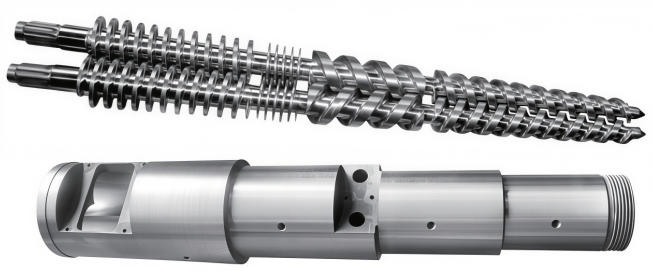
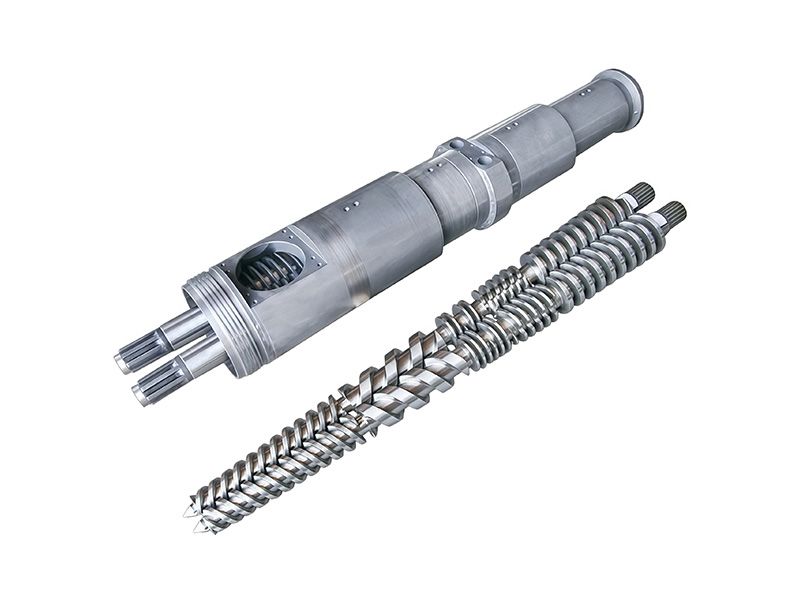
For abrasive recyclate applications, a bimetallic barrel with a purpose-selected alloy liner can provide substantially greater wear resistance than conventional nitrided hardware. Alloy grade, liner thickness and manufacturing route should be selected according to the actual feedstock and duty cycle.
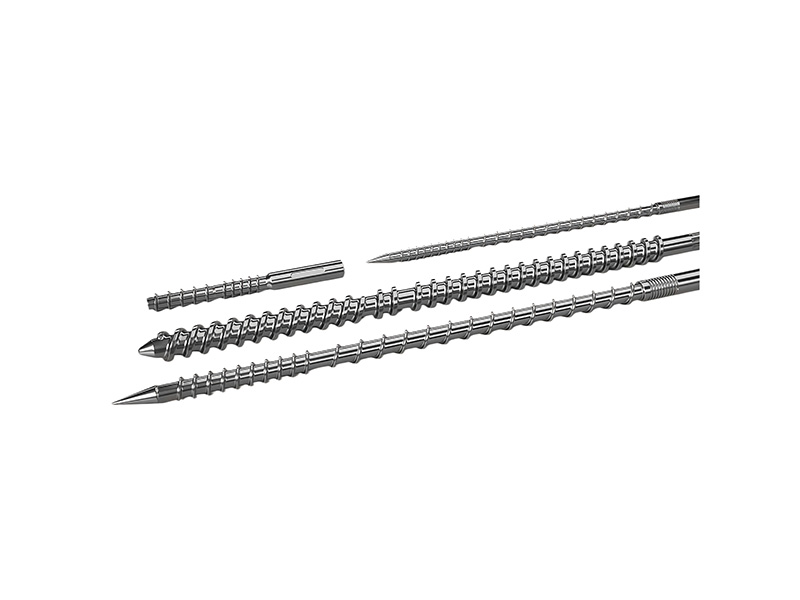
The screw flight land is directly exposed to abrasive material and barrel clearance. PTA welding, laser cladding or other hard-facing technologies can reinforce critical areas. The deposited alloy should be matched to the application, followed by precision machining and inspection.
A screw designed for virgin resin is not automatically optimal for flakes or regrind. Feed-zone conveying, melting capacity, mixing intensity, compression and devolatilization should be evaluated together.
> Dry PET flakes to the moisture specification required by the process.
> Control contamination at sorting, washing and filtration stages.
> Monitor melt pressure, motor load, temperature and throughput for changes that may indicate wear.
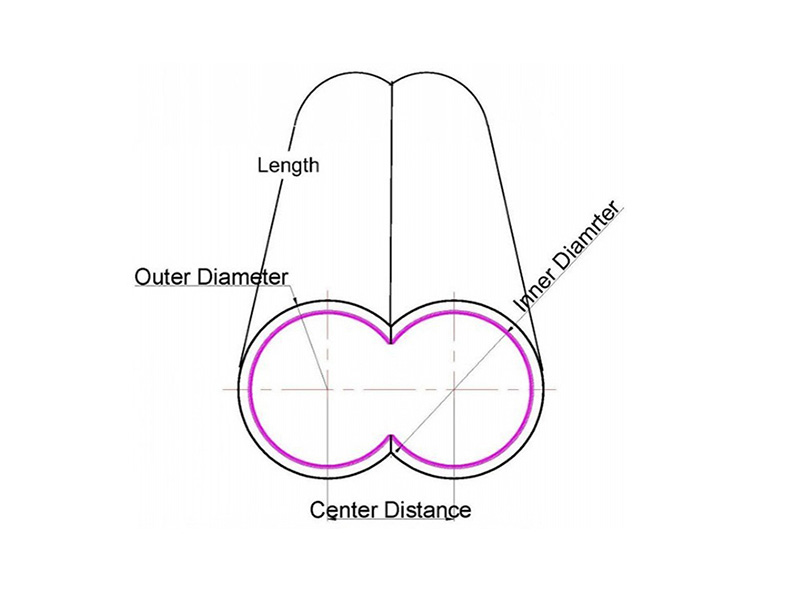
> Inspect screw flight height, barrel internal dimensions and clearances during planned maintenance.
> Select metallurgy based on actual abrasive and corrosive conditions rather than using one material for every recycling application.
1. Material: PET, PP, PE, ABS or mixed recyclate?
2. Feedstock: flakes, pellets, regrind or a blend?
3. Contamination: mineral, glass, metal, pigment, filler or unknown?
4. Moisture: actual incoming moisture and drying conditions?
5. Operating conditions: throughput, screw speed, melt temperature and pressure?
6. Current hardware: material grade, nitriding depth, liner alloy, hard-facing and measured wear?
7. OEM machine data: model, screw diameter, L/D, drawing and critical dimensions?
This information makes it possible to recommend a realistic screw and barrel configuration instead of simply
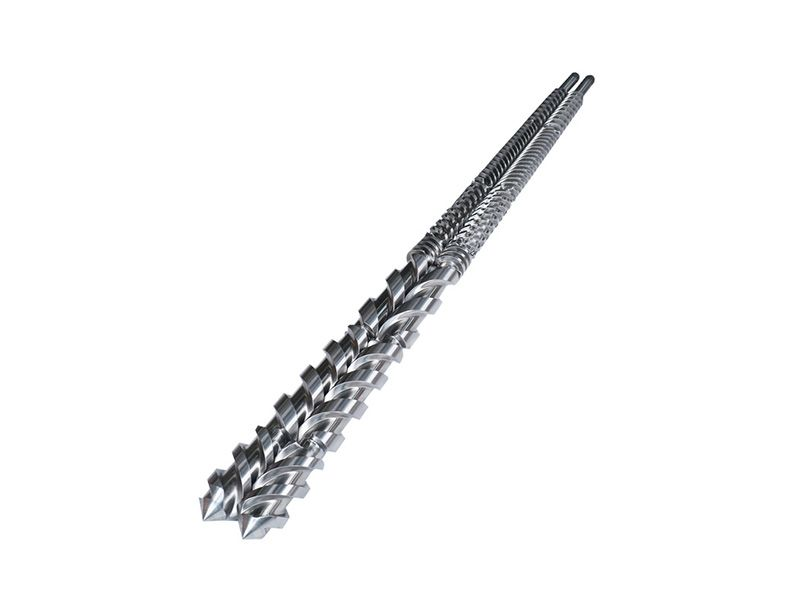
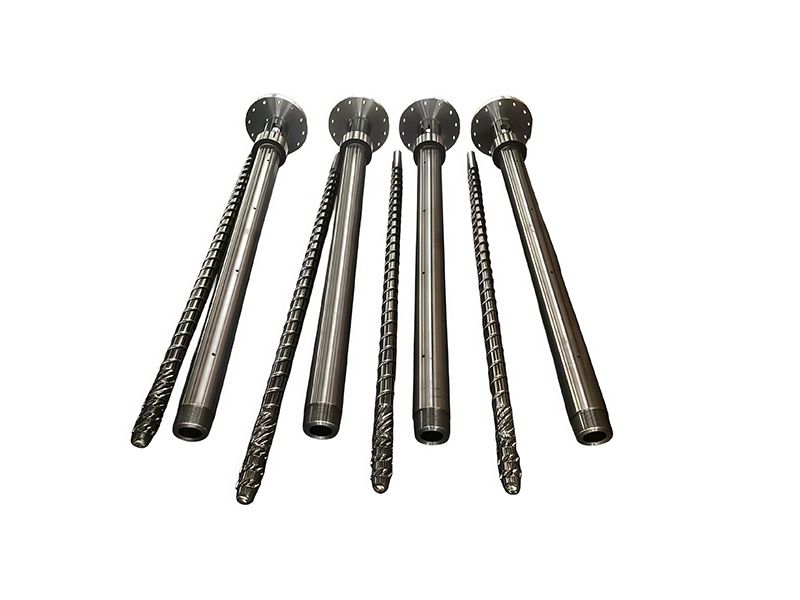
PIPLL manufactures replacement screw and barrel assemblies for extrusion and recycling applications. We can review OEM drawings, worn-part measurements and operating conditions to recommend suitable metallurgy, flight geometry and barrel protection.
> Custom screw and barrel assemblies for recycling and extrusion lines
> Bimetallic barrel solutions for abrasive service
> Hard-faced and wear-resistant screw flights
> Dimensional inspection and OEM-fit verification
> Engineering review based on polymer, filler, recyclate and operating conditions
Eric Dong | Co-founder | eric@pipll.com | WhatsApp: +86-15267878906 | www.pipll.com


+86 15267878906

1306 W building , NB-IoT Industrial Park, No. 199 Changxing Road, Jiangbei, Ningbo.
 Languages