Can Rigid PVC and Flexible PVC Share the Same Extruder Barrel

2026-09-30

  • A practical guide to material carryover, purging, barrel condition, and changeover decisions

  • Rigid PVC and flexible PVC are both based on PVC, but they do not behave like the same process material. The practical question is not simply whether one barrel can physically run both materials. It is whether the formulation, screw design, temperature profile, cleaning discipline, and final-product requirements allow the changeover without unacceptable quality risk.

    For many plants, the honest answer is: sometimes, but not automatically. A shared single screw barrel for PVC may be workable for controlled, low-sensitivity applications. It becomes much less attractive when a flexible PVC run is followed by transparent, white, light-coloured, high-gloss, regulated, or odour-sensitive rigid PVC extrusion.

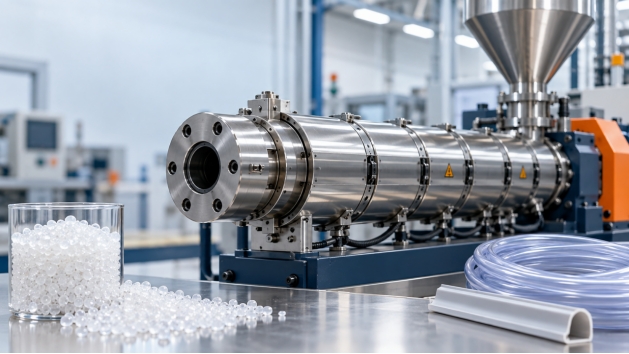
  • Figure 1. Generic PVC extrusion illustration for this article. This is an illustrative visual, not a customer site or product claim.

  • Rigid PVC and Flexible PVC Are Not the Same Process Material
    PVC becomes flexible through the use of plasticisers and may include other formulation changes for the desired softness, flexibility, colour, weathering, electrical, or processing performance. Rigid PVC is typically formulated around stabilisers, lubricants, processing aids, fillers, pigments, impact modifiers, and other additives selected for its own extrusion objective.

    Those formulation differences influence melt viscosity, friction and shear response, processing temperature, pressure, residence time, odour, residue behaviour, surface quality, and the tolerance for contamination. That is why a shared single screw and barrel for a plastic extruder should be evaluated as a process-control question, not only an equipment-cost question.

    The Barrel May Be Shared Physically but the Screw Usually Needs Review
    A factory may be able to retain one extruder barrel and use different screws for rigid PVC and flexible PVC. This is often more practical than asking one screw to do everything. The correct decision depends on the barrel diameter, single screw barrel L/D ratio design, heating and cooling arrangement, venting arrangement, screw-to-barrel clearance, screw geometry, throughput target, and condition of the existing components.

    A custom extruder screw manufacturer should look at the actual formulation and production target before recommending a screw. Compression ratio, channel depth, flight design, mixing strategy, metering behaviour, and the location of any vent or mixing zone all affect how a screw responds to a PVC compound. A screw that works acceptably for one flexible PVC grade can still create unnecessary shear or poor stability in rigid PVC extrusion.

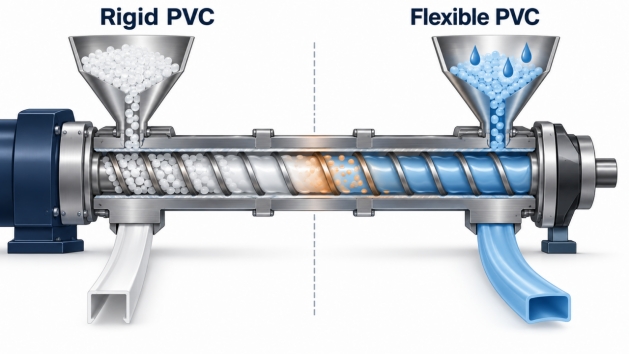
  • Figure 2. Conceptual comparison of rigid and flexible PVC processing. The orange area highlights potential residue carryover during a material changeover.

  • When Sharing One Extruder Barrel May Be Acceptable
    Sharing can be considered when the operating window is controlled, the products are not highly appearance-sensitive, and the plant can validate each changeover. Typical conditions include:
    · The PVC formulations are known, stable, and not widely different in colour or additive package.
    · The following product is not transparent, white, light-coloured, high-gloss, or otherwise highly sensitive to trace carryover.
    · The plant uses separate or adjustable screws designed for rigid PVC extrusion and flexible PVC extrusion.
    · A reliable purge, thermal stabilisation, inspection, and validation routine is actually followed on the shop floor.
    · Material changes are infrequent, and the barrel, screw, head, and die are maintained in sound condition.
    · The application does not impose unusually strict contamination, odour, medical, food-contact, or cable-quality controls.

    When Rigid and Flexible PVC Should Not Share the Same Barrel
    A dedicated processing route is generally the safer choice when the potential cost of rejection is high. The following situations deserve special caution:
    · Flexible PVC is followed by transparent rigid PVC, where plasticiser-rich or coloured residue can show as haze, yellowing, black specks, odour, or surface defects.
    · The target rigid PVC product is white, very light coloured, clear, glossy, or a premium visible surface.
    · The flexible formulation contains dark pigments, high plasticiser content, recycled content, strong odour, or additives that are difficult to displace.
    · The plant makes frequent short runs, leaving insufficient time for disciplined purging and inspection.
    · The line already shows unstable output, black specks, discolouration, odour, leakage, wear, or evidence of dead spots.

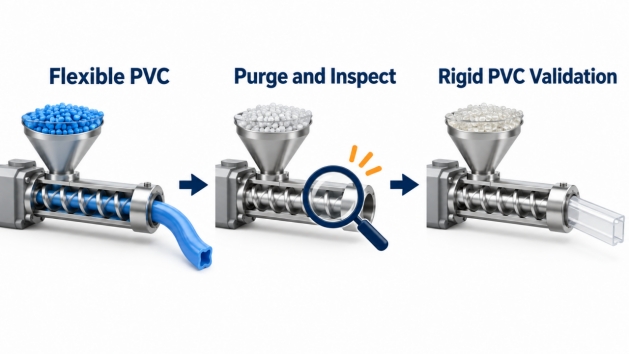
  • Figure 3. A controlled flexible PVC to rigid PVC changeover should include purging and inspection before quality validation.

  • The Highest Risk Changeover Is Usually Flexible PVC to Rigid PVC
    When scheduling allows, rigid PVC to flexible PVC is usually easier to manage than flexible PVC to transparent or light-coloured rigid PVC. Flexible PVC can leave plasticiser-rich or colour-bearing residues in the screw channels, barrel surface, screen pack area, adapter, head, and die. A small residue can be acceptable in one product and immediately visible in the next.

    This does not mean scheduling alone replaces cleaning. It means scheduling can reduce avoidable risk. A material change plan should still include the correct purge material or process, realistic temperature control, targeted inspection of likely retention zones, and a start-up validation standard agreed by production and quality teams.

    A Practical Changeover Procedure
    1. Record the outgoing and incoming formulations. Note colour, plasticiser level, recycled content, stabiliser system, filler, and any quality sensitivity of the next product.
    2. Remove outgoing material as fully as practical. Do not treat a colour change at the die as proof that the internal system is clean.
    3. Use an appropriate purge routine. The purge material and process must suit the equipment and formulation; confirm it against the plant's own process controls.
    4. Control thermal history. Avoid leaving heat-sensitive residue in high-temperature zones for unnecessary time during a stop or changeover.
    5. Inspect high-risk retention areas when required, including the screw, barrel, vent area, screen pack, adapter, head, and die.
    6. Restart gradually and watch motor load, melt appearance, colour, odour, pressure stability, and surface quality before returning to full production speed.
    7. Validate the first acceptable production output against the product's own release criteria, including clarity or colour where relevant.

    Does a Vented Barrel Increase the Risk
    A vented barrel can help manage moisture, volatiles, or process gases in the right PVC extrusion process. But the vent section also introduces another area that must be kept clean and correctly filled. Residue near the vent, poor melt sealing, inappropriate fill level, leakage, or neglected vacuum piping can complicate a changeover.

    Before treating a vented barrel as a universal upgrade, confirm the material, moisture condition, formulation volatility, screw design, vent position, and operating pressure. PIPLL can review whether a vented barrel arrangement or vacuum venting is appropriate for a defined application, but the decision should be based on real process data rather than a generic rule.

    Barrel Material and Surface Condition Matter Too
    A nitrided screw barrel is a common choice where a sound surface, reasonable wear resistance, and stable processing are required. In more abrasive or corrosive applications, a bimetallic single screw barrel may be considered. Material selection can support service life, but it does not solve a contamination problem created by poor cleaning, unsuitable screw geometry, excessive residence time, or damaged internal surfaces.

    If black specks, yellowing, odour, output loss, or unstable melt pressure are already occurring, check the screw and barrel condition before assuming the next formulation is at fault. Wear, deposits, dead areas, and damage can undermine both rigid and flexible PVC processing.

  • A Quick Decision Table
    Use this as a first screening tool. The final decision should still be confirmed by the process owner, quality team, and the actual formulation data.

    Operating situationPractical recommendationRisk level
    Low sensitivity application and infrequent grade changesSharing may be workable with documented purging, a clean barrel, and a validation run.Moderate
    Same barrel but separate rigid and flexible PVC screwsUsually more practical than sharing one screw. Review screw geometry and clearance for both formulations.Moderate
    Flexible PVC followed by transparent rigid PVCTreat as a high risk changeover. Use a controlled purge and inspection sequence; dedicated equipment may be justified.High
    White, clear, light colored, or high gloss rigid PVCPrefer dedicated screw and barrel capacity where customer specifications are strict.High
    Medical, food contact, regulated cable, or other strict contamination controlsAvoid shared processing unless a formal, validated cleaning and change-control system is in place.High
    High regrind flexible PVC or strong odor / dark-color formulationAssess residue and odor carryover before scheduling a rigid PVC run.High
    Black specks, odor, yellowing, or unstable output already presentDiagnose the screw, barrel, head, die, temperature profile, and cleaning practice before changing material strategy.High

  • How PIPLL Supports the Decision
    PIPLL is an extruder screw barrel manufacturer and custom single screw barrel supplier. We help processors review existing single screw barrels, screw wear, screw geometry, material history, and the practical risks around an application change. For a specific rigid PVC extrusion or flexible PVC extrusion case, we can start with the machine dimensions, present screw and barrel photographs, material information, output target, and defect history.

    The purpose is not to force a replacement decision. It is to help determine whether the existing equipment can be monitored, cleaned, modified, paired with a second screw, repaired, or prepared for a future replacement. This can include a custom extruder screw recommendation, a single screw barrel for PVC review, or guidance on nitrided screw barrel and bimetallic single screw barrel options where appropriate.

    Conclusion
    Rigid PVC and flexible PVC can sometimes share an extruder barrel, but they should not be treated as interchangeable. The safest answer depends on the formula, the final product's sensitivity, screw design, barrel condition, venting arrangement, cleaning method, and changeover discipline. In particular, flexible PVC to transparent or light-coloured rigid PVC deserves a more conservative plan.

    If your line is experiencing yellowing, black specks, odour, unstable output, or uncertainty around a rigid-flexible PVC changeover, PIPLL can help you review the screw and barrel information before you commit to a repair, replacement, or production change.

    Technical and Sales Contact
    Harry Jiang | PIPLL | Screw and Barrel Solutions for Plastic Extrusion
    Supporting extrusion manufacturers with customized screw and barrel solutions for PVC, PE, PP, PET, and other polymer processing applications.
    Email: Harry@pipll.com | WhatsApp: +86 182 6854 1152 | Website: www.pipll.com

Copyright © PIPLL All rights reserved Designed & SEO by www.followala.com Sitemap | XML

One-stop PVC Chemicals Solution | PVC stabilizer