 Languages
PVC Pipe Screw Barrel: Matching Conical, Parallel and Single-Screw Lines
PVC Pipe Screw Barrel: Matching Conical, Parallel and Single-Screw Lines
Rigid PVC is unforgiving at the screw. The right architecture keeps the melt stable — the wrong one shows up as black spots, surging and short service life.
PVC Pipe Screw Barrel · Conical Twin Screw · Pipe Extrusion Screw Barrel
1. Why the screw barrel decides PVC pipe quality
PVC pipe problems are often blamed on the die or the formulation first. In practice the screw and barrel set the conditions the die has to work with: how much shear the material sees, how long it stays hot, and how evenly it is plasticised before it reaches the head.
Rigid PVC gives very little margin. It degrades rather than simply softening when it is overworked, and the damage is not reversible:
· Excessive shear raises melt temperature and starts thermal degradation
· Uneven plasticisation produces surface defects and dimensional variation
· Long or inconsistent residence time causes black spots and discolouration
· Unstable melt pressure translates directly into pipe wall variation
That is why PVC extrusion is a low-shear process by design, and why the screw barrel geometry matters more here than in most other PVC applications . The same logic applies across the product range, from UPVC drainage and water pipe to PVC film and sheet .
KEY INSIGHT In PVC pipe extrusion the screw barrel does not just melt material. It decides whether the melt reaches the die intact.
2. Three architectures on real PVC pipe lines
Walk through a pipe plant and you will see three screw configurations doing PVC duty. They are not interchangeable, and each one earns its place at a different point in the size and output range.
Architecture Where it fits Character Conical twin screw Small to medium rigid PVC pipe and profile Large feed intake for powder, high compression, low shear Parallel twin screw High-output pipe, board and multi-formulation plants Constant diameter, modular, positive conveying with interlocking chambers Single screw Large-diameter pipe, polyolefin and specialty tube Simpler and cheaper where the duty is melt and pump, not compound The choice is made when the line is specified, and it is fixed for the life of the machine. That matters for spares: a conical twin screw barrel and a parallel twin screw barrel are different machine configurations, not two versions of the same part.
3. Conical twin screw: the standard for smaller rigid PVC pipe
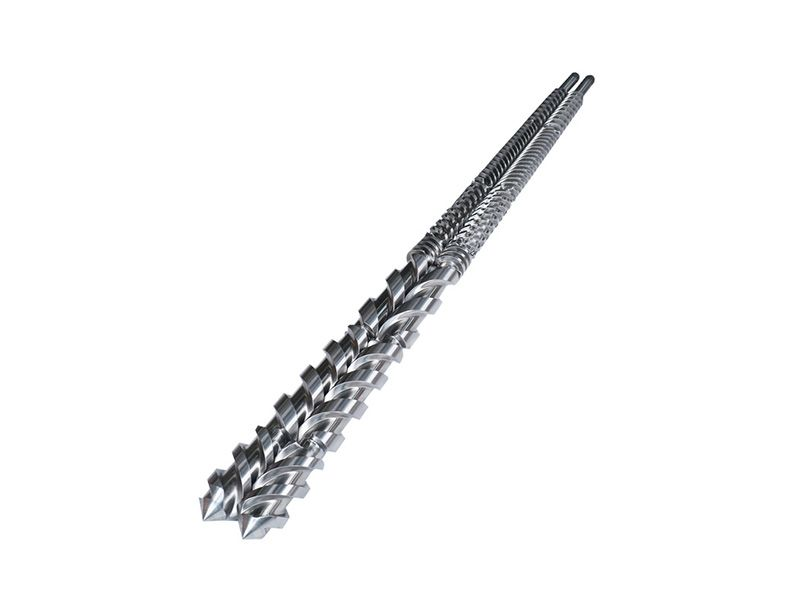
The tapered screw is the reason this geometry dominates PVC. The screw is large at the feed end, which gives a generous intake area for low-bulk-density PVC powder, and it narrows towards the discharge, building compression gradually rather than in one step.
Because compression is progressive, shear stays moderate and the melt is not overheated on the way to the die. For a polymer that degrades instead of merely softening, that is the whole argument.
PIPLL builds the general PVC conical range around the same principle. The barrel is forged from a single billet as an integral seamless structure, which removes the flange joints where molten PVC can leak and degrade. The compression ratio is set between 2.5:1 and 3.5:1 to plasticise thoroughly without pushing shear past the point where PVC starts to break down.
Conical twin screw barrel for PVC PIPLL specification Base steel 38CrMoAlA, with proprietary ion nitriding Nitrided layer 0.4 – 0.6 mm at HV900 – 1100 Published service life 2 – 3 years in low-fill applications Compression ratio 2.5:1 – 3.5:1 Radial clearance 0.1 – 0.15 mm Temperature control 3 – 5 independent heating zones, single venting system Machining check 100% testing before shipment Applications run beyond plain pipe: construction profiles, sheet for formwork, granulation, edge banding and sealing strips are all produced on this geometry. Where the pipe is heavily filled, the same architecture is used with a different alloy — see high filling polymer conical twin screw barrel .
4. Parallel twin screw: when a pipe line goes parallel
Parallel machines keep a constant screw diameter along the whole processing length. They are modular, easier to maintain, and they hold a longer processing zone with uniform torque transfer — which is why they appear in high-output and multi-formulation plants.
The counter-rotating version is the one that matters for PVC. Its interlocking conjugate design traps material in closed C-shaped chambers and pushes it forward mechanically, so conveying is positive and pressure build-up is strong. Direct PVC powder feeding becomes practical because the closed chambers do not allow the bridging and slipping that non-positive conveying runs into with powder, and the overall shear character stays gentle enough for rigid PVC.
PIPLL counter-rotating parallel twin screw barrel Range Screw diameter Φ45 – Φ300 L/D ratio 16 – 40 (customisable) Base material 38CrMoAlA premium alloy steel Surface options Bimetallic barrel and screw, nitriding, electro-chromising Typical duty Pipes, profiles, boards, WPC, SPC flooring, pelletizing Compatibility is usually the deciding factor between suppliers, because the interface dimensions differ by machine builder. PIPLL builds sets to match the common builds directly — KraussMaffei KMD , Battenfeld-Cincinnati twinEX , Bausano MD , Theysohn XTS and Weber DS among them — rather than working from a generic pattern.
For pelletizing and recycling duty on the same architecture, the pelletizing conical twin screw barrel page covers the sugar-cube and strand-cut variants, and recycled formulations are handled with the recycled material barrel configuration.
5. Single screw: where it still wins on pipe
A single screw is the simpler machine, and for a long list of pipe duties simpler is correct. Where the task is to melt and pump a consistent melt into a die — rather than to compound or homogenise — a single screw line does it with fewer variables and lower cost.
· Large-diameter HDPE, PP and PVC double-wall corrugated pipe
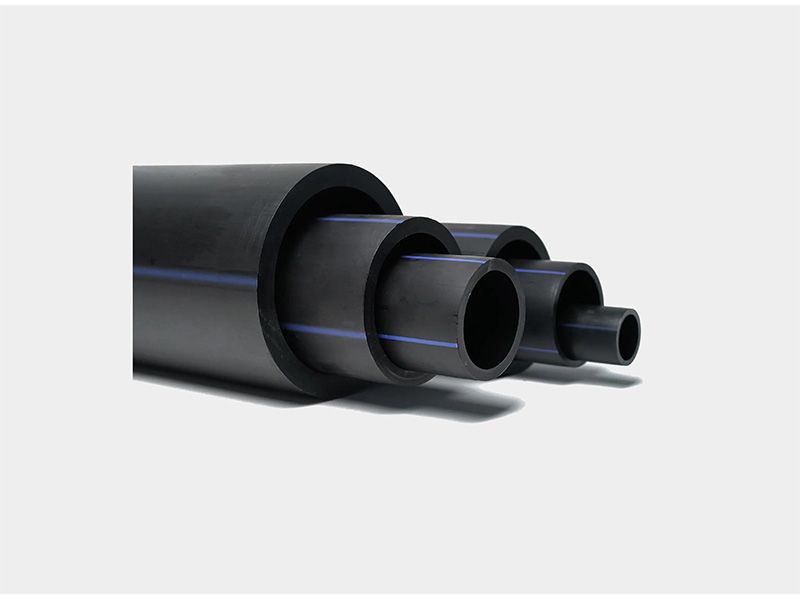
· UPVC solid-wall pipe and cable protection pipe
· Hot and cold water pipe in PP-R, PE-RT and PE-X
· Medical PVC tube and specialty tube
· PMMA, PC and ABS industrial tube
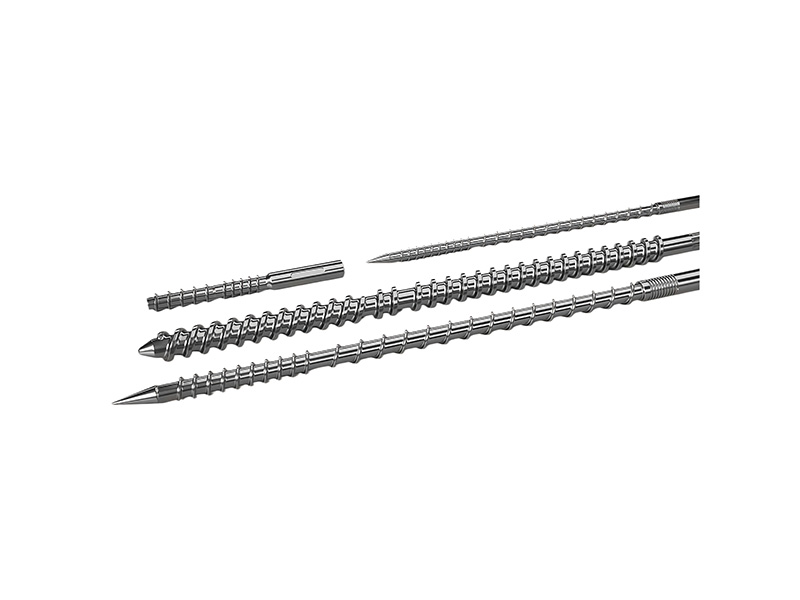
The configurations differ by duty. Barrier screw designs improve melting efficiency and melt homogenisation for high-output polyolefin pipe, a comparison worth reading in barrier screw versus conventional screw . Maddock and pineapple mixing sections handle melt homogenisation where the requirement is simply uniformity, and grooved feed construction supports stable solids conveying in high-output lines — the trade-off between that and a smooth bore is set out in grooved feed versus smooth bore barrels .
The full range of pipe and tube duty, including corrugated, composite and multi-layer construction, is covered under pipe and tube extrusion screw barrels .
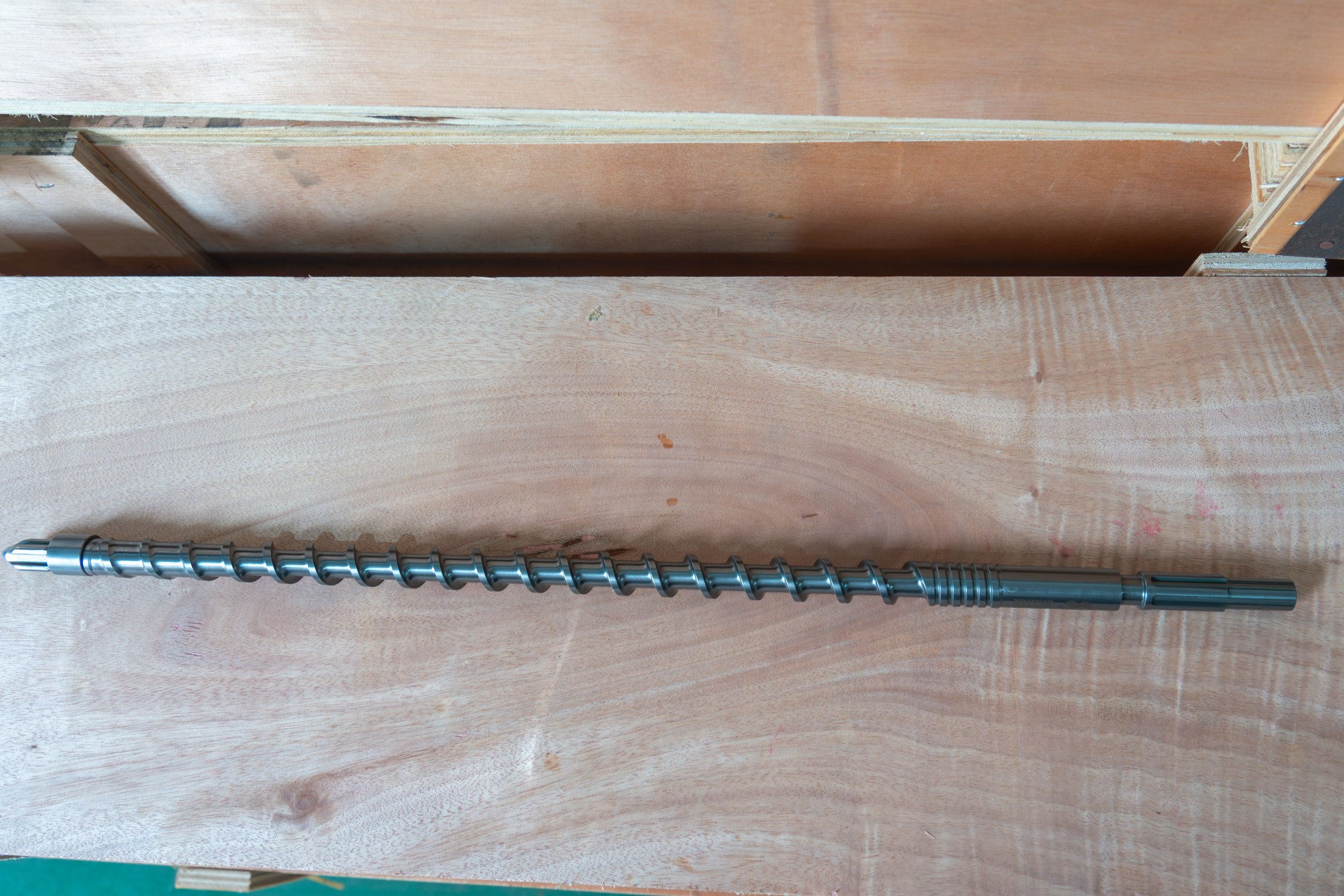
A single screw and barrel for pipe extrusion. Where the duty is melting and pumping rather than compounding, this is the simpler answer.
6. Sizing the barrel to pipe diameter and output
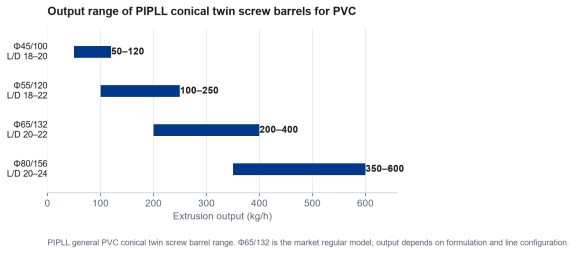
Once the architecture is fixed, the model range narrows quickly, because pipe diameter and target output together determine the barrel size. The general PVC conical range covers the usual production windows:
PIPLL model L/D Output Typical application Φ45/100 18–20 50–120 kg/h Small-diameter conduit, precision profile Φ55/120 18–22 100–250 kg/h Medium pipe, ordinary profile Φ65/132 20–22 200–400 kg/h Market regular model, universal pipe and profile Φ80/156 20–24 350–600 kg/h Large-diameter pipe, thick sheet Output range of PIPLL general PVC conical twin screw barrels. Φ65/132 is the market regular model; actual output depends on formulation and line configuration.
Two cautions on that table. First, the figures describe the barrel range, not a promise for your line — formulation, die design and downstream equipment all move the achievable output. Second, choosing a barrel one size up 'for headroom' is not automatically safer: an oversized screw runs at low speed with long residence time, which is precisely the condition rigid PVC tolerates worst.
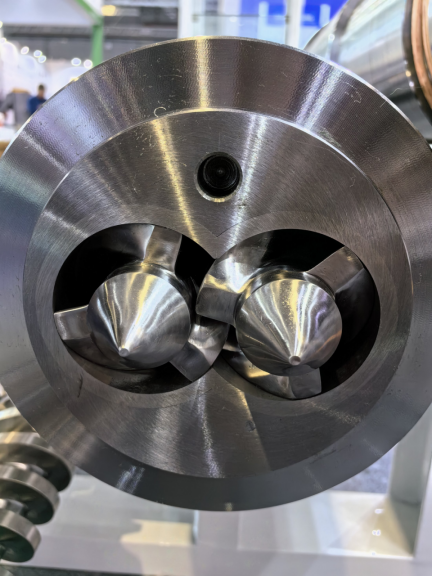
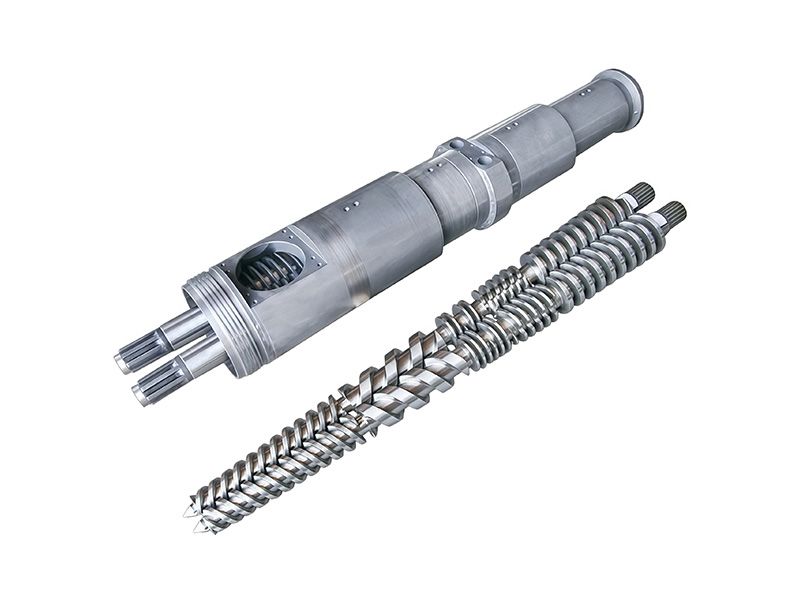
A conical twin screw barrel with an internal liner sleeve, a construction that allows the wear surface to be renewed.
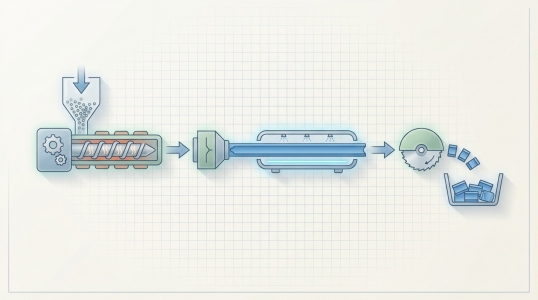
Schematic of an extrusion line: hopper, barrel and screw, heating, die head and cooling. The screw barrel sets the melt condition the die inherits.
KEY INSIGHT Size the screw barrel to the duty you actually run. Oversizing a PVC screw to gain headroom usually costs melt quality rather than buying margin.
7. Filler loading and the wear picture
Almost no PVC pipe formulation is pure resin. Calcium carbonate is the most common filler, and its loading level — not the pipe diameter — usually decides how long a screw and barrel set lasts.
For unfilled and lightly filled formulations, nitrided construction is normally sufficient: PIPLL publishes a 0.4–0.6 mm nitrided layer at HV900–1100, with 2–3 years of service in low-fill applications. As filler loading rises, the balance shifts. Abrasive wear accelerates at the flights and in the bore, and acidic degradation products add a corrosion element on top.
Bimetallic construction exists for that combination, and the alloy layer is what is being paid for — PIPLL publishes 1.5–3 mm depending on grade, at HRC 50–65 and maximum working temperatures from ≤400°C to ≤600°C. The choice between bimetallic and nitrided construction is a duty question, and the alloy family for a given formulation is set out in bimetallic alloy selection . For the filler itself, calcium carbonate in plastic explains what it does to a formulation.
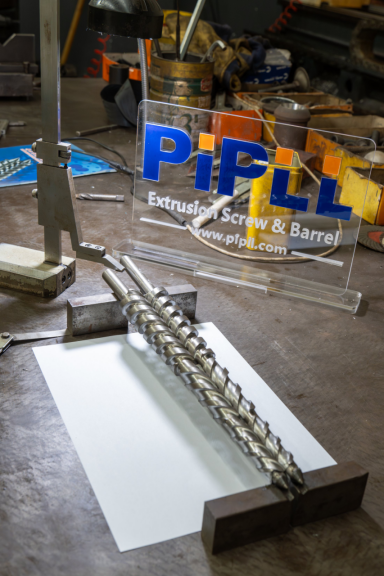
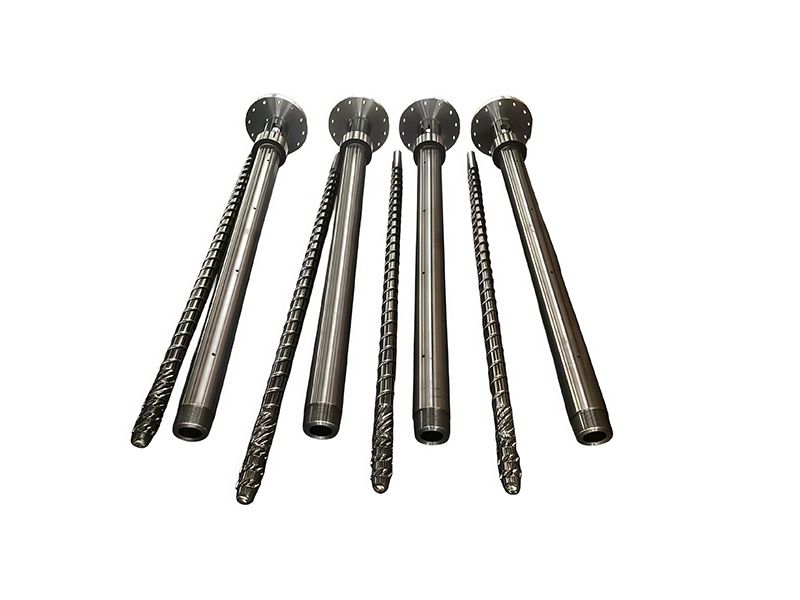
A screw and its barrel in the workshop. On filled PVC duty both surfaces carry the wear, which is why the alloy decision covers the pair rather than the barrel alone.
8. What can and cannot be swapped
Replacement is where a good line gets compromised. The rules are short, and the first one is absolute.
· A conical barrel does not go into a parallel machine, or the reverse, without a machine redesign
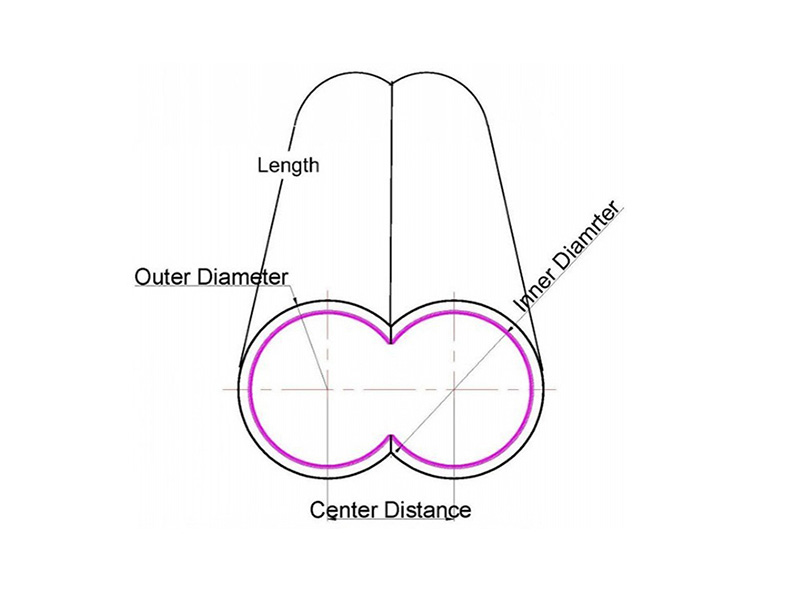
· Screws and barrel are replaced as a matched set — centre distance, profile and clearance are designed together
· A harder alloy does not compensate for a wrong geometry
· A new barrel on a worn screw restores nothing except the purchase order
The dimensions that must be matched are specific: screw diameter and total length, L/D ratio, centre distance, bore geometry, feed opening position, heating and cooling layout, and the connection to the gearbox. Our parallel twin screw barrel PVC guide works through that checklist for parallel machines, and the general logic for any extruder is in the screw barrel replacement guide . Where repeated wear is expected, a barrel with an internal liner sleeve lets the wear surface be renewed without replacing the whole barrel.
KEY INSIGHT Match the part to the machine, then match the alloy to the formulation. Reversing that order is how replacement projects go wrong.
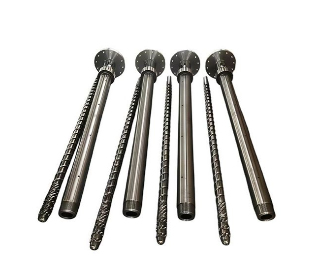
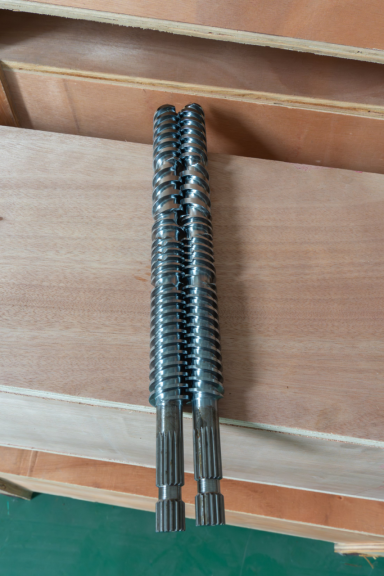
A matched parallel twin screw pair. Connection and centre distance differ between machine builds, which is why replacement sets are matched rather than patterned.
9. Measuring a worn set before you order
Wear on a PVC screw barrel is rarely uniform. The feed zone, the compression zone and the high-pressure region wear at different rates, and measuring only one position can hide the real problem.
· Outer diameter and condition of each screw flight
· Bore measurement at several positions along the barrel
· Clearance between screw and bore at each position
· Condition of the feed zone and the high-pressure section
· Screw tip, spline and coupling condition
· Barrel heating and cooling connections
· Photographs, plus machine nameplate and the production problem observed
With that information a quotation can be built on measurements rather than assumptions. Without it, the usual fallback is the original drawing — and if that is missing too, photographs and key dimensions still support an initial evaluation, which is what our custom screw and barrel process is designed around. How a drawing becomes a finished barrel is covered under manufacturing process and production capacity .
10. Symptoms that point at the screw barrel
Wear announces itself before it fails. The signals below do not prove the screw barrel is the only cause — feeding, temperature control, the die and downstream equipment all deserve a check — but they put it on the list.
· Gradual reduction in output
· Higher screw speed needed for the same result
· Unstable melt pressure and surging output
· Poorer plasticisation, more surface defects
· Increasing wall-thickness variation
· Visible scratching, pitting or corrosion on flights
· Repeated repair of the same component
Surging in particular has several possible causes, and the troubleshooting guide for unstable extrusion output separates the screw-side causes from the process-side ones. If wear is suspected but the line cannot be stopped, inspection without teardown describes what can be checked in place. Adjacent PVC duty such as PVC film and sheet and PET flake and regrind extrusion follows the same wear logic with different temperature windows.
Need help with a PVC pipe screw barrel?
Send us the machine model, pipe diameter, formulation and target output and we will recommend a barrel size and construction. PIPLL manufactures conical and parallel twin screw barrels and single screws for PVC pipe, profile, sheet and granulation lines.
· General PVC conical twin screw barrels from Φ45/100 to Φ80/156, with standard specifications in stock
· Compatible sets for Bausano, Weber, Theysohn, Luigi Bandera, Battenfeld, KraussMaffei and other major builds
· Nitrided and bimetallic options matched to filler loading and operating temperature
Contact Us Now
Eric Dong | Co-founder | eric@pipll.com | WhatsApp: +86-15267878906 | www.pipll.com