PVC film and sheet extrusion requires more than simply melting and conveying material through an extruder. Stable plasticization, controlled melt temperature, consistent pressure, and resistance to wear all influence production efficiency and final product quality.
The screw and barrel are therefore critical components of a PVC extrusion line. Their design and material should match the PVC formulation, machine configuration, required output, and actual operating conditions.
This guide explains the key factors to consider when selecting a screw barrel for PVC film and sheet extrusion.
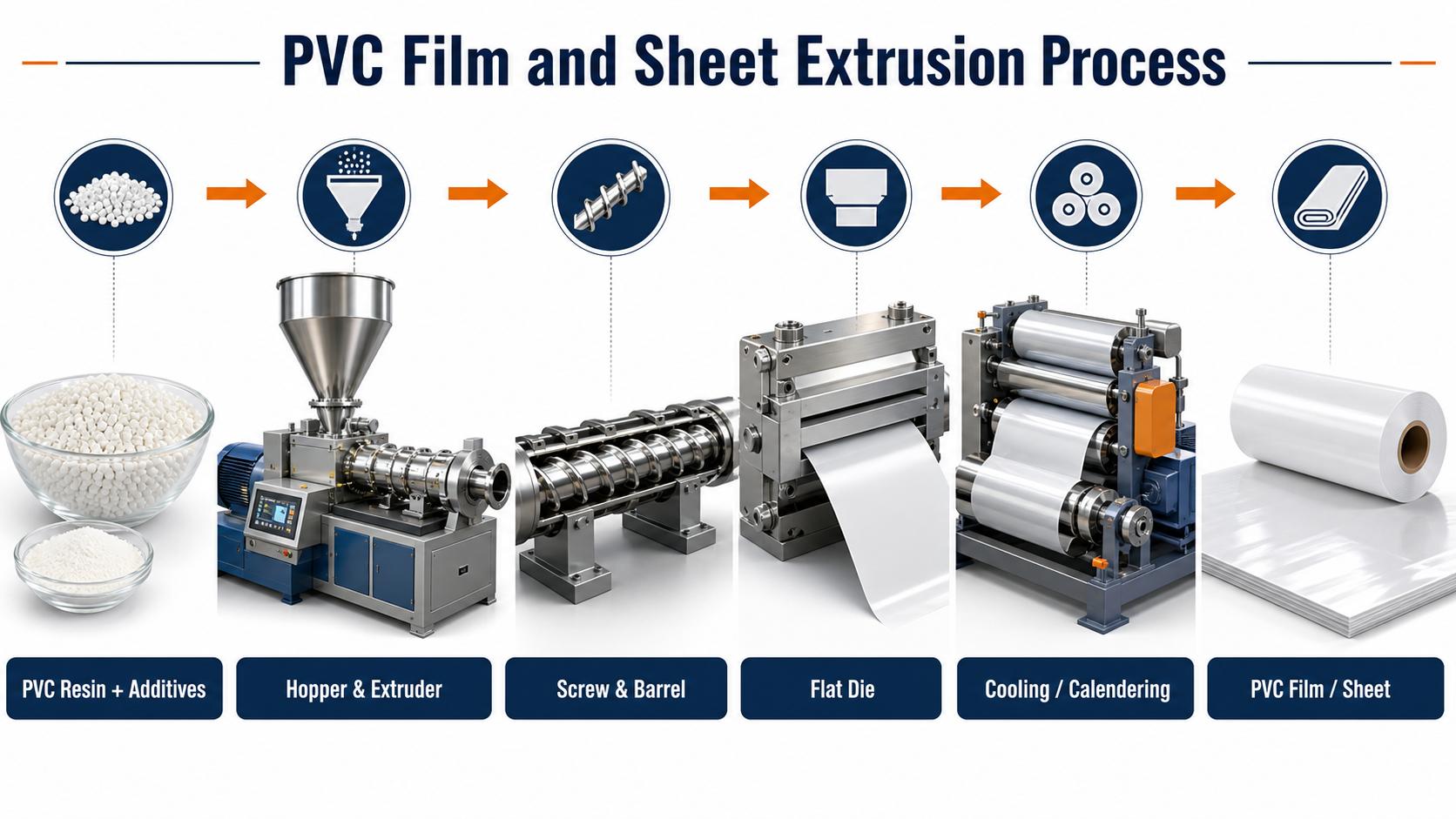
Typical PVC film and sheet extrusion process and the position of the screw and barrel.
PVC is sensitive to processing temperature and shear. During extrusion, the material must be conveyed, compressed, plasticized, mixed, and delivered to the die under stable conditions.
If the screw design does not match the material and process, manufacturers may experience problems such as:
· Unstable extrusion output
· Uneven plasticization
· Excessive melt temperature
· Surface defects
· Thickness variation
· Material degradation
· Premature screw and barrel wear
A properly designed PVC extrusion screw barrel helps establish a more stable processing window and improves melt consistency before the material reaches the die.
The feeding section receives the PVC compound and moves it forward through the barrel. Stable feeding is important for maintaining consistent output.
As the material moves through the screw, compression and heat gradually convert the PVC compound into a homogeneous melt.
Because PVC is heat-sensitive, the relationship between screw geometry, shear, barrel temperature, and residence time needs to be carefully controlled.
The screw must provide sufficient mixing to distribute additives, pigments, fillers, and other components throughout the material.
Uniform plasticization is particularly important in sheet and film extrusion, where inconsistencies in the melt can affect the surface and dimensional stability of the final product.
Before the melt reaches the die, the screw needs to deliver material at a stable and controlled rate.
Stable melt flow and pressure help the downstream extrusion system maintain consistent production conditions.
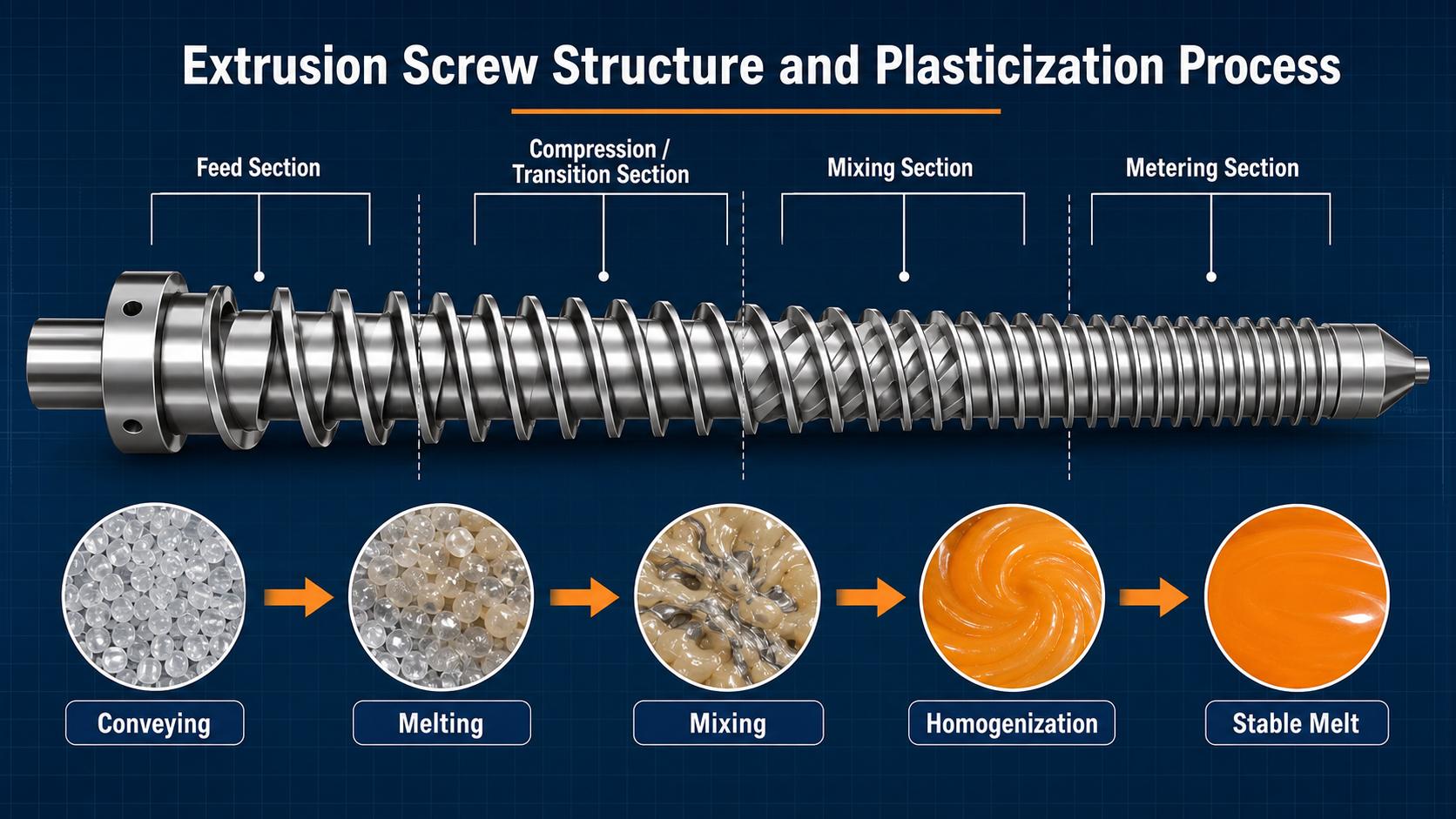
Main functional sections of an extrusion screw: feeding, compression/plasticization, mixing, and metering.
There is no universal screw configuration suitable for every PVC film or sheet production line.
The correct solution depends on the formulation, extruder design, product structure, output requirement, and processing conditions.
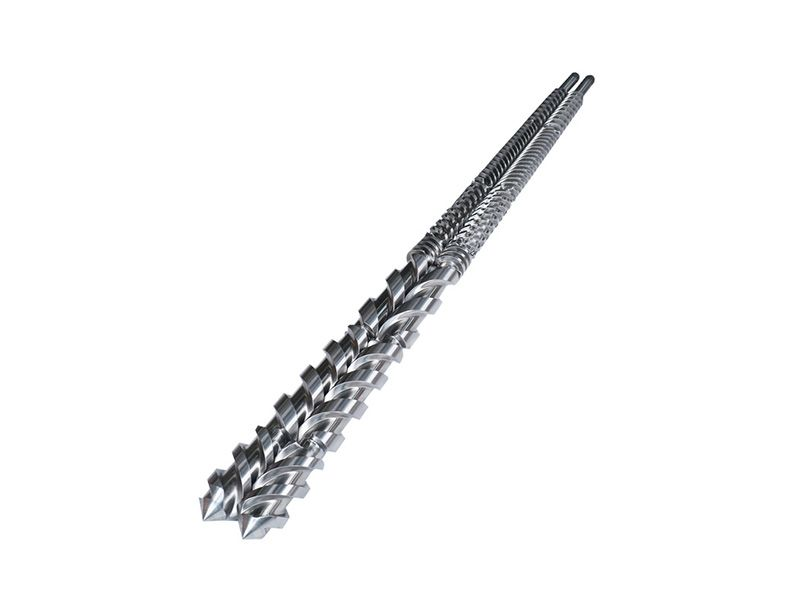
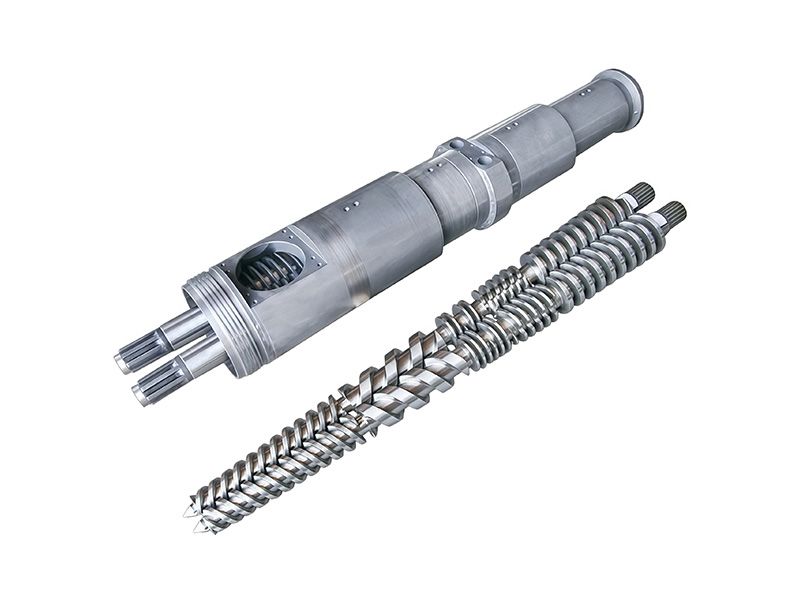
Counter-rotating twin screw systems are commonly used in rigid PVC processing because of their conveying and mixing characteristics.
Depending on the machine and product, they can be used for applications including:
· Rigid PVC sheet
· PVC foam board and sheet
· Decorative PVC sheet
· Construction sheet products
· Highly filled PVC products
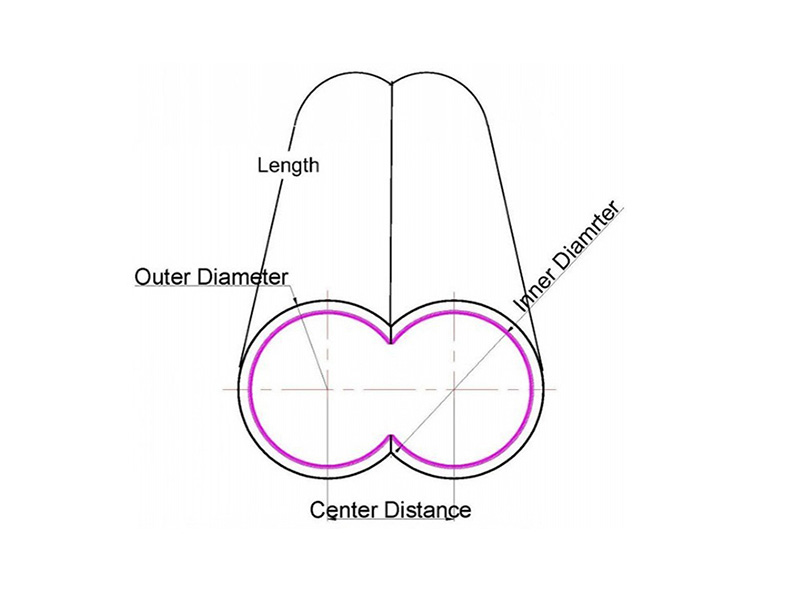
Both conical twin screw barrels and parallel twin screw systems are used in PVC extrusion equipment.
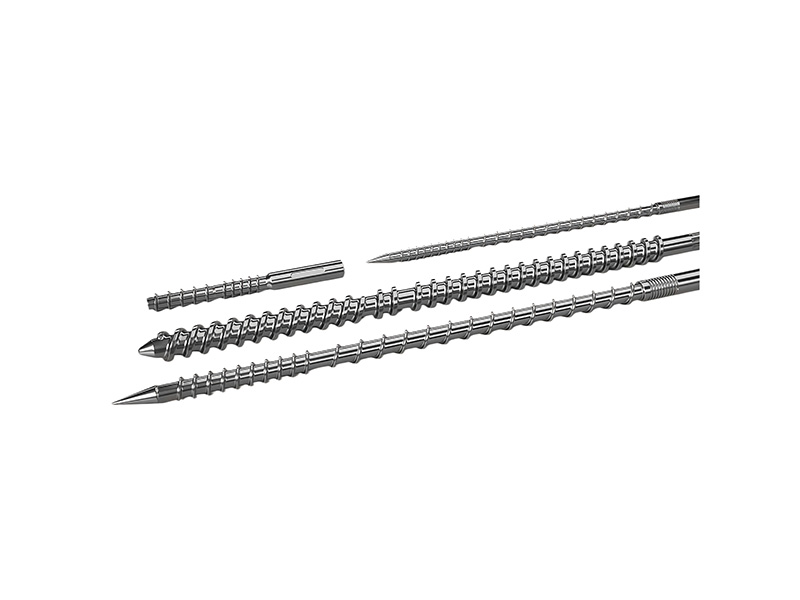
Single screw extruders are also used for certain PVC film and sheet processes, particularly when the formulation and production system are designed for single-screw extrusion.
For these applications, screw geometry should be selected according to the actual material and production requirements rather than simply copying a general-purpose screw design.
PVC formulations can vary significantly.
In addition to PVC resin, a formulation may contain:
· Stabilizers
· Plasticizers
· Lubricants
· Calcium carbonate
· Impact modifiers
· Processing aids
· Pigments
· Other functional additives
These ingredients influence material flow, plasticization behavior, abrasion, and corrosion.
For example, highly filled PVC formulations can accelerate abrasive wear on both the screw and barrel.
Therefore, the formulation should be considered before selecting screw geometry and surface treatment.
Calcium carbonate and other mineral fillers are widely used in PVC products.
As filler content increases, wear on the screw flight and barrel inner surface can become more severe.
Typical signs of excessive wear include:
· Gradual reduction in output
· Increasing screw speed required for the same output
· Unstable melt pressure
· Poorer plasticization
· Increased clearance between screw and barrel
· More frequent replacement or refurbishment
For demanding production conditions, a more wear-resistant screw barrel solution may provide a longer service interval.
Screw geometry directly affects material conveying, compression, melting, mixing, and pressure development.
Important design factors can include:
· Screw diameter
· L/D ratio
· Compression characteristics
· Flight geometry
· Mixing section design
· Screw clearance
· Screw speed
· Required output
For this reason, replacing an extrusion screw based only on its diameter is usually insufficient.
The original screw drawing, machine information, PVC formulation, and actual production conditions provide much more useful information for designing a replacement.
Material selection should reflect the severity of the application.
Depending on operating conditions, common solutions include:
Nitrided Screw and Barrel
Suitable for many conventional extrusion applications where abrasion and corrosion are moderate.
Bimetallic Barrel
A wear-resistant alloy layer is applied to the inner working surface of the barrel to improve service performance under demanding conditions.
Wear-Resistant Alloy Screw
The working surfaces of the screw can be strengthened with wear-resistant alloy materials, particularly in areas subject to high abrasion.
For highly filled PVC or other demanding formulations, upgrading the wear resistance of the screw and barrel can be more economical than frequently replacing conventional components.
The screw barrel must ultimately match the machine.
Before manufacturing a new or replacement screw barrel, several parameters should be confirmed:
| Parameter | Information Required |
|---|---|
| Application | PVC Film / PVC Sheet |
| Extruder Type | Single Screw / Twin Screw |
| Screw Diameter | According to existing machine |
| Screw Length / L/D | According to machine configuration |
| PVC Formulation | Rigid / Flexible / Filled Compound |
| Filler Content | Percentage or formulation information |
| Required Output | kg/h |
| Screw Speed | rpm |
| Existing Material | Nitrided / Alloy / Bimetallic |
| Machine Brand & Model | If available |
| Existing Drawing | Recommended if available |
The more complete the operating information, the more accurately a replacement screw barrel can be matched to the production line.
Not every PVC extrusion line requires a bimetallic solution.
For conventional formulations and moderate operating conditions, a nitrided screw and barrel may provide suitable performance.
A bimetallic screw barrel becomes particularly relevant when the production line experiences:
· High abrasive filler content
· Rapid screw or barrel wear
· Frequent replacement intervals
· Recycled or demanding materials
· Long continuous production cycles
· Higher requirements for wear resistance
The objective is not simply to use a harder material. The screw, barrel, alloy system, geometry, and processing conditions need to work together.
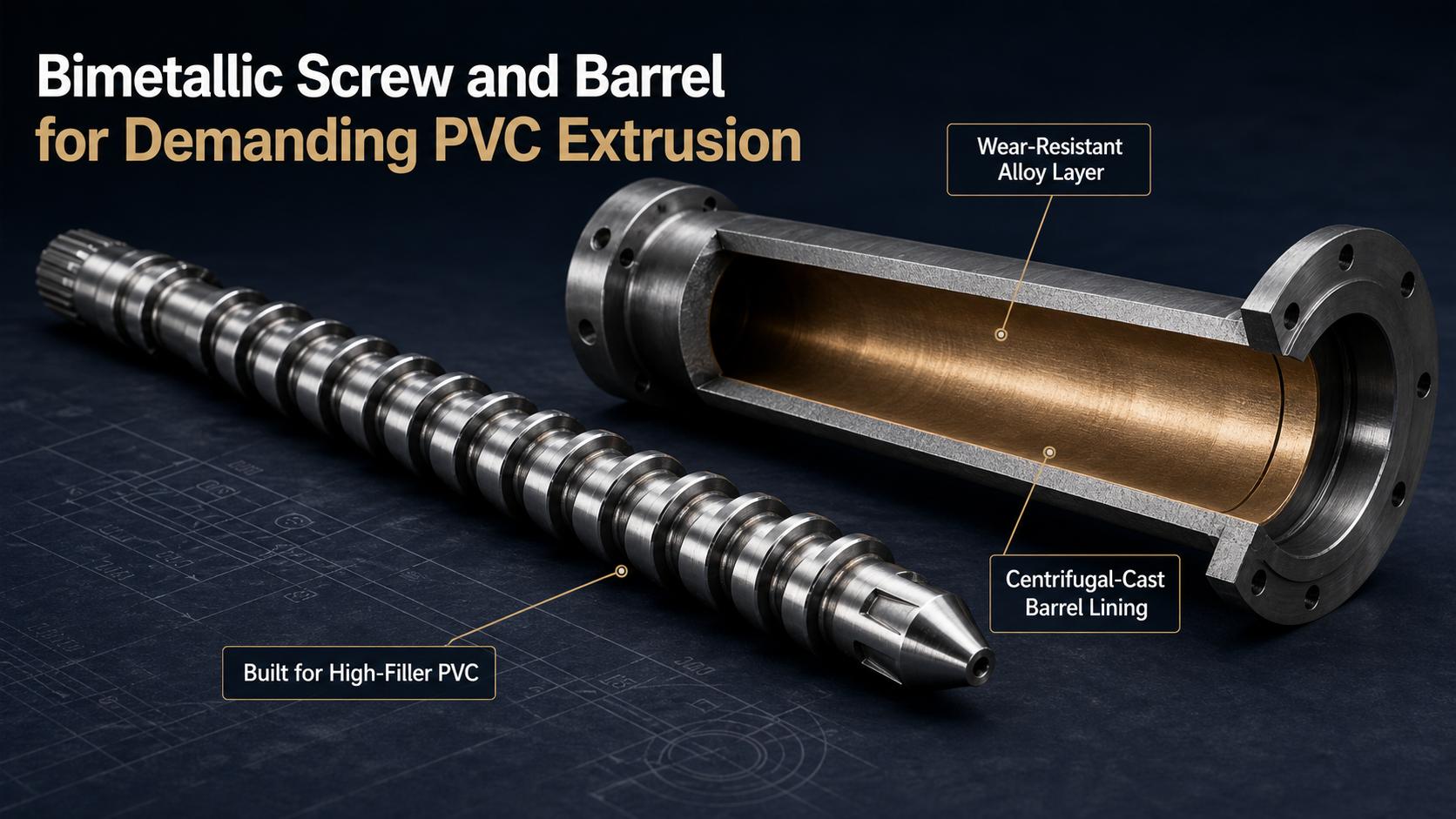
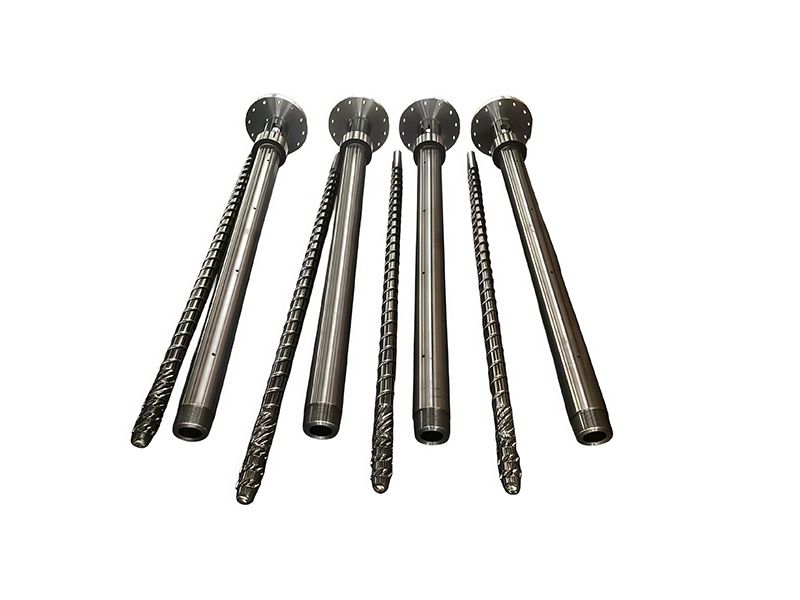
Wear-resistant screw and barrel solutions for demanding PVC extrusion applications.
When production performance changes, the screw and barrel are worth checking before assuming that the problem comes entirely from downstream equipment.
| Production Problem | Possible Screw Barrel Factor |
|---|---|
| Output gradually decreases | Screw/barrel wear or increased clearance |
| Unstable output | Feeding, conveying or screw wear |
| Poor plasticization | Unsuitable screw geometry or worn screw |
| Excessive melt temperature | Excessive shear or unsuitable screw design |
| Melt pressure fluctuation | Wear, feeding instability or inconsistent plasticization |
| Frequent screw replacement | Insufficient wear resistance for the formulation |
When production performance changes, the screw and barrel are worth checking before assuming that the problem comes entirely from downstream equipment.
However, inspecting screw and barrel wear is an important part of extrusion troubleshooting.
PIPLL manufactures screw and barrel components for plastic extrusion equipment, including solutions for PVC processing.
Available configurations include:
· Single screw and barrel
· Conical twin screw and barrel
· Parallel twin screw and barrel
· Bimetallic barrel
· Wear-resistant alloy screw
· Customized screw barrel for sheet extrusion
· Replacement screw barrel based on customer drawings or samples
Instead of selecting a screw barrel only by machine size, the design can be evaluated according to the customer's material, formulation, machine configuration, output requirement, and wear conditions.
This is particularly important for high-filled PVC and other applications where conventional screw barrels experience accelerated wear.
If you are looking for a replacement or customized screw barrel for a PVC film or sheet extrusion line, providing the following information can make technical evaluation much faster:
1.Extruder manufacturer and model
2.Screw diameter and total length
3.L/D ratio
4.Existing screw and barrel drawing
5.PVC formulation or material description
6.Approximate filler percentage
7.Current production output
8.Screw speed
9.Existing screw/barrel material
10.Current production problem, if any
If a complete drawing is unavailable, photos, measurements, an old sample, or machine information may also help with preliminary evaluation.
Selecting the right screw barrel for PVC film and sheet extrusion requires more than matching basic dimensions.
The PVC formulation, filler content, screw geometry, wear conditions, machine configuration, and required output should be considered together.
For standard production conditions, conventional nitrided components may be sufficient. For highly filled or abrasive formulations, wear-resistant or bimetallic solutions may help extend service intervals and maintain more stable extrusion performance.
If you are evaluating a replacement screw barrel for an existing PVC film or sheet extrusion line, send PIPLL your machine model, screw drawing, material formulation, or current screw dimensions for technical evaluation.


+86 15267878906

1306 W building , NB-IoT Industrial Park, No. 199 Changxing Road, Jiangbei, Ningbo.
 Languages
