 Languages
Glass-Fibre Reinforced Compounds: Specifying the Screw and Barrel
-
-
Glass-Fibre Reinforced Compounds: Specifying the Screw and Barrel
Where 20–50% glass fibre actually destroys a working surface — and which construction survives it.
Glass fibre reinforced plastic · Glass-filled PA66 screw barrel · Tungsten carbide screw barrel · Abrasive wear
-
1. What actually changes when you add glass fibre
A glass-filled compound is not a harder version of the unfilled resin. The fibres are short, stiff and much harder than the steel they slide against, and they are present at 20–50% by weight in most reinforced grades. That changes the wear mechanism, the heat history and the quality risk at the same time, which is why a bimetallic screw barrel bought for “glass-filled duty” can still come back early.
- Fibre length is a quality variable, and the screw can shorten it
- The abrasive load is a hard phase, not a soft filler — it cuts rather than polishes
- Most reinforced engineering grades are hygroscopic, so drying and venting join the wear question
-
KEY INSIGHT
Specifying for glass fibre means specifying four things at once: abrasion resistance, fibre-length survival, moisture control and dimensional fit. Buying only the first one is the usual mistake. -
2. Where the damage actually lands
On a machine running reinforced compound, wear is not spread evenly over the working surface. It concentrates in four places, and each one points at a different part of the specification. The failure-mode walk-through covers the mechanisms in general; what follows is the glass-fibre-specific version.
Location What you find Why it happens here What it changes Screw flight crest Flight width worn down, crest flattened, clearance opened up Highest sliding speed against the bore, thin section, hottest metal Flight hardfacing, crest geometry and the alloy on the screw — not just the barrel Barrel bore, metering zone Axial scoring and a polished wear band, output drifting down Fully melted, fully fibre-loaded melt moving at pressure Bore alloy family and lining thickness for that filler level Feed section and first flights Rounded flight edges, polished root, occasional grooving Cold, uncompacted granules with high fibre content, plus mechanical load Feed-zone geometry and whether the feed housing is hardened at all Screw tip, non-return valve, check ring (injection) Erosion of sealing faces, leak-back, inconsistent shot weight The same abrasive melt forced through the narrowest gaps Tip and valve material, replaced as a set with the screw -
3. The four numbers that decide the specification
Four inputs move the answer more than anything else on the enquiry. If a quotation arrives without them having been asked for, the alloy was chosen by habit rather than by duty.
- Filler content by weight, and whether it is glass, mineral or both
- Fibre type and nominal length — chopped strand, milled, or a blend
- Melt temperature and whether the grade is hygroscopic
- Running hours per year and the service interval you are trying to reach
The first two set the abrasion rate. The second two decide whether a corrosion-resistant family is needed as well as an abrasion-resistant one, because a hot, moist, slightly acidic melt attacks some hard alloys faster than a softer but more corrosion-resistant one. That trade-off is set out in detail on the bimetallic alloy selection guide .
-
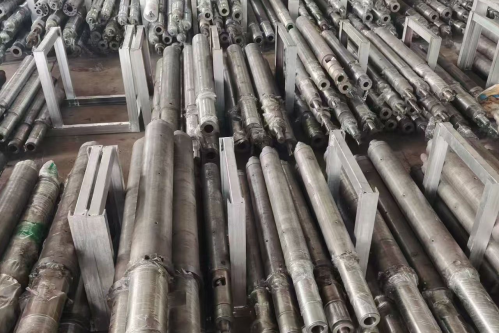
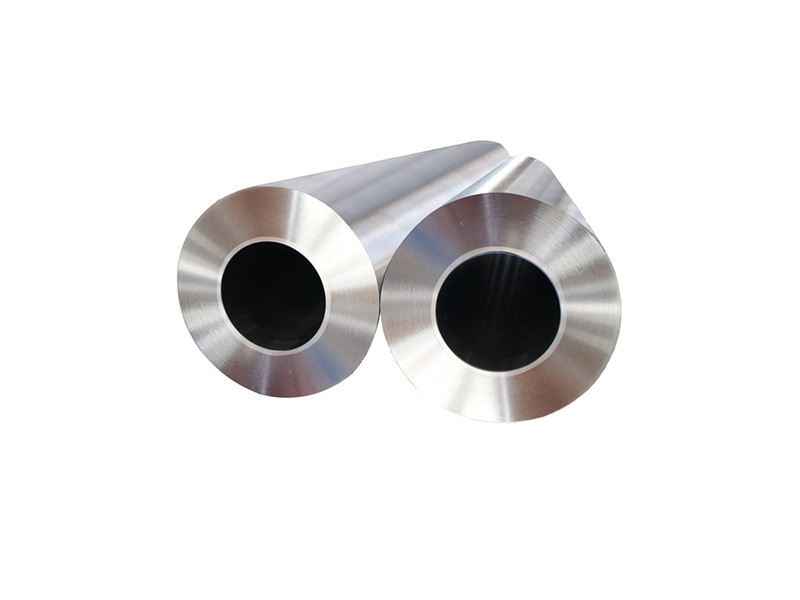
Barrels and screws held across sizes. The wear-resistant layer is only a few millimetres of the inner wall; everything outside it is structure and wears at a completely different rate.
-
4. Why “bimetallic” is not an answer on its own
The word describes a construction, not a performance level. A standard centrifugally cast iron-base lining and a tungsten-carbide composite are both “bimetallic”, and on 30–50% glass-filled PA66 they are not interchangeable. The published multiplier for a carbide system in high glass-fibre duty is roughly four to six times a nitrided bore; an iron-base lining specified for low-to-mid filler sits far below that.
Construction Working hardness Typical layer Best fit The trade-off Nitrided (38CrMoAlA class) Surface-hardened case, not through-hardened A fraction of a millimetre of case Unfilled and lightly filled commodity grades Case depth is the whole wear budget; once breached, wear accelerates Standard bimetallic, iron-base HRC 58–62 1.5–2.0 mm General engineering grades, glass below about 15–20% Cost-effective, but the carbide volume is not there for 30%+ fibre Tungsten-carbide composite HRC 65–68 1.0–1.5 mm 30–50% glass or carbon fibre, mineral-filled engineering grades Thinner layer, higher cost — the specification has to actually need it Nickel-based, corrosion-resistant HRC 45–50 2.0–3.0 mm Corrosive and abrasive together: flame-retardant, acidic or halogenated grades Lower hardness by design; choosing it for abrasion alone is a mis-spec KEY INSIGHT
The question is not “is it bimetallic” but “which alloy family, at what layer thickness, on which component”. Two of those three answers are usually missing from a quotation. -
5. The screw side: hardfacing, and why the crest goes first
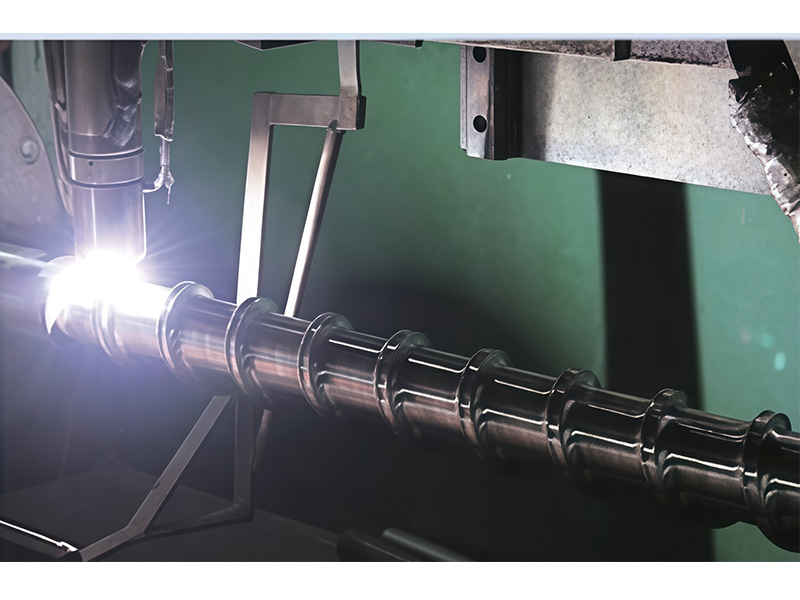
On reinforced duty the screw usually loses its working surface before the barrel does, because the flight crest combines the highest sliding speed with the thinnest section. A bimetallic extrusion screw addresses this by depositing a carbide-bearing layer on the flight, typically by PTA welding or laser cladding, at roughly 1.5–2.0 mm.
- The layer has to be thick enough to survive being reground at least once
- It has to be applied to the crest and the leading flank, not just the top
- Dilution with the base metal is what quietly costs hardness — ask how it is controlled
- Hardfaced flights cannot be finished the same way as a plain screw; the finished profile has to be cut after deposition
Where the whole screw is being replaced rather than rebuilt, a through-hardened screw is sometimes the more sensible answer for moderate filler levels — it wears evenly and can be re-polished, at the cost of peak abrasion resistance.
-
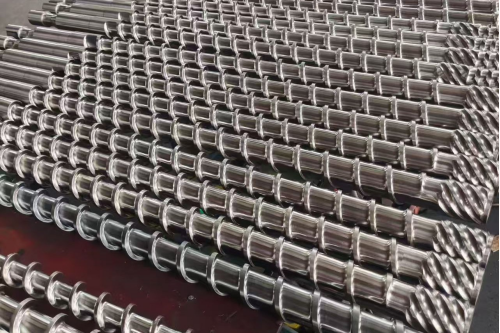
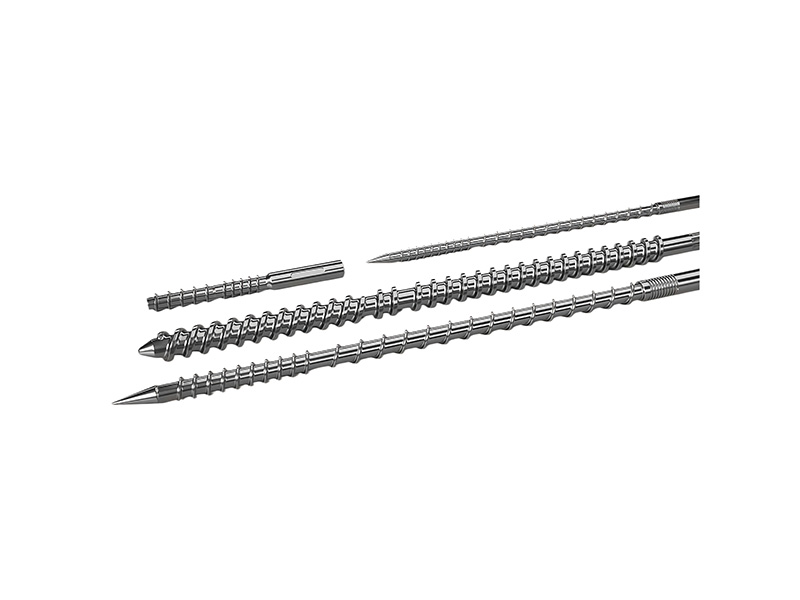
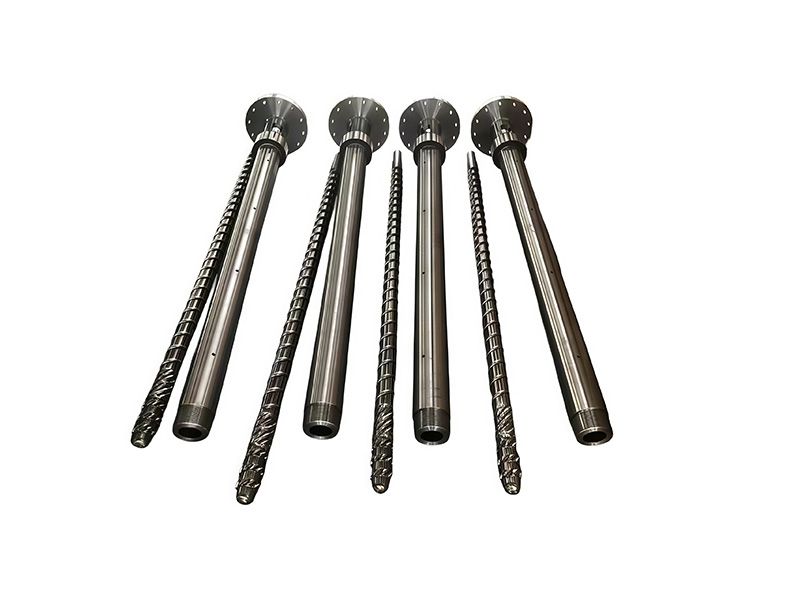
Finished screws staged in racks. A screw is built for one compound and one machine; the diameter is the only dimension two different duties reliably share.
-
6. Fibre length is a quality spec, not just a wear spec
This is the part of glass-fibre processing that gets least attention in a screw enquiry and causes the most arguments downstream. Reinforcement only works while the fibres are long enough; every high-shear mixing element, every sharp compression transition and every excessive back-pressure setting shortens them. The result is a part that passes dimensional inspection and fails a strength test.
- Conveying elements move material with low shear; kneading blocks mix with high shear and break fibres
- A screw configured for dispersion of a mineral filler will over-work a glass-filled grade
- Back pressure and screen-pack restriction add shear everywhere, not only where you intended
- Regrind of reinforced scrap carries already-shortened fibres; treat it as a different material
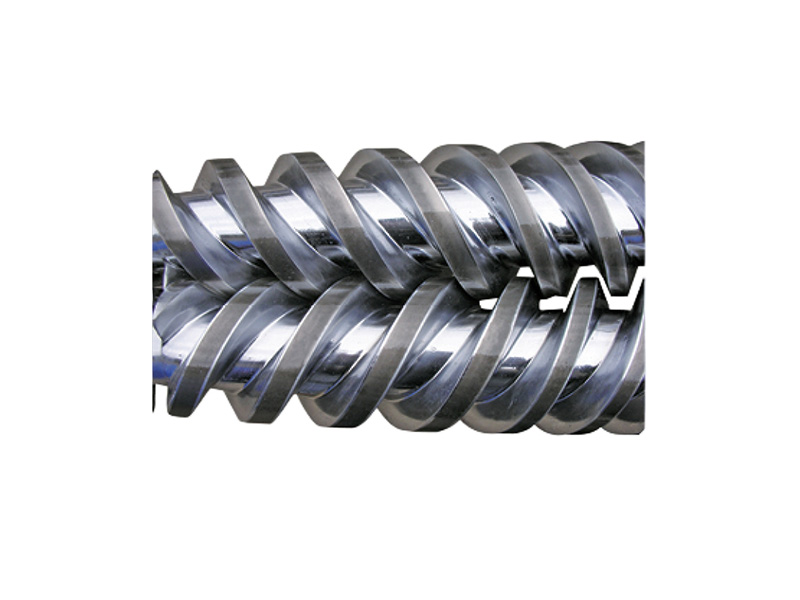
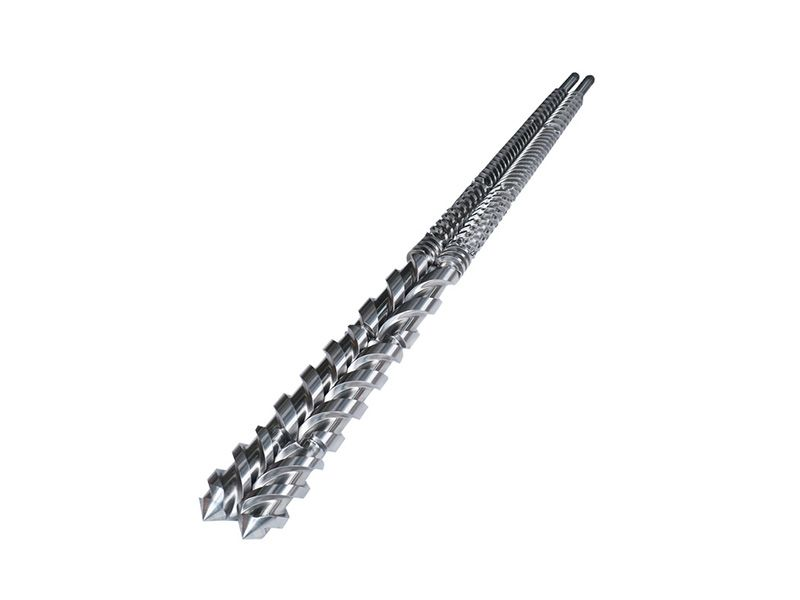
On twin-screw compounding lines this is an element-configuration question, covered on the twin screw elements page and in the compounding application notes . On a single screw it is a matter of compression ratio, mixing section and screw speed — the single screw range is where those choices are made.
KEY INSIGHT
A screw that maximises dispersion and a screw that preserves fibre length are different screws. Decide which one the part actually needs before the quotation, not after the strength test. -
7. Screw geometry for glass-filled compounds
Reinforced grades are usually stiffer, more abrasive and less forgiving of dead spots than the unfilled version of the same polymer. Geometry follows from that rather than from a generic “wear screw” pattern.
- Deeper, gentler compression so the fibre is wetted without being crushed
- No sharp steps or undercuts where material can sit and degrade
- Barrier or mixing sections only where the dispersion requirement justifies the shear
- A feed section that can actually grip a low-bulk-density, slippery granule
For compounds that are both highly filled and heat-sensitive, the high-filling polymer barrel and the high-CaCO3 processing notes describe the same geometry problem from the mineral side, and the reasoning carries across.
-
8. Drying, venting, and the failure that looks like wear
PA, PBT and most reinforced engineering grades are hygroscopic. Moisture carried into the melt hydrolyses the polymer, and the symptoms — bubbles, voids, splay, a drop in strength, inconsistent shot weight — are routinely blamed on the screw and barrel. Before an alloy is changed, the material has to be dry and the machine has to be able to prove it.
- Resin dried to the grade’s stated moisture limit, and re-checked after storage, not only after the dryer
- A vented or vacuum-vented barrel where the grade and the regrind content justify it
- Melt temperature measured at the nozzle or die, not read off the controller
- A check that the “wear” is actually dimensional, not chemical
The distinction matters commercially: a corrosion or hydrolysis problem cannot be solved by buying a harder alloy, and the plant ends up paying twice. The polyamide application page and the PE and PP pages set out what each family needs; for recycled or regrind-heavy reinforced material, start from the recycled-material route .
-
9. What to measure on the part you are replacing
A reinforced-duty replacement is only as good as the wear record behind it. Five measurements turn “it wore out” into a specification, and all of them can be taken before the machine is reassembled.
Measurement Where What it tells you What it changes Screw flight OD Along the full length, every 100–150 mm Where the crest has lost material, and how much Whether the screw is rebuilt or replaced, and which zones need hardfacing Barrel bore ID Same axial positions as the screw Bore wear and any ovality Whether the barrel is sleeved, relined or replaced Clearance OD minus ID at each position The number that actually governs output and leak-back Whether both parts must be replaced together Flight width at the crest Feed, compression and metering zones Crest wear, which OD alone hides Hardfacing thickness and whether regrinding is still possible Wear pattern — photographs Each zone, with a scale in frame Abrasion versus corrosion versus mechanical damage Alloy family, not just alloy hardness -
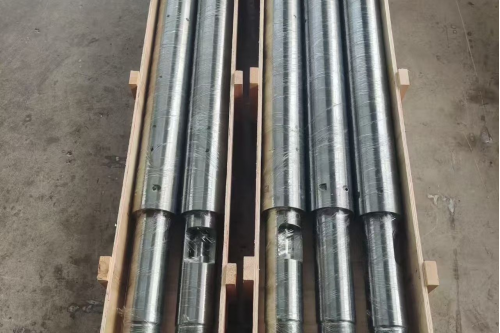
Screw and barrel sets packed for shipment. The pair is specified together — the clearance between them is the number that decides output, and it belongs to neither part on its own.
-
10. What to send for a quotation
Reinforced duty enquiries fail for the same reason every time: the machine details arrive without the compound details, or the compound arrives without the wear evidence. The checklist for a replacement project has the long version; the short one is below.
- Machine make, model and screw diameter, plus the original drawing if it exists
- Resin grade, filler type and percentage, and the regrind proportion
- Melt temperature, output, screw speed and running hours per year
- The measurements in section 9, and photographs of each wear zone
- The service interval you are trying to reach, and what the last part achieved
If the machine is a proprietary design, a replacement built from OEM drawings is usually the shortest route, and the manufacturing process and capacity pages describe how the part is made and how long it takes. Where the geometry has to change as well as the alloy, the custom screw and barrel route covers the pair together.
It is also worth stating the service interval you are asking for in months rather than in adjectives. A reinforced-duty bore bought to reach 24 months and one bought to reach 36 are not the same purchase, and the expected-interval benchmarks give you something to compare against. PIPLL’s manufacturing page sets out what the plant can hold on alloy, layer thickness and bore geometry, which is what makes the interval a commitment rather than a hope.
-
✔ Glass-Fibre Screw & Barrel Specialist | ✔ Tungsten-Carbide · Bimetallic · Hardfaced · Through-Hardened
✔ Fibre-Length Survival Geometry | ✔ Wear Mapping · OEM Replacement · Service-Interval Engineering