 Languages
WPC Wood-Plastic Composite Extrusion: Screw and Barrel Design for Wood-Filled Compounds
-
WPC Wood-Plastic Composite Extrusion: Screw and Barrel Design for Wood-Filled Compounds
Wood flour is abrasive, hygroscopic and thermally fragile all at once, and it arrives at loadings where it stops behaving like a filler and starts behaving like the matrix. This guide covers how wood content changes the melt, why a barrier screw is the wrong instrument here, what the venting has to remove, and why barrel metallurgy is the difference between a screw that lasts a thousand hours and one that lasts twelve thousand.
-
1. What WPC Extrusion Actually Is
A wood-plastic composite is a thermoplastic matrix carrying wood flour or wood fibre, together with a coupling agent, lubricants and a UV package. The matrix is usually PE , PP or PVC, and the wood fraction is commonly between 30 % and 70 % by weight.
Above about 40 % wood the description of “filled plastic” stops being useful — the wood particles become the dominant phase. The commercial pull is real: outdoor decking, cladding, fencing, railing, window profiles and furniture components. The engineering consequence is that the screw and barrel are a consumable whose life is set by the wood content.
-
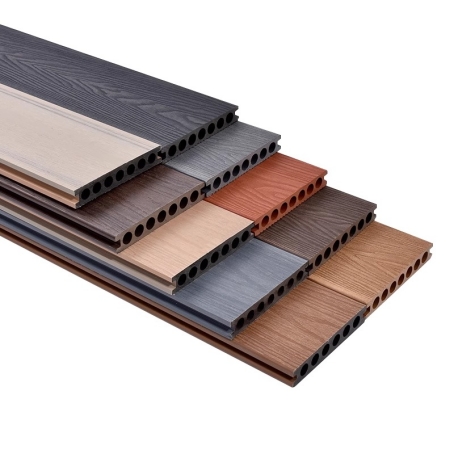
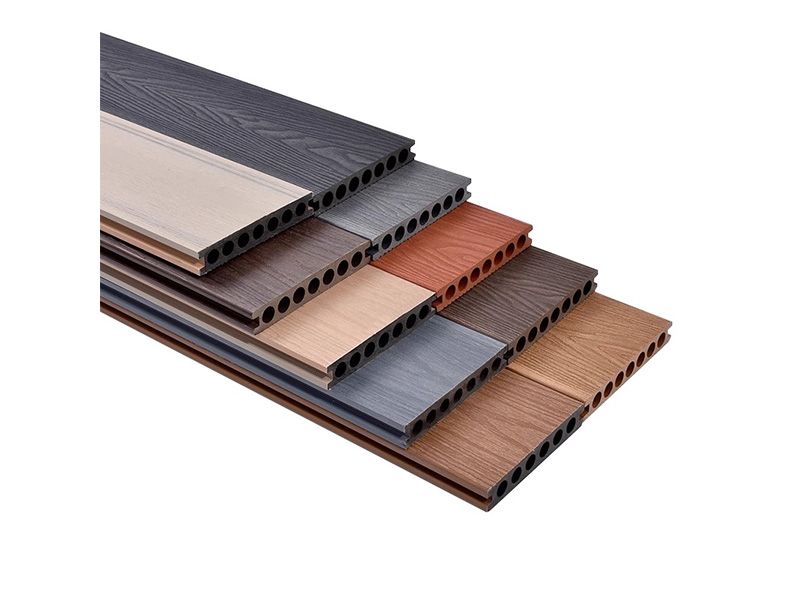
WPC decking. Decking is the largest WPC application by volume, and the one where abrasive wear of the screw and barrel sets the real maintenance interval.
-
2. Three Properties of Wood Flour That Define the Machine
Abrasive — wood flour carries silica and erodes flight tips, the compression section and the barrel bore. A bimetallic barrel lining addresses this directly.
Hygroscopic — wood flour arrives at roughly 8–12 % moisture and must be dried to around 1.5–2 %.
Thermally fragile — cellulose and lignin begin to degrade above roughly 195–200 °C.
-
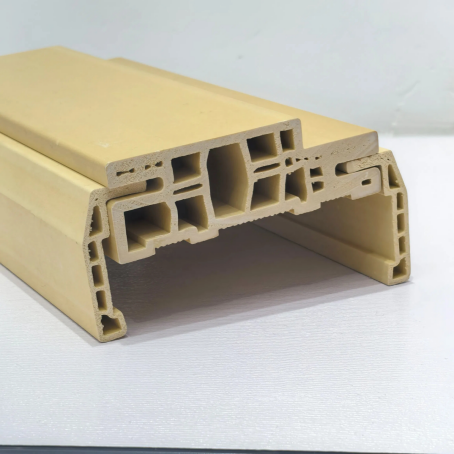
WPC profiles and cladding. Above roughly 40 % wood the fibre stops behaving like a filler and starts behaving like the matrix — which is the point at which feeding, venting and wear all change.
-
3. Wood Content: Where the Physics Changes
Wood content What the melt actually is Expected life, nitrided screw 30–40 % Polymer-continuous; wood acts as a filler Long; standard geometry often acceptable About 50 % Transitional; both phases matter Roughly 3,000–5,000 hours 65–70 % Wood-dominant; behaves like a filled paste Roughly 800–1,200 hours 4. Feeding: Low Bulk Density and the Bridging Problem
Wood flour’s bulk density is a fraction of that of a polymer pellet. Countermeasures include enlarging the feed opening, deepening the feed flights, forced or crammer feeding, and gravimetric dosing.
5. Venting: Why WPC Needs Two Vent Ports
A single atmospheric vent is rarely enough. WPC lines normally carry an atmospheric port early and a deep vacuum port later (−0.08 to −0.095 MPa) to strip residual moisture and decomposition volatiles.
-
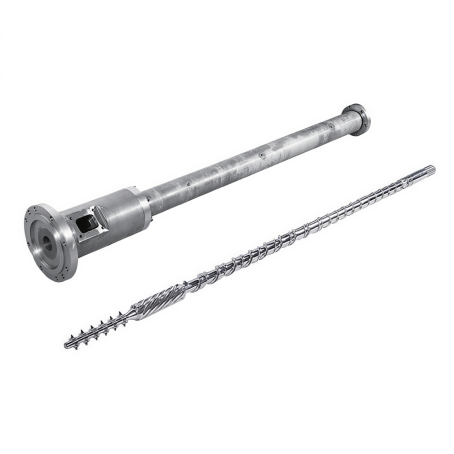
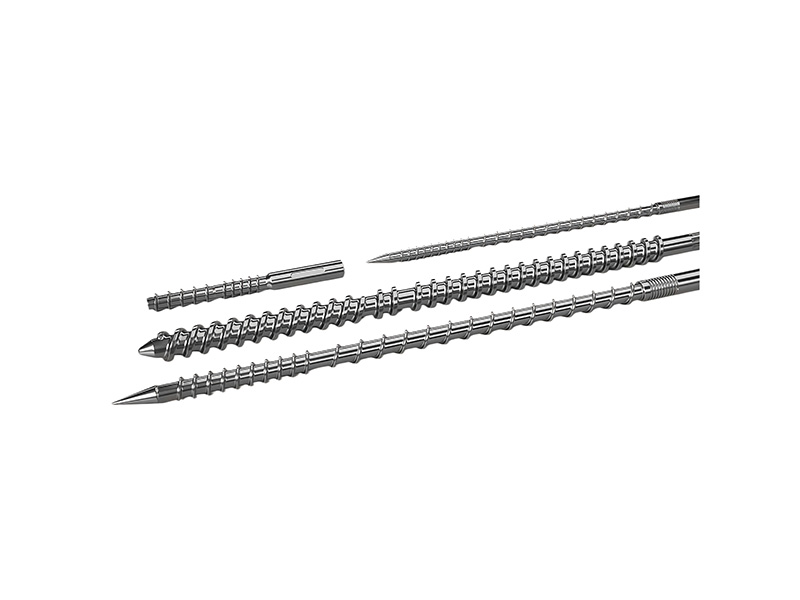
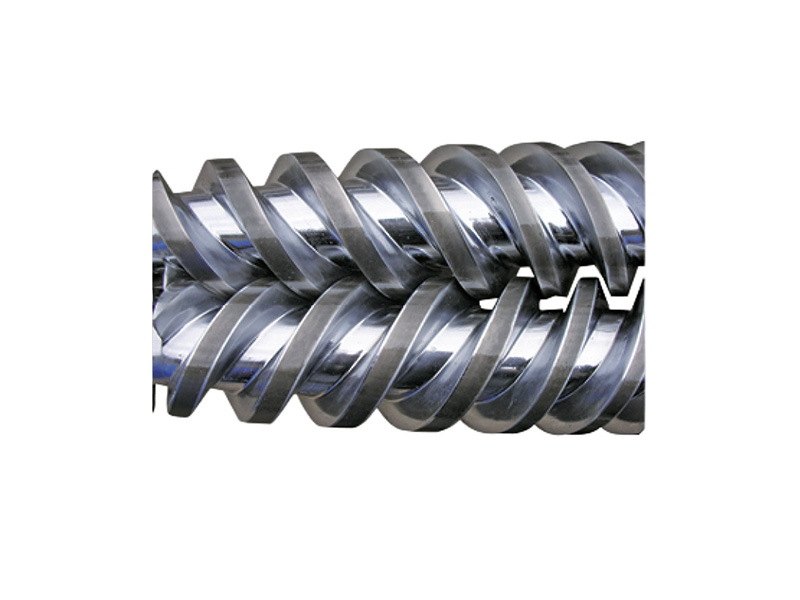
A single screw and barrel set for profile and pipe duty. On WPC the feed flights are deepened and the compression transition kept gradual — the geometry is working against shear heat, not for it.
-
6. Screw Geometry: L/D, Compression Ratio, and Why Not a Barrier Screw
Design element WPC practice Reason L/D ratio 32:1 – 34:1 (single); up to 40:1 (twin) Enough length for feed, gradual compression, two vents and metering Compression transition Gradual, 2.2:1 – 2.5:1 A sharp spike generates shear heat that scorches the fibre Barrier screw Do not use High-shear barrier design overheats wood flour and produces char Mixing section Distributive pin or turbine elements Homogenisation without a temperature rise 7. The Temperature Window
The WPC window is defined at the top end by the wood, not by the polymer. Keep the melt comfortably below 195–200 °C — typically 165–180 °C depending on the matrix.
-
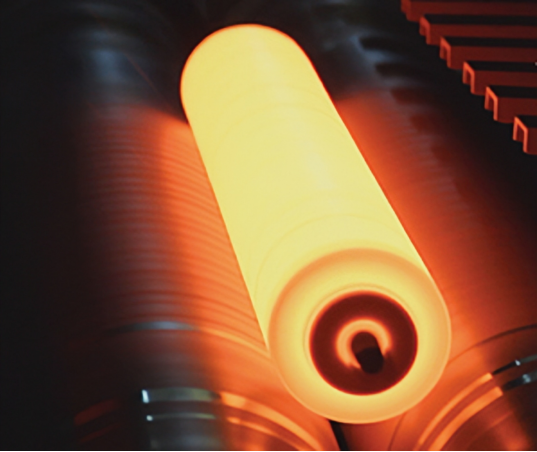
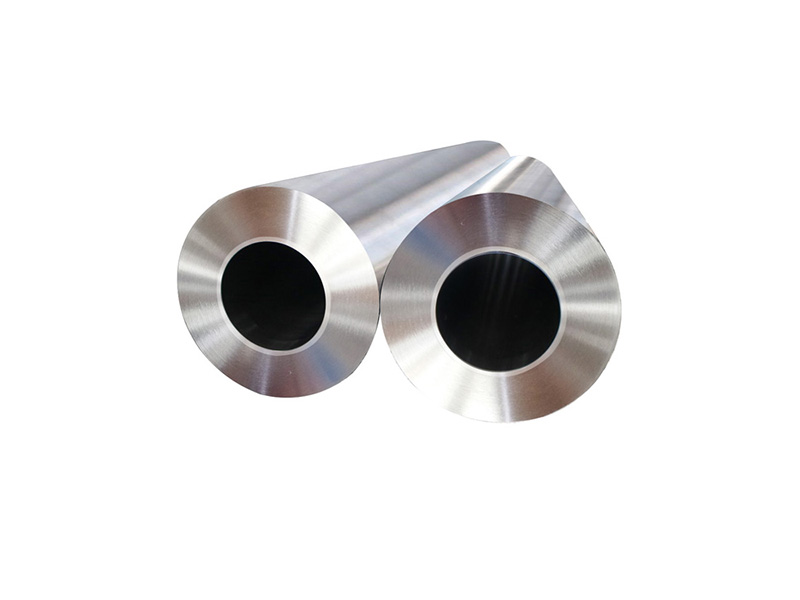
Centrifugal casting of a bimetallic barrel lining. Wood flour abrasion is the dominant wear mechanism in WPC, and it is the one variable the metallurgy can actually change.
-
8. Screw and Barrel Metallurgy: The Real Cost
Surface Hardness Life at ~50 % wood Life at ~70 % wood Nitrided 38CrMoAlA HRC 60–65 3,000–5,000 h 800–1,200 h Bimetallic, Ni-based liner HRC 55–62 6,000–8,000 h 2,000–3,500 h Tungsten carbide surface HRC 68–72 10,000–15,000 h 4,000–6,000 h For wood-filled duty PIPLL04 (Ni-WC-Cr-B) is normally the starting point because the tungsten-carbide phase addresses silica abrasion directly.
9. WPC Defects: Cause and Action
Symptom Usual cause Action Black specks, charred streaks Local overheating from shear or a dead zone Reduce screw speed; review compression ratio Bubbles, pinholes, internal voids Inadequate venting or undried flour Verify vacuum level and flour moisture Output pulsation, dimensional drift Unstable feed from bridging Crammer or forced feed, gravimetric dosing Heavy wear inside 12 months Metallurgy mismatched to wood content Move to bimetallic or tungsten-carbide surface 10. What to Send Before You Ask for a WPC Screw and Barrel
· Matrix polymer, wood species and mesh size, wood loading percentage
· Moisture as received, target moisture, drying method
· Board or profile cross-section drawing, line output in kg/h
· Single or twin screw, diameter, L/D, current compression ratio, drive power
· Vent positions, vacuum level, temperature profile, wear history
Conclusion
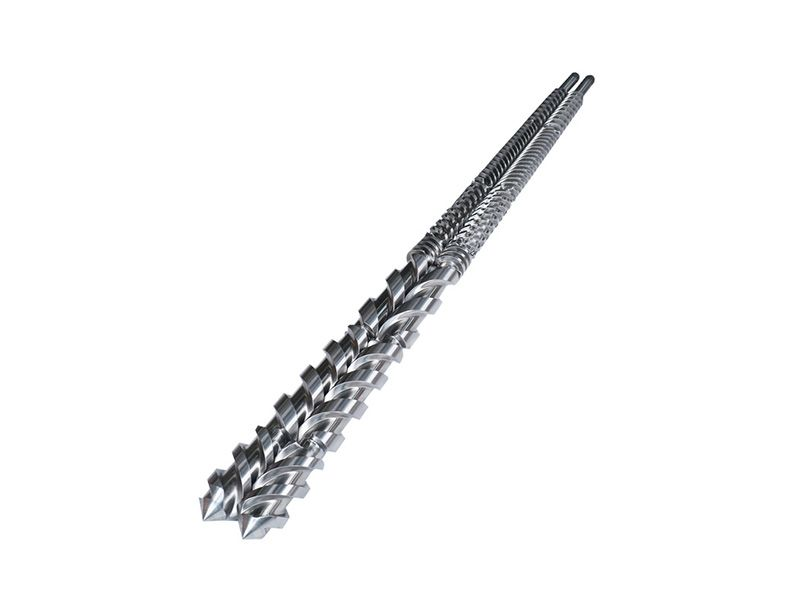
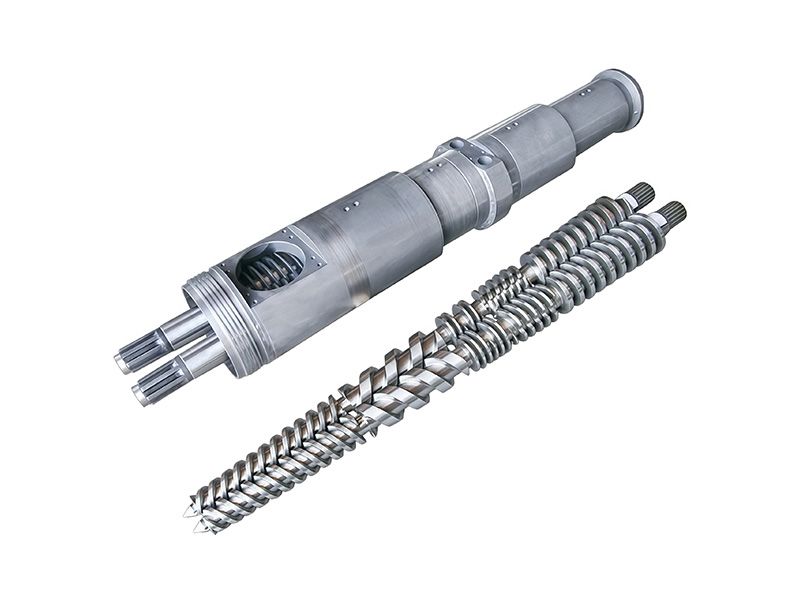
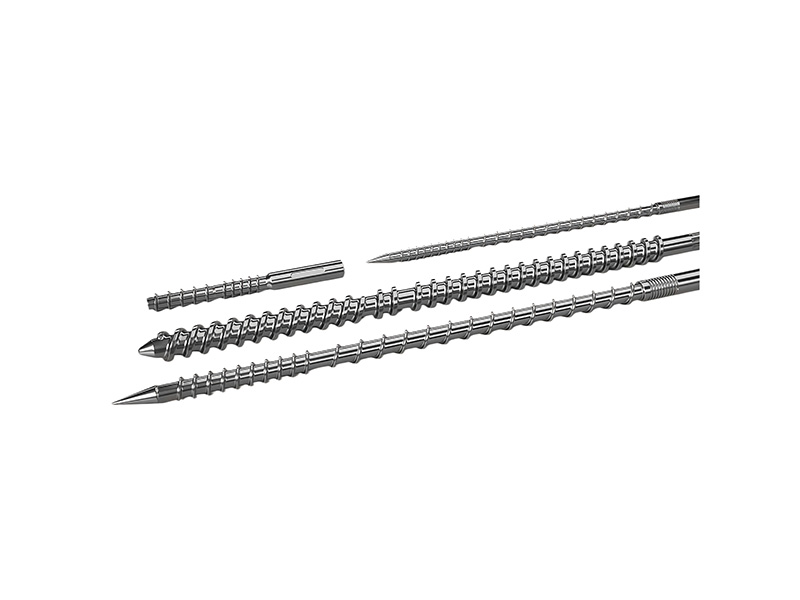
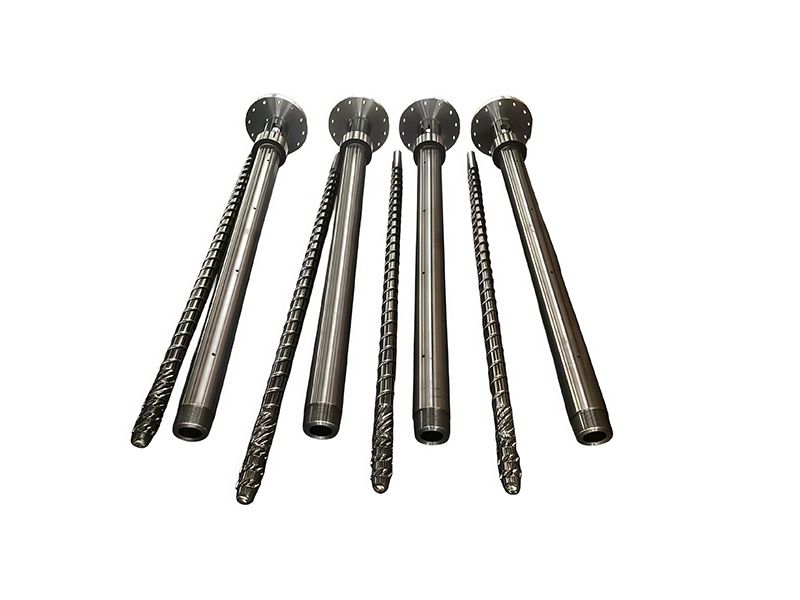
WPC is unusual in that you are protecting the metal from the material and the material from the metal at the same time. Abrasion demands a harder surface; heat sensitivity demands less shear. PIPLL manufactures matched single and twin screw and barrel sets for WPC decking and profile lines in Φ20–500 mm.
Related PIPLL Pages
· WPC Wood-Plastic Composite Extrusion
-
Technical and Sales Contact
Eric Dong | Co-founder | PIPLL | Screw and Barrel Solutions for Plastic Extrusion
Email: eric@pipll.com | WhatsApp: +86-15267878906 | Website: www.pipll.com