 Languages
ABS Extrusion Black Specks - Screw Barrel Inspection Guide
ABS Extrusion Black Specks 7 Screw Barrel Checks
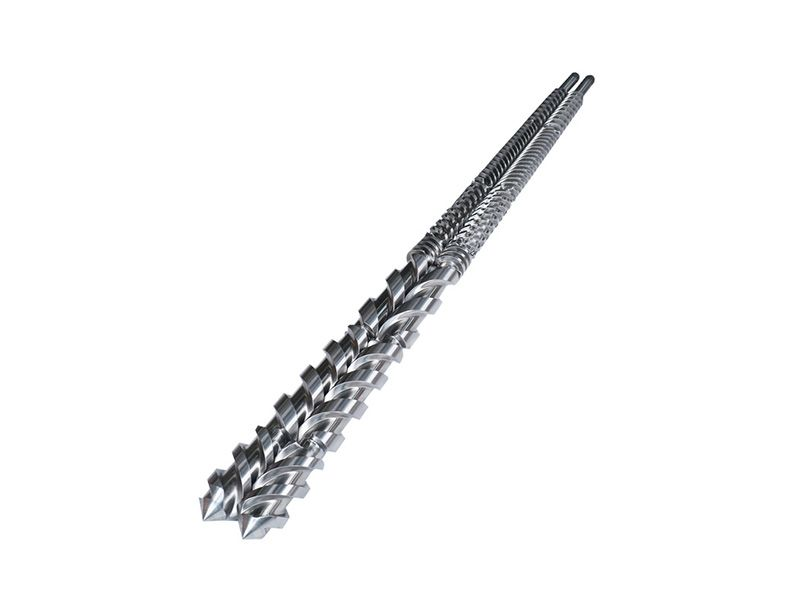
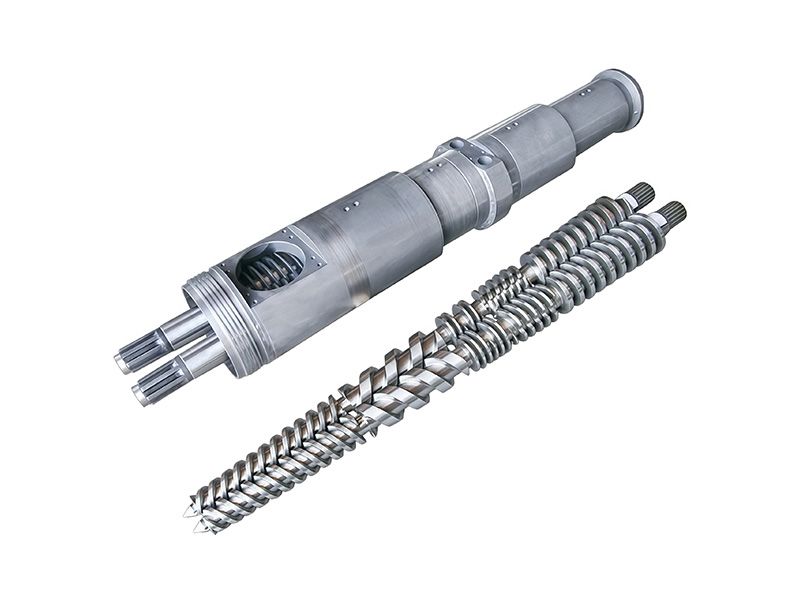
Black specks in ABS extrusion do not automatically mean the screw is worn. They can come from contaminated resin, incompatible regrind, degraded material left in the flow path, overheating, or a screw and barrel condition that creates excessive residence time. Before replacing an extruder screw and barrel, use the checks below to identify where the defect begins. PIPLL uses this ABS extrusion black specks checklist to separate material, process and component causes before recommending replacement parts.
The fastest diagnosis starts with one question: when do the black specks appear? A defect present only at startup points to a different cause from one that grows after several hours of stable production. Record timing before changing several settings at once.
GET A FREE QUOTE NOW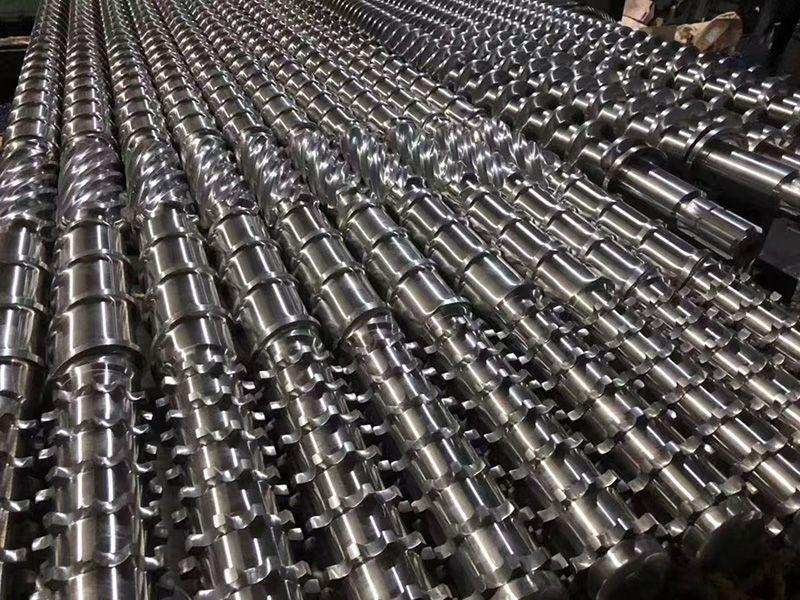
A screw may look clean outside the machine, but defect diagnosis depends on the complete material flow path.1 Record the Defect Pattern Before Adjusting the Line
A few production notes can narrow the search quickly. For ABS extrusion black specks, the timing and location of the defect often provide the first useful clue. Keep samples and record whether the specks are concentrated at startup, after a colour change, after a shutdown, only at high output, or continuously throughout the run. Also note whether they can be smeared. A hard foreign particle and a soft degraded polymer fragment should not be investigated in the same way.
- Startup only: inspect shutdown practice, purge quality, die lips and areas where old resin can remain.
- After a material or colour change: review compatibility, purge sequence and hold-up points.
- Increasing during a long run: review actual melt temperature, residence time and local stagnation.
- Only at high output: compare motor load, melt pressure, screen condition and temperature stability.
2 Rule Out Resin and Regrind Contamination
Begin with a short controlled run using verified clean material. PIPLL recommends ruling out resin and regrind contamination before attributing ABS extrusion black specks to the screw and barrel. Check the hopper, dryer, conveying hose, magnet, blender and regrind storage. ABS melt is not compatible with many other polymers, so a small amount of material left from a previous job can create visible defects or weak spots. Label regrind by grade and colour, and do not assume two black ABS streams contain the same additives.
Moisture usually shows itself through surface streaks, bubbles or poor appearance rather than isolated black particles, but drying still needs verification. Follow the resin supplier's drying instructions and compare actual dryer dew point, temperature and residence time with the target values. Do not raise barrel temperature to compensate for wet resin.
3 Compare Set Temperatures with Actual Melt Temperature
Controller setpoints do not prove that the polymer sees the intended temperature. A failed thermocouple, heater band, cooling circuit or poorly seated sensor can create a local hot area. Excessive shear or long residence time can also raise the actual melt temperature above the displayed barrel zones. Measure the melt consistently and look for one zone that cycles unusually or responds slowly. In an ABS extrusion black specks investigation, PIPLL compares actual melt temperature with setpoints and production data rather than relying on the controller display alone.
- Compare a good production record with the current zone temperatures, screw speed, pressure and output.
- Check whether the defect becomes worse after a stoppage with hot material left in the machine.
- Confirm that cooling fans or water circuits operate instead of relying only on the controller display.
4 Inspect Every Hold Up Point Downstream of the Screw
The screw is only one part of the melt path. Carbonised material can remain around the breaker plate, screen pack, adapter, static mixer, pressure sensor port, die entrance or die lip. If black specks continue after a screw change but the downstream assembly was not cleaned, the real source may remain untouched. ABS extrusion black specks can originate downstream of the screw, so PIPLL includes the complete melt path in a technical review.
When specks appear Check first When hardware becomes more likely At startup Shutdown residue, die and adapter Repeated carbon build-up at the same location After colour change Purge method and incompatible remnants Persistent hold-up despite a verified purge During a long run Melt temperature and residence time Wear or geometry creates poor wiping or recirculation With rising pressure Screen pack, die restriction and contamination Scoring, damaged surfaces or abnormal clearance 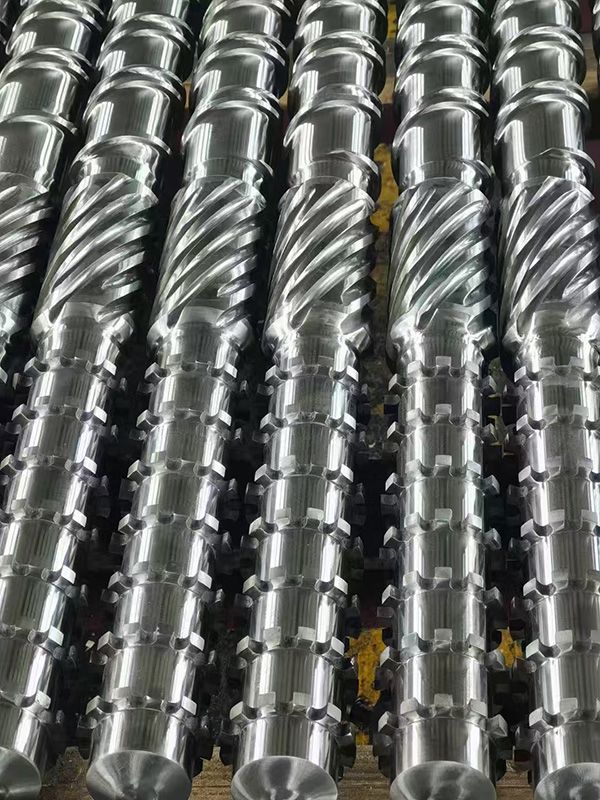
Mixing elements and transitions should be checked for deposits, damage and areas where material can remain.5 Review the Purge and Shutdown History
Ask what was processed immediately before the defect started. Dark colour, flame-retardant compounds, filled regrind and an extended hot shutdown can all leave a different cleaning burden. Record the last three materials, the purge compound or resin used, screw speed during purging and how long the machine remained hot without flow. For recurring ABS extrusion black specks, PIPLL uses this purge and shutdown history to identify possible degraded-material hold-up.
A long or unpredictable colour change suggests material hold-up somewhere in the system. It does not identify the screw by itself. Clean and inspect the downstream parts, then observe whether the same residue returns from the same area. For lines that repeatedly struggle with mixing or clean-down, a custom screw and barrel review can consider flight transitions, mixing sections, venting and the actual ABS formulation together.
6 Measure Screw and Barrel Condition
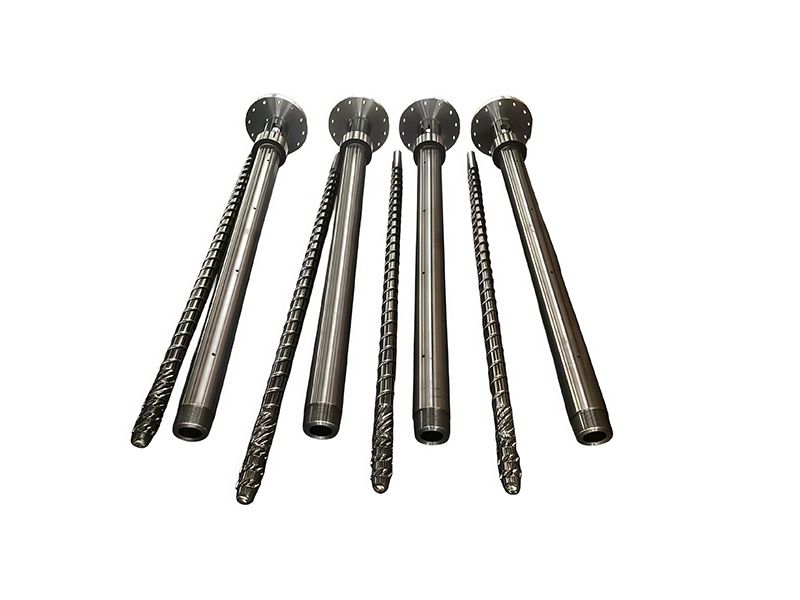
Move to mechanical inspection after the material, temperature and flow-path checks have been controlled. Pull the screw when practical, clean it completely and measure both screw outside diameter and barrel inside diameter at repeatable axial positions. Compare the clearance profile rather than relying on one measurement at the discharge end. PIPLL evaluates these measurements together with the ABS process data when reviewing screw and barrel condition.
- Map the wear location and compare it with feed, compression, mixing and metering sections.
- Look for scoring and pitting that can retain degraded polymer or disturb melt flow.
- Inspect flight edges and mixing features for rounded profiles, chipped protection layers or local deposits.
- Compare production data including output, pressure stability, motor load and melt uniformity before deciding on replacement.
If the ABS contains glass fibre, mineral filler or substantial recycled content, the wear mechanism and material choice deserve separate review. The bimetallic or nitrided screw barrel guide explains the basic selection logic without assuming that every ABS application requires a bimetallic solution.
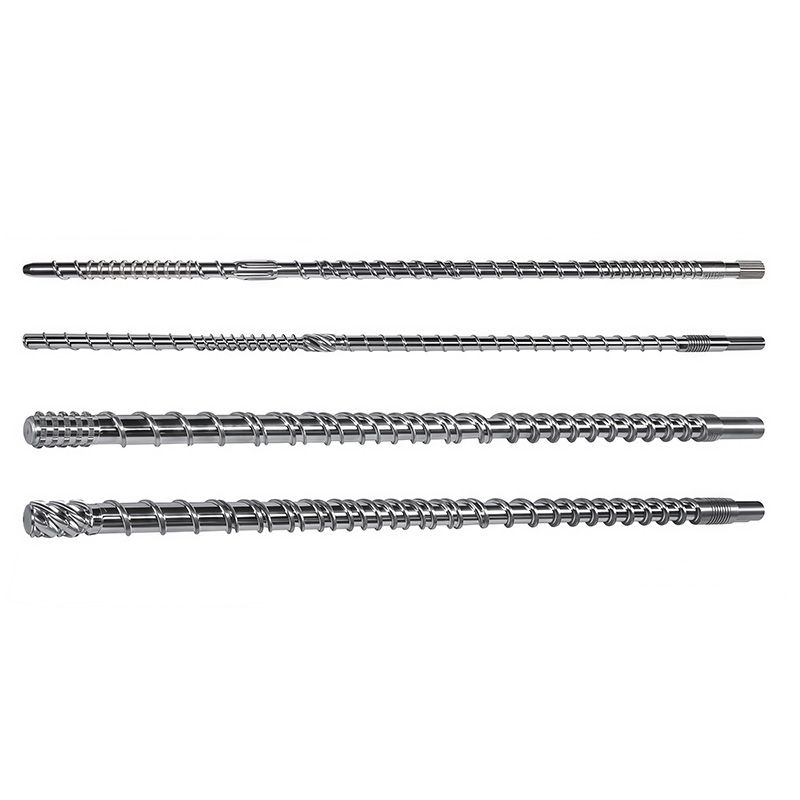
Screw geometry should match the resin, product, output and mixing requirement rather than a generic ABS label.7 Decide Whether to Clean Repair Redesign or Replace
The correct action depends on evidence from the earlier checks. When ABS extrusion black specks persist, PIPLL can review whether cleaning, repair, redesign or replacement is the most suitable next step. Cleaning is appropriate when deposits are local and the working surfaces remain within specification. Repair may be possible for a limited damaged area, provided the base material and treatment allow it. Replacement is more reasonable when wear is distributed, the barrel is oversize, the protection layer is failing, or the current geometry repeatedly creates an unresolved process limitation.
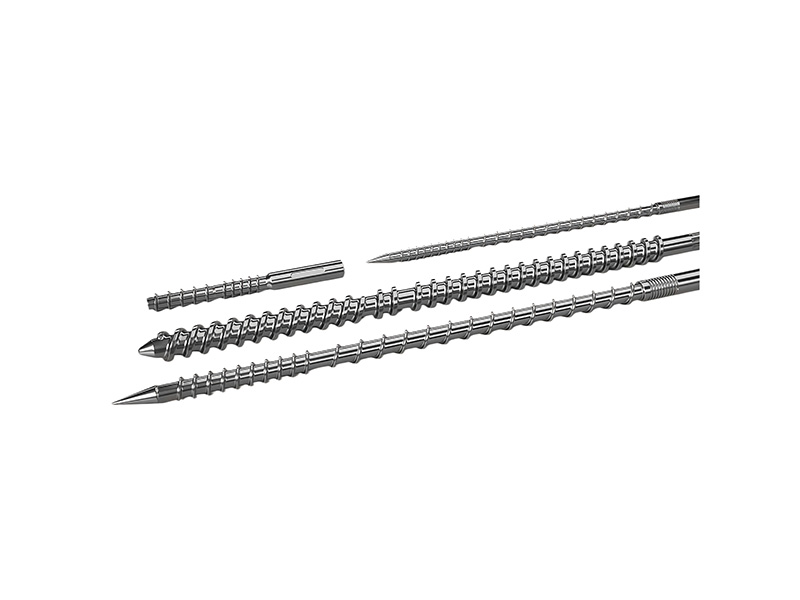
Do not copy an old screw automatically if the resin formulation, output target or downstream product has changed. Review the existing design against the current process. A high speed single extruder screw barrel may use barrier and mixing features for specific output and melt-quality targets, but those features still need to be selected for the real line conditions.
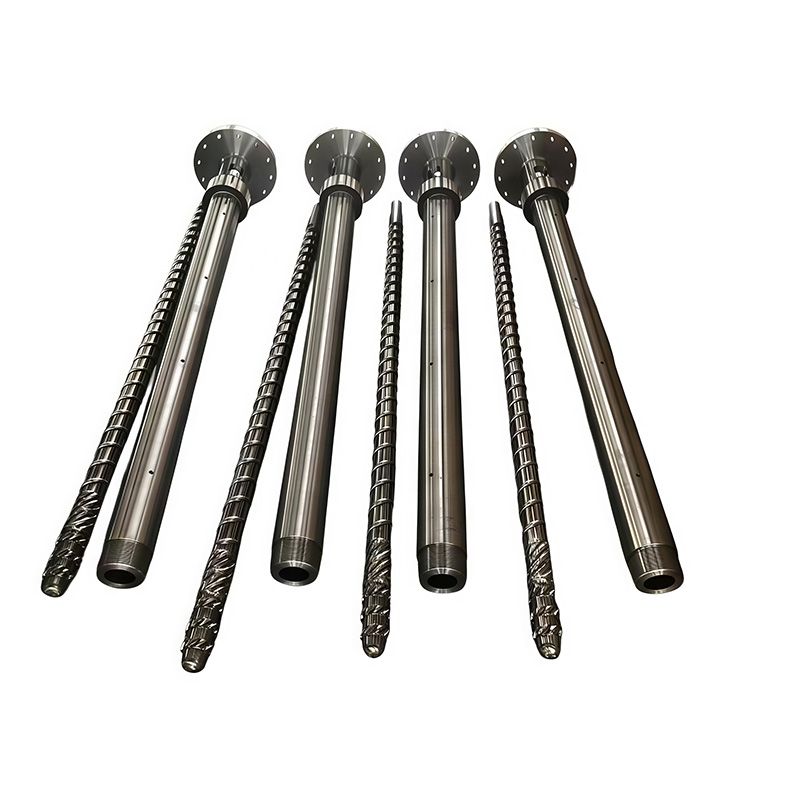
A replacement recommendation should combine measured component condition with the current ABS process data.What to Send for an ABS Extrusion Review
A useful technical review needs more than a photo of the finished sheet or profile. Prepare the following information so the defect and the component condition can be evaluated together. This allows PIPLL to assess ABS extrusion black specks in the context of the complete line rather than from a single component photo.
- ABS grade, colour, additive package and regrind percentage
- Product type and the location and appearance of the black specks
- Screw diameter, L/D ratio, screw speed, output and motor load
- Barrel temperature profile, measured melt temperature and melt pressure
- Drying conditions and the three materials processed before the defect
- Photos of the screw, barrel bore, screen pack, adapter and die after cleaning
- Wear measurements, machine model and any available screw drawing
Diagnose the Source Before Ordering Parts
Black specks in ABS extrusion are a symptom, not a complete diagnosis. First isolate resin and regrind contamination, drying, actual melt temperature, purge history and downstream hold-up points. Then measure the screw and barrel and compare the wear pattern with production data. This sequence helps avoid replacing a usable component while the contamination source remains elsewhere in the line.
If the defect persists after controlled cleaning and process checks, send PIPLL the line data, defect photos, machine model and available measurements. You can review the PIPLL manufacturing process or contact PIPLL for a screw and barrel assessment before preparing a replacement specification.