Recycling Extruder Screw Barrel Selection for Regrind and Pelletizing
A recycling extruder screw barrel should be selected from the actual waste stream and the installed line, not from the word recycled alone. A single screw barrel used for regrind pelletizing has different geometry and feed behavior from a recycled material conical twin screw barrel . The bimetallic screw barrel category may be relevant when measured abrasion or corrosion warrants greater surface protection. None of these choices removes the need to characterize contaminants, moisture, and changes between feedstock batches.
This article helps recycling-line operators prepare a practical screw barrel specification. It focuses on the connection between material variability, stable feeding and melting, wear evidence, and the records a supplier needs for a replacement or redesign proposal.
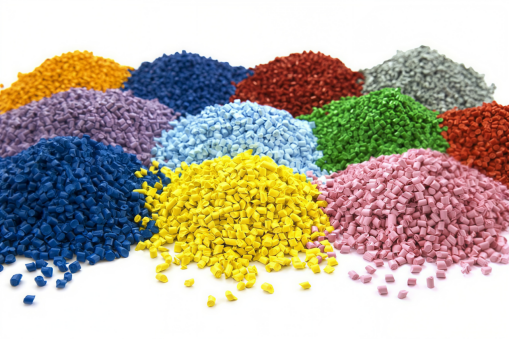
Figure 1. Different plastic pellets illustrate feedstock variability. The pictured colors do not identify resin grades or prove recyclate quality.
Describe the Regrind Before Selecting Geometry
A screw barrel for recycled plastics may process clean, single polymer production scrap, washed flakes, mixed regrind, or a compound containing mineral filler. Those feeds do not behave identically. Record the principal polymer, expected range of material sources, particle or flake form, bulk density variation, moisture, contaminants, and any filler or additive. Include whether the line uses a cutter compactor, force feeder, vent, melt filter, or downstream pelletizer.
For PET flake extrusion screw barrel inquiries, moisture control and drying history deserve specific attention because PET processing quality is sensitive to material condition. A generic screw recommendation cannot compensate for an unstable or poorly prepared feed. Likewise, a regrind extrusion screw barrel for PE or PP must be matched to the flake or pellet feed behavior and the actual line arrangement, rather than copied from a different recycling duty.
Match the Screw Barrel to the Line Architecture
Line situation | Review focus | Evidence needed
Single screw regrind pelletizing | Feed stability, melting, venting, filtration pressure, and screw wear. | Installed drawing, feeder, vent and filter layout, output and pressure trends.
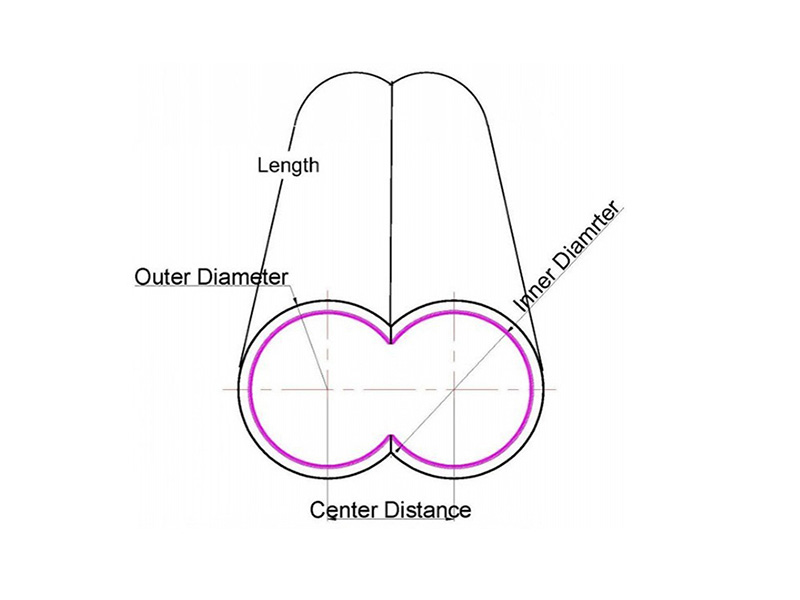
Conical twin screw recycled material duty | Twin screw profile, center distance, barrel bores, and material consistency. | Exact machine model, paired geometry, material mix and wear map.
Variable or contaminated feed | Cleaning and sorting limits, protection against scoring, and process monitoring. | Contaminant type, screen change history, photos and measured wear.
Architecture comes from the installed machine. A single screw for a recycled plastic pelletizing line is not interchangeable with a conical twin screw set. Before discussing profile changes, confirm screw diameter and length, drive connection, feed and vent locations, barrel zones, discharge connection, and whether a matching screw and barrel replacement is required.
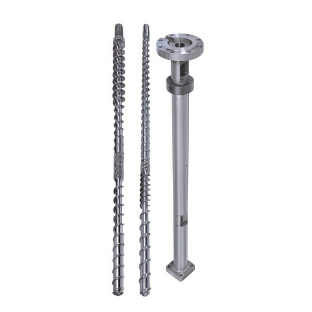
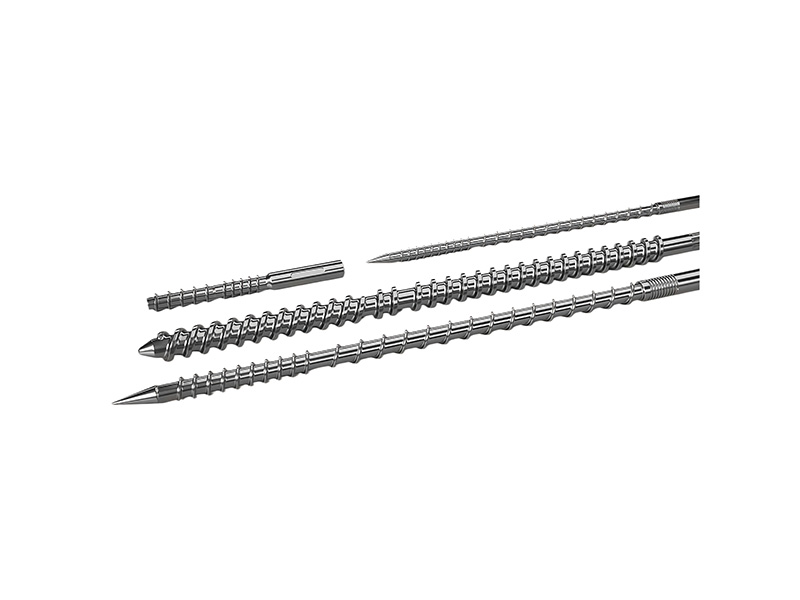
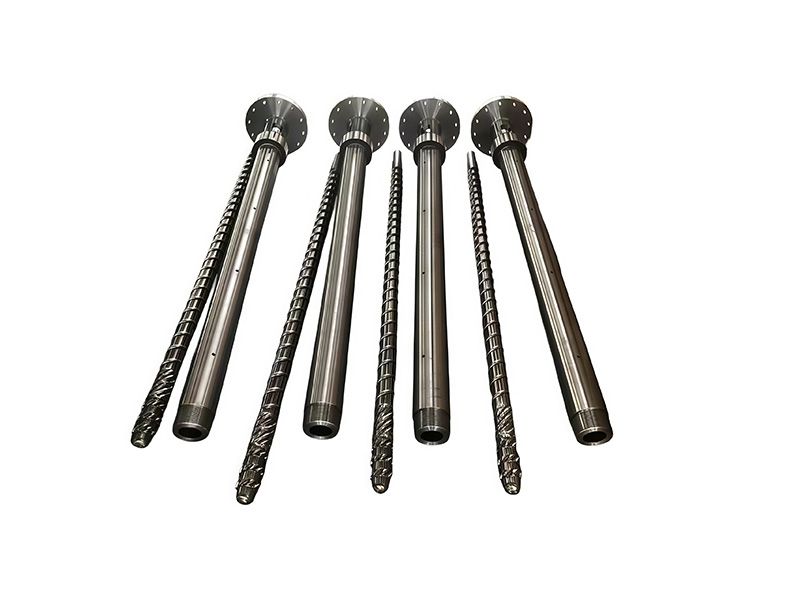
Figure 2. Example single screw and barrel components used in a recycling granulation context. The pictured parts are illustrative, not a universal recycling configuration.
Use Wear Evidence to Choose Surface Protection
A high wear screw barrel for a recycling line is justified by observed duty, not by a generic promise of longer life. Sand, metal fines, mineral filler, and hard inclusions can contribute to abrasive or localized damage; some formulations also create corrosion concerns. Map where flights lose diameter, where the bore enlarges, and where scoring or pitting begins. Compare those locations with feed condition and screen-change records.
For screw barrel for contaminated recycled material projects, ask what contaminants can be removed upstream and what remains in the process. Better sorting and filtration may address a different part of the problem than a harder barrel surface. If an alloy or liner is proposed, specify the protected component, material system, final dimensions, inspection method, and limits of the proposed construction. Replace the screw and barrel as a matched pair when wear measurements show that both sides of the running clearance are affected.
Send a Complete Recycling Line Inquiry
• Machine manufacturer, model, nameplate, original drawing, and verified screw and barrel dimensions.
• Polymer grades and feed form, source variability, moisture, contaminants, filler, and sorting or washing steps.
• Feeder, vent, melt filter, die and pelletizer arrangement, including any recent line changes.
• Current throughput, screw speed, temperature profile, melt pressure, screen changes, and quality or stoppage history.
• Flight and bore wear measurements, damage photos, service hours, and the desired replacement or redesign objective.
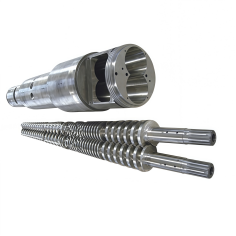
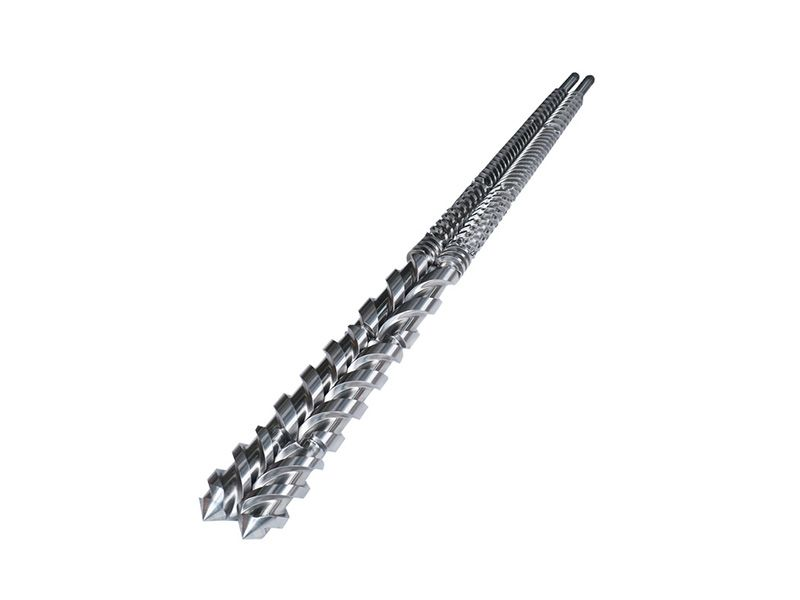
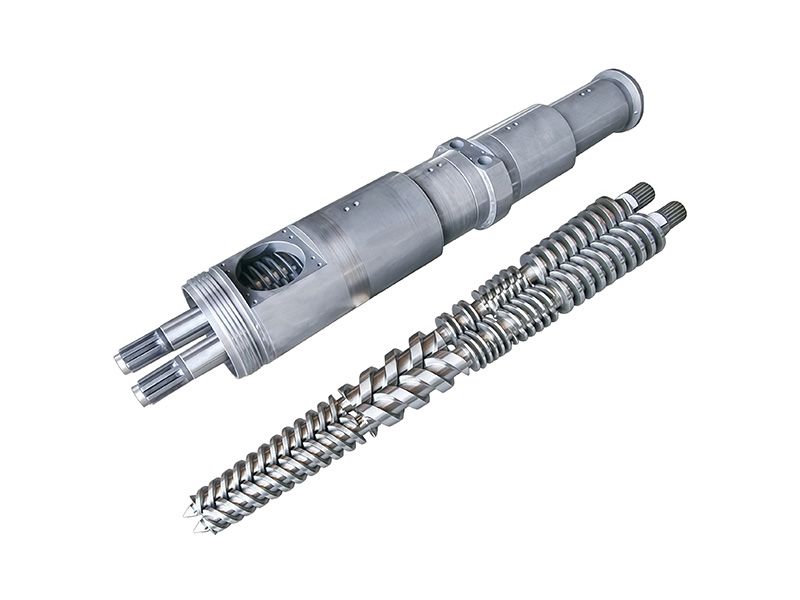
Figure 3. Conical twin screws and barrel shown as a different architecture for recycled material duty. This assembly is not interchangeable with the single screw example above.
Conclusion
A recycling extruder screw barrel specification begins with feedstock and line evidence. Identify the actual polymer stream and machine architecture, document process variation and wear, then decide whether a direct replacement, material upgrade, or geometry review is required. The resulting inquiry is easier to quote and easier to inspect than a request for a generic recycling screw.
Related PIPLL Pages
• Pelletizing Conical Twin Screw Barrel
- Related pelletizing product example.
• Custom Screw and Barrel
- Project specific replacement inquiry.
• Extruder Screw Wear Diagnosis
- Signals to record before teardown.
• How Screw Barrels Are Made
- Manufacturing and inspection background.
Technical and Sales Contact
Young | PIPLL | Screw and Barrel Solutions for Plastic Extrusion
Supporting extrusion manufacturers with customized screw and barrel solutions for PVC, PE, PP, PET, and other polymer processing applications.
Email: Young@pipll.com | WhatsApp: +86 150 5840 4692
Website: www.pipll.com


+86 15267878906

1306 W building , NB-IoT Industrial Park, No. 199 Changxing Road, Jiangbei, Ningbo.
 Languages