PLA 3D Printing Filament Extrusion and Diameter Control
PLA 3D printing filament extrusion depends on a stable relationship between melt delivery and downstream drawing. The screw barrel supplies the melt, but it cannot independently guarantee the finished filament diameter. Resin preparation, feeding, cooling, haul off and measurement must work together. A useful investigation follows the material through this sequence rather than adjusting screw speed whenever the gauge changes. For component information, see PIPLL custom screw barrel design , manufacturing process , pipe extrusion components .
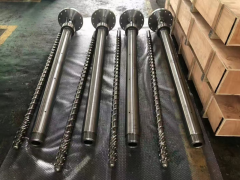
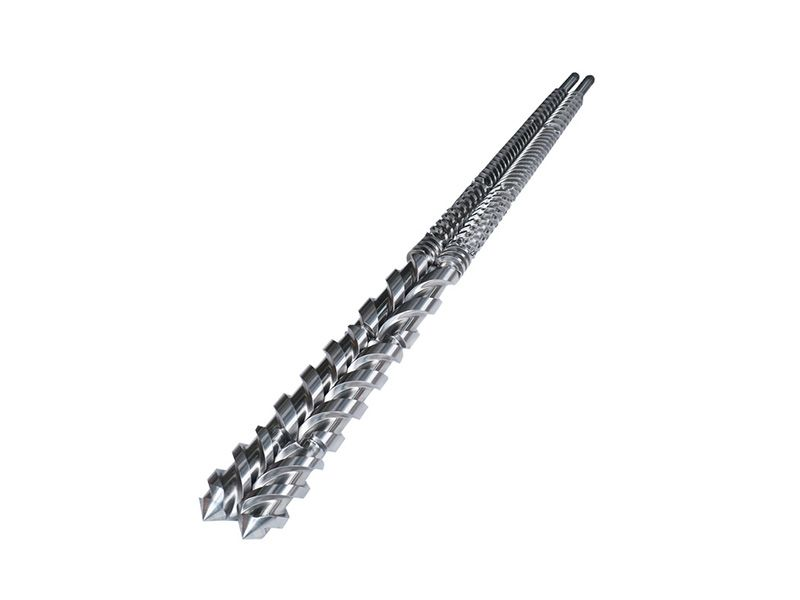
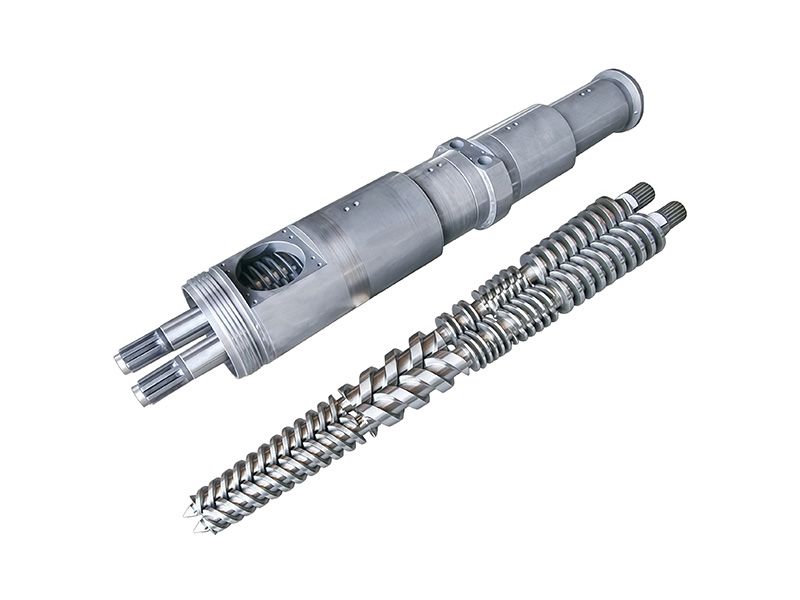
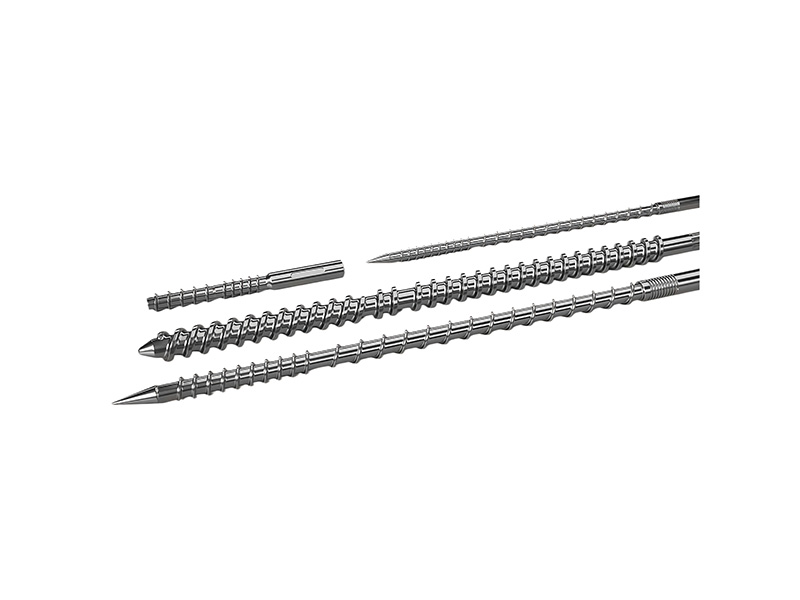
Single screw and barrel product reference. Application suitability requires a separate design review.
Why diameter control starts before the die
Define the required diameter, ovality and inspection method before commissioning. A nominal 1.75 mm designation is not an acceptance tolerance. State the allowable variation and how measurements will be sampled along the spool. Distinguish an occasional isolated defect from a repeating oscillation because these patterns point to different investigations.
Protect the resin condition through feeding
PLA filament extrusion moisture control begins with the selected resin grade and its supplier instructions. Moisture during melt processing can promote hydrolytic degradation, changing the behavior of the melt. Drying conditions must suit the grade and pellet condition; do not copy a temperature and time from a different polymer or assume longer drying is always better.
Check the path between drying and the feed throat. Exposure during storage, transfer or an extended interruption can undermine preparation. Record drying conditions, the available moisture measurement and the time material spends waiting before processing. Compare suspect and normal batches under equivalent conditions before changing the screw geometry.
Connect melt delivery with haul off speed
At approximately constant density and line speed, a change in mass delivery changes the cross sectional area of the filament. For a round strand, diameter varies with the square root of area. This explains why output and haul off should be assessed together. The relationship is a steady state approximation; it does not describe every effect of drawdown, temperature and cooling.
A PLA filament extruder screw design review should therefore start with synchronized output, pressure and diameter records. If the screw drive is steady but feeding is intermittent, changing the metering section may not solve the disturbance. If diameter changes coincide with haul off adjustments, review the downstream response and control logic before concluding that the barrel is worn.
Process relationship schematic
Use the measurement location to interpret the defect
A gauge measures the strand at its installation point. The time between a process disturbance and its appearance at that point depends on transport and line speed. Align recorded events using this delay. Otherwise a diameter alarm can be incorrectly associated with a later feeder event or operator adjustment.
Check whether the strand has reached the intended state at measurement and whether guides, tension or water carryover influence the reading. Use the equipment supplier procedure to verify calibration and alignment. Measurements in multiple directions can help distinguish ovality from a uniform diameter change. A single average value can hide a strand that is unsuitable for reliable feeding in a printer.
Diagnose repeating variation with controlled trials
Keep formulation, raw material preparation and downstream settings fixed while testing a defined change. Record diameter behavior over time, not only a handful of manual measurements. Retain spool positions or sample identifiers so visible defects can be connected to the operating record. Note interruptions and restart material separately from stable production.
When the evidence points to the screw barrel, review melting consistency, feed behavior and the actual machine geometry with PIPLL. Supply the diameter trace and the relevant process records alongside the drawing. A successful trial demonstrates the agreed diameter distribution and usable spool quality at a defined operating rate; a higher gross output alone does not demonstrate a better filament process.
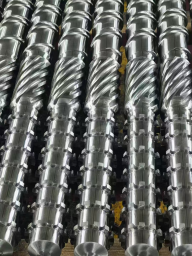
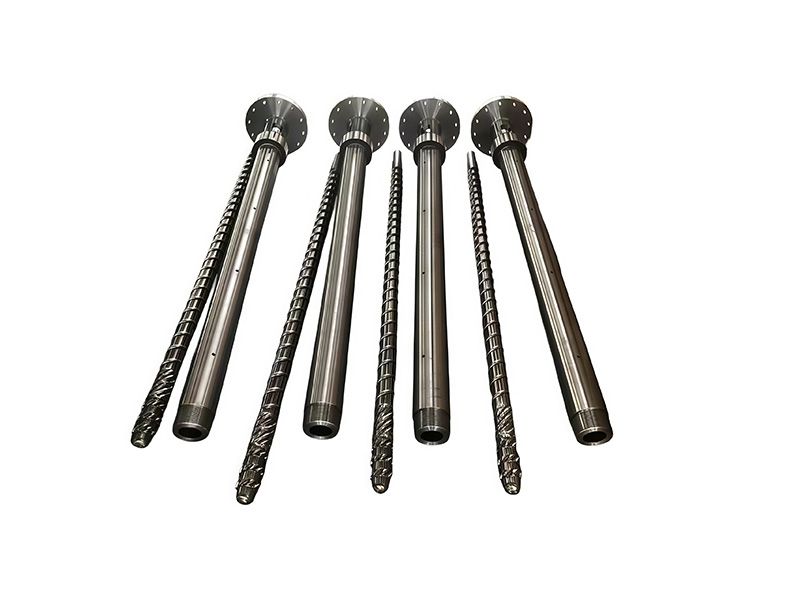
Machined screw mixing sections shown as a manufacturing detail reference.
Related PIPLL resources: wear checks ; maintenance resources ; bimetallic screw barrels ; compounding components .
For an application and drawing review, contact Young@pipll.com or WhatsApp +86 150 5840 4692.
Technical and Sales Contact
Young | PIPLL | Screw and Barrel Solutions for Plastic Extrusion
Supporting extrusion manufacturers with customized screw and barrel solutions for PVC, PE, PP, PET, and other polymer processing applications.
Email: Young@pipll.com | WhatsApp: +86 150 5840 4692
Website: www.pipll.com


+86 15267878906

1306 W building , NB-IoT Industrial Park, No. 199 Changxing Road, Jiangbei, Ningbo.
 Languages