 Languages
PVC Vent Port vs Vacuum Venting for Rigid PVC Pelletizing | PIPLL
Do You Need a Vent Port or Vacuum Venting for Rigid PVC Pelletizing
- Why PVC Venting Is a Process Decision Not a Standard UpgradeTransparent rigid PVC pelletizing is often judged by what comes out at the end of the line: clarity, color consistency, pellet density, odor and the absence of black specks or bubbles.When quality becomes unstable, many processors immediately ask whether they need a vacuum system. Others assume that a vent port is always an upgrade over a closed barrel. Neither assumption is reliable.A vented single screw barrel can help release air, moisture and volatile components. Vacuum venting can provide stronger devolatilization when the application genuinely needs it. But a poorly matched vent port, inadequate melt seal or unstable screw profile can create new problems: material leaking from the vent, inconsistent output, excessive residence time, contamination and even more visible defects.For rigid PVC pelletizing, the right question is not simply, 'Should we add vacuum?' The useful question is: What needs to be removed from the melt, and can the screw-barrel system expose and release it without damaging the PVC?At PIPLL, we approach a single screw barrel for PVC as a complete process component. The vent port, screw profile, L/D ratio, compression behavior and downstream pressure requirement must work together.
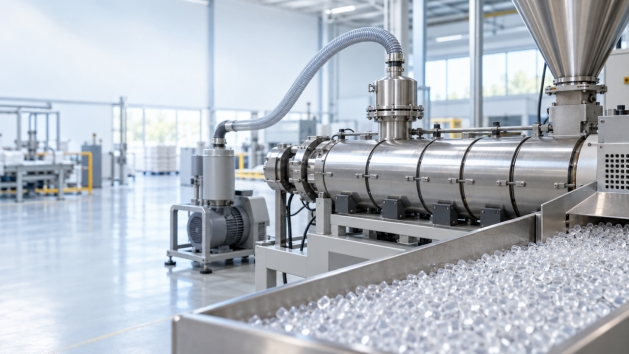
Featured visual. Illustrative rigid PVC pelletizing with vacuum venting; this is not a photograph of a specific PIPLL or customer facility.
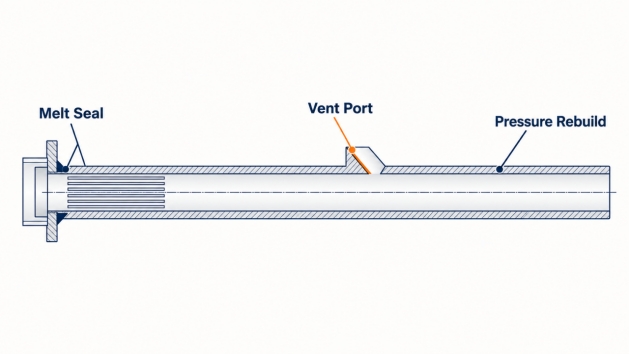
- Vent Port and Vacuum Venting Are Not the SameAn atmospheric vent port is an opening in the barrel that allows entrained air and low levels of vapor to escape under normal pressure conditions. A vacuum venting system connects the vent zone to a vacuum source. It lowers the pressure around the exposed melt and can improve the removal of moisture, air and volatile components.Both options require the material to reach the vent zone in the correct condition. The PVC should be sufficiently plasticized to release gases, but not pushed so aggressively that melt escapes through the opening.· A stable melting and conveying section before the vent· A melt seal or pressure-building section that prevents material from flooding the vent opening· A decompression and venting zone, followed by a downstream section that rebuilds pressure for pelletizingThis is why adding a hole to a standard barrel is not the same as designing a vented single screw and barrel for plastic extruder use.
Figure 1. Public-safe PIPLL vented-barrel concept. The melt seal, vent port and pressure-rebuild functions must work as one process sequence. All dimensions and manufacturing details have been removed.
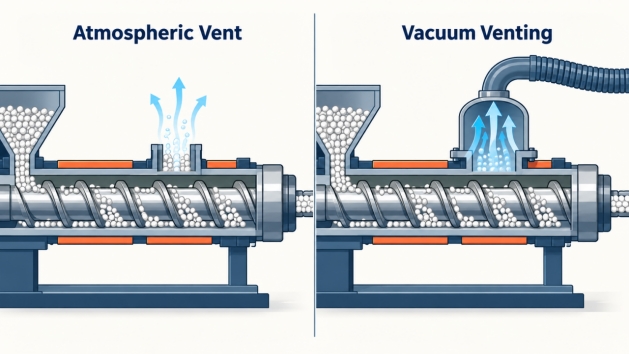
- When a Non Vented Barrel May Be EnoughA closed, non-vented barrel is not automatically a weakness. It can be the correct choice when the PVC material and process are stable.A non-vented single screw barrel may be sufficient when:· The rigid PVC formulation is clean, dry and consistent· Virgin material is used with little or no recycled content· There are no bubbles, foaming, odor or visible volatile-related defects· Output is stable and melt quality is already acceptable· The process has no evidence of trapped air, residual moisture or contamination carryoverIf transparent PVC is turning yellow or developing black specks because of excessive shear, degraded residue or a dead zone in the screw-barrel system, vacuum alone will not fix the root cause. The screw design, transition profile, surface condition and cleaning practice should be reviewed first.When an Atmospheric Vent Port Can HelpAn atmospheric vent port can be a practical middle option when the process needs to release entrained air or a limited amount of vapor, but does not require deep vacuum devolatilization.It may be worth considering when:· The material contains a controlled percentage of clean internal regrind· Air is entrained during feeding or blending· Minor porosity or inconsistent pellet density appears occasionally· The formulation produces limited vapor during processing· Production is stable enough to maintain a controlled fill level at the vent zoneAn atmospheric vent is not intended to remove every volatile component. Its main purpose is to give gases an escape path without making the process unnecessarily aggressive.
Figure 2. Atmospheric venting can release limited air or vapor. Vacuum venting provides stronger devolatilization when the formulation and screw-barrel design can support it.
- When Vacuum Venting Is Worth ConsideringVacuum venting becomes more relevant when the quality issue is connected to moisture, trapped gas, odor, volatile contamination or recycled-material variation.Rigid PVC pelletizing may benefit from vacuum venting when:· Regrind or recycled PVC is used at a meaningful percentage· Feedstock has inconsistent storage conditions or residual moisture· Pellets show bubbles, voids, foaming or unstable density· Finished material carries an unwanted odor or volatile residue· The process must improve clarity and visual consistency in transparent PVC· The formulation includes components that release vapor or gas during processingFor recycled material, vacuum can be valuable because the challenge is not limited to moisture. Regrind may introduce air, surface contamination, residual volatiles and inconsistent thermal history. Vacuum venting should still be treated as a process tool, not as a substitute for material sorting, cleaning, screening or correct screw design.Why a Vacuum Port Can Make PVC Processing WorseA vacuum vent can create problems if it is added without considering the screw profile and barrel layout.· Melt escaping from the vent opening· Vent blockage caused by material buildup· Unstable vacuum level caused by leaks or poor piping· Insufficient melting before the vent zone· Too much decompression, causing poor conveying stability· Long residence time that increases the risk of PVC degradation· A screw profile that does not rebuild pressure effectively after ventingFor heat-sensitive PVC, an unstable vented process may be worse than a properly controlled closed-barrel process. The most important design feature is the melt seal before the vent zone. It creates enough pressure control to keep polymer inside the barrel while allowing gases to escape. After venting, the downstream screw section must convey and recompress the melt steadily toward the die.
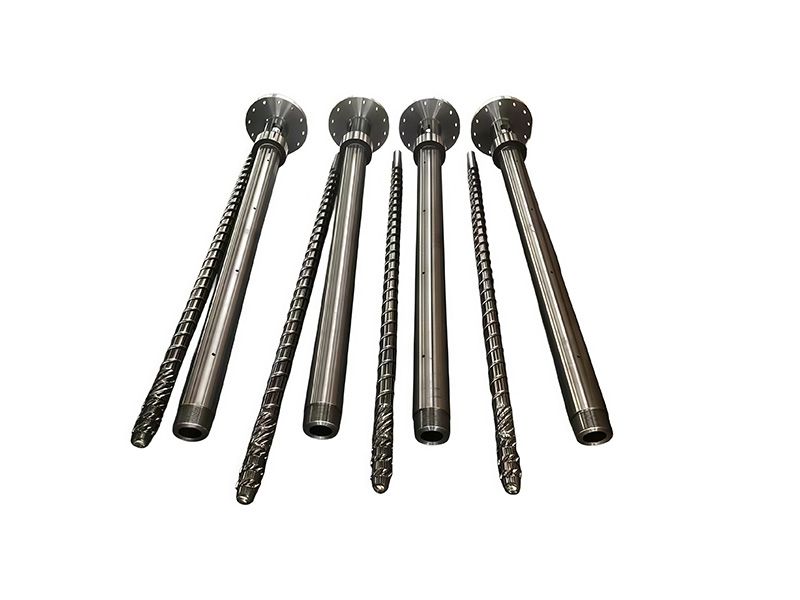
- The Barrel Vent Port Is Only Half of the DesignA vent port changes the barrel. It also changes the screw requirement. When PIPLL reviews a vented single screw barrel for PVC, the technical review should include:· Extruder diameter and current L/D ratio· PVC type and transparency requirement· Virgin material, regrind percentage and source of regrind· Stabilizer package, filler level and additives· Current output, target output and actual melt temperature· Existing screw drawing and vent-port location· Type of defect: bubbles, odor, yellowing, black specks, output fluctuation or material leakage· Condition of the existing screw and barrel, including wear, corrosion and depositsThis information helps determine whether the correct solution is to keep the closed barrel and optimize the screw profile, add an atmospheric vent port, use vacuum venting with a purpose-designed two-stage screw, repair worn components first, or improve material preparation before changing the extruder.Material Selection Still MattersVenting performance depends on process geometry, but wear and corrosion resistance still affect long-term stability. A nitrided screw barrel may suit many standard PVC extrusion applications. A bimetallic single screw barrel may be considered where abrasion, corrosion or recycled-material contamination creates a more demanding service condition.But material selection should follow process analysis. A premium barrel material cannot compensate for an incorrect vent-zone layout, poor melt seal or excessive thermal history.
- A Practical Decision Table
Process condition Recommended starting point Clean, dry, stable virgin rigid PVC with no volatile-related defects Non-vented barrel may be sufficient Minor entrained air or limited vapor with stable feedstock Evaluate an atmospheric vent port Recycled PVC, moisture variation, odor, bubbles or volatile-related quality issues Evaluate vacuum venting with a purpose-designed screw profile Melt leaking from an existing vent Review melt seal, screw geometry, fill level, vent location and downstream pressure Yellowing or black specks without bubbles or odor Review shear, dead zones, wear and cleaning before assuming vacuum is needed High regrind content with inconsistent quality Review material preparation and consider vacuum venting as part of a complete process solution - How PIPLL Supports PVC Venting DecisionsPIPLL does not start with the assumption that every PVC pelletizing line needs vacuum. As a custom extruder screw manufacturer, PIPLL can review the existing screw drawing, barrel layout, material information and defect description to identify whether the issue is related to venting, screw geometry, wear, retention or operating conditions.For a new vented single screw barrel, the goal is to create a stable sequence: melt the PVC safely, build a controlled melt seal, release gases at the vent, rebuild pressure and pelletize consistently.ConclusionA vent port is not a universal upgrade, and vacuum venting is not a cure for every PVC defect. For clean and stable rigid PVC, a non-vented single screw barrel may be the best choice. For moderate air or vapor release, an atmospheric vent can be enough. For recycled PVC, moisture variation, odor, bubbles or volatile-related instability, vacuum venting may be justified.The correct decision depends on the material, the defect, the operating condition and the complete screw-barrel design. PIPLL manufactures customized single screw barrels for PVC extrusion and pelletizing applications. If you are considering a vent port, vacuum barrel or replacement screw, send your machine details, current screw drawing, material information and photos of the defect for a technical review.Related reading: How Screw Design Helps Prevent Yellowing and Black Specks in Transparent Rigid PVC Pelletizing.Technical and Sales ContactHarry Jiang | PIPLL | Screw and Barrel Solutions for Plastic ExtrusionSupporting extrusion manufacturers with customized screw and barrel solutions for PVC, PE, PP, PET, and other polymer processing applications.Email: Harry@pipll.com | WhatsApp: +86 182 6854 1152 | Website: www.pipll.com