 Languages
Maximizing Screw & Barrel Lifespan in PET Flake and Rigid Regrind Extrusion
Maximizing Screw & Barrel Lifespan in PET Flake and Rigid Regrind Extrusion
1. Executive Summary & Recycling Market Context
Global sustainability mandates, Extended Producer Responsibility (EPR) regulations, and ambitious corporate carbon-neutrality targets have transformed recycled polyethylene terephthalate (rPET) bottle flakes, post-consumer regrind (PCR), and post-industrial waste into core feedstocks for modern plastics converting. While incorporating high percentages of regrind dramatically cuts virgin polymer consumption and carbon emissions, it places unprecedented physical and mechanical demands on extrusion machinery hardware.
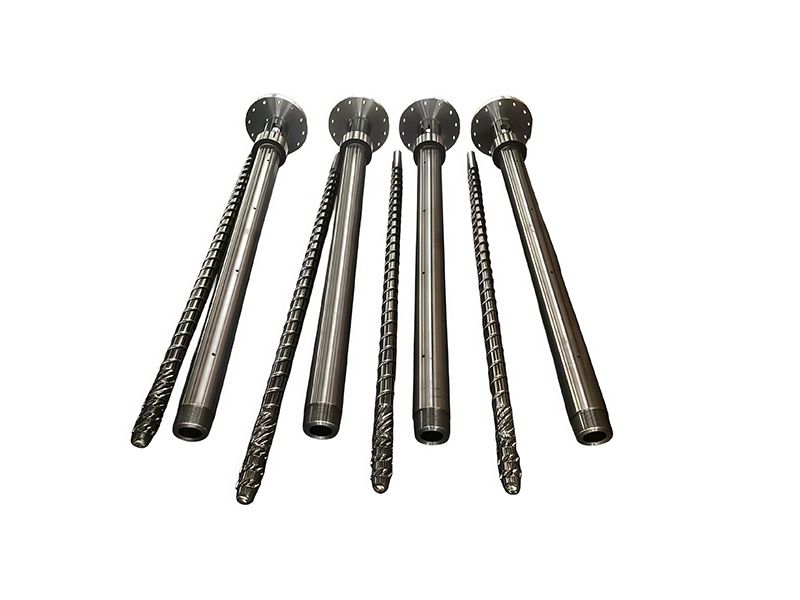
Unlike virgin resins, which feature predictable thermal properties, uniform pellet geometry, and high purity, recycled feedstocks arrive with erratic bulk densities, fluctuating melt flow indexes (MFI), and unpredictable levels of contamination. When processed through standard nitrided screws and barrels , these recycled flakes act as relentless micro-abrasives. Extrusion lines running high-recyclate content frequently experience accelerated barrel wall scoring, loss of screw flight height, and severe melt pressure loss within just 6 to 9 months.
This degradation severely undermines process stability, reduces hourly output, degrades end-product optical and mechanical properties, and forces expensive, unscheduled shutdowns for component replacement.
GET A FREE QUOTE NOW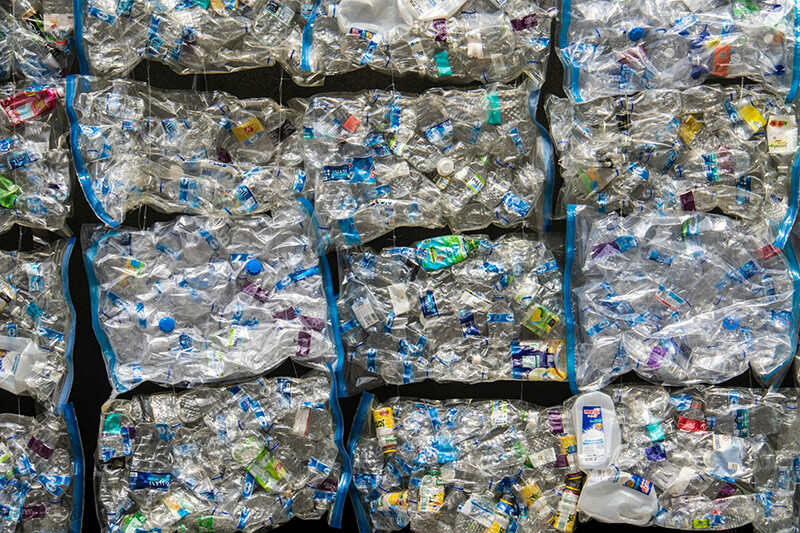
2. Comprehensive Breakdown of Recyclate Wear Mechanisms
To design effective hardware defenses, extrusion engineers must evaluate the complex, interactive wear mechanisms occurring inside the extruder during PET flake and regrind processing:
A. Solid Particulate Abrasion (Three‑Body & Two‑Body Wear)
Post‑consumer plastics inevitably contain residual silica, ambient dust, sand, aluminum foil fragments, ceramic dust, and residual mineral fillers. As these un‑melted solids are conveyed through the feed zone and compressed into the melting zone, they become trapped in the tight clearances between the screw flight land and the inner barrel wall. This creates extreme two‑body and three‑body abrasive grinding, effectively peeling away standard protective surface layers.
B. Hydrolytic Cleavage & Acidic Corrosive Attack
PET is highly hygroscopic, rapidly absorbing atmospheric moisture. When un‑dried or improperly dried bottle flakes enter the heated barrel, moisture triggers severe hydrolytic degradation at elevated processing temperatures (260°C ‑ 290°C). This reaction breaks the ester linkages in the polymer chain, causing a drop in Intrinsic Viscosity (IV) and producing acidic byproducts that chemically etch carbon steel and standard alloy barrel substrates.
C. Bulk Density Fluctuation & Frictional Thermal Spikes
Un‑compacted PET bottle flakes feature a low and erratic bulk density (typically 0.25 ‑ 0.38 g/cm³, compared to virgin PET pellets at ~0.85 g/cm³). As the feeding screw attempts to capture and compress this light material, localized friction spikes develop. This irregular friction causes local polymer overheating, thermal degradation, and sticky charring on the flight surfaces, further compounding abrasive wear.
3. Degradation Benchmarks & Hardware Lifespan Analysis
The table below outlines real‑world hardware lifespan benchmarks under varying feedstock conditions, contrasting standard treatment methods with advanced metallurgical upgrades:
Feedstock Condition Key Degradation Drivers Standard Nitrided Hardware Lifespan Premium Bimetallic / Carbide Lifespan Operational Impact Virgin PET Pellets Thermal Shear, Minimal Corrosion 24 – 36 Months 60+ Months Baseline operation, stable pressure. Clean Washed Bottle Flakes Fine Silica Abrasion, Hydrolysis 6 – 10 Months 36 – 48 Months Mild pressure fluctuation, gradual IV loss. Un‑washed / Mixed PCR Regrind Heavy Mineral & Metal Contamination 4 – 8 Months 30 – 42 Months Rapid pressure drop, frequent screen pack blinding. Highly Filled Post‑Industrial Regrind High Mineral Loading + Particle Wear 3 – 6 Months 24 – 36 Months Severe wall scoring, flight rounding, output loss. 4. Advanced Metallurgical & Screw Flight Engineering Solutions
To extend operational lifespan by 300% to 500% while processing aggressive recycling streams, processing facilities must implement combined structural and metallurgical upgrades:
A. Tungsten Carbide (WC Alloy) Centrifugally Cast Barrels
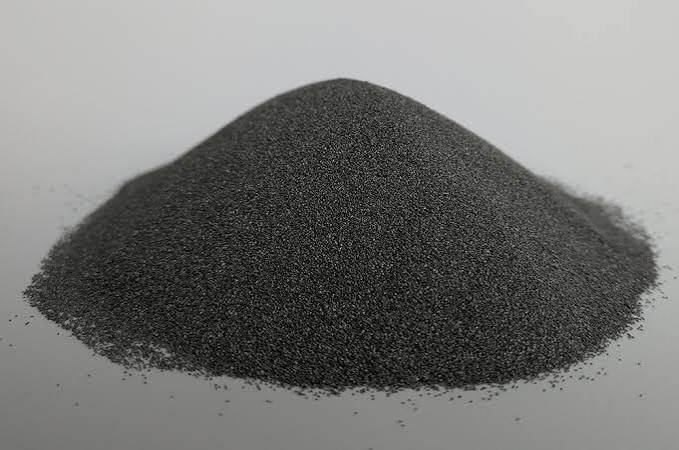
Rather than relying on thin surface nitriding (typically 0.3 ‑ 0.5 mm thick with moderate hardness), high‑wear barrels utilize centrifugal casting to apply a thick 2.0 mm to 3.5 mm bimetallic alloy lining. Formulations with high Tungsten Carbide matrix distribution achieve surface hardness levels exceeding 1800 HV, resisting direct particle scoring even under continuous 24/7 operation.
B. Laser‑Clad & PTA Hard‑Faced Screw Flights
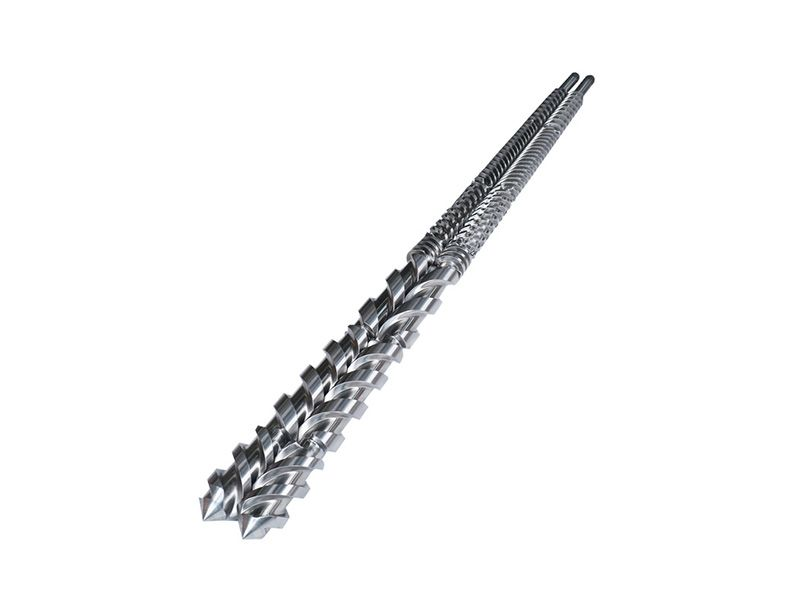
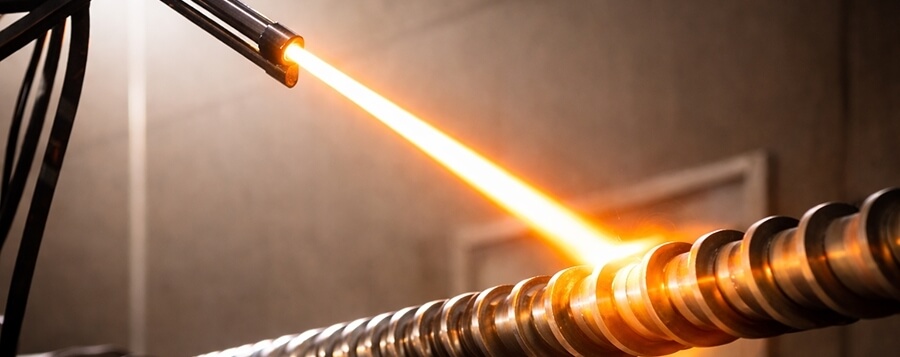
To match the durability of bimetallic barrels, screw flight tops must be reinforced with high‑grade Cobalt‑based or Nickel‑based hard‑facing alloys (such as Colmonoy 56/83 or Stellite 6) applied via Plasma Transferred Arc (PTA) welding or precision laser cladding. Maintaining precise radial clearance (<0.02 mm tolerance) prevents melt backflow and maintains volumetric efficiency.
C. Customized Screw Flight Geometry & Multi‑Stage Venting
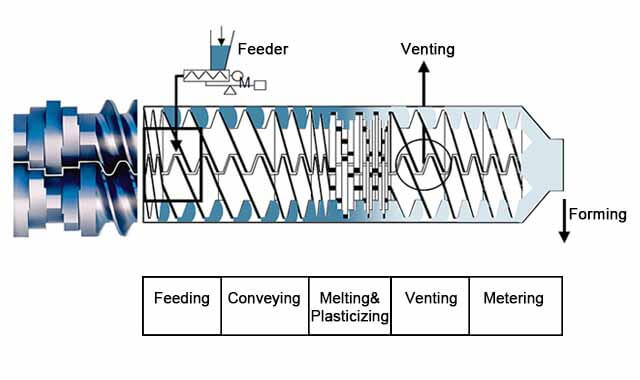
Standard short‑screw designs fail when handling fluffy flakes. Upgraded extruders utilize long long‑to‑diameter ratios (L/D 36:1 to 44:1) paired with:
- Deep Feed Sections: Enhanced flight depth to capture low‑density flakes without bridging.
- Gradual Compression Transitions: Preventing sudden shear spikes and reducing mechanical stress.
- Multi‑Stage Atmospheric & Vacuum Devolatilization: High‑vacuum venting zones to pull off moisture, volatile organic compounds (VOCs), and printing ink residues before the metering section.
5. Maintenance Best Practices for Recyclate Lines
- Regular Inspection of Radial Clearances: Check the clearance between screw flights and barrel walls using feeler gauges or bore micrometers every 6 months to catch wear early.
- Proper Purging Procedures: Always use high‑viscosity purging compounds tailored for PET before shutdown to clean residual acidic degradation products from screw channels.
- Moisture Control Optimization: Maintain online desiccant drying or multi‑stage vacuum degasification upstream to keep flake moisture content under 50 ppm, minimizing hydrolytic chain scission.
PIPLL Engineering Solutions & Direct Support
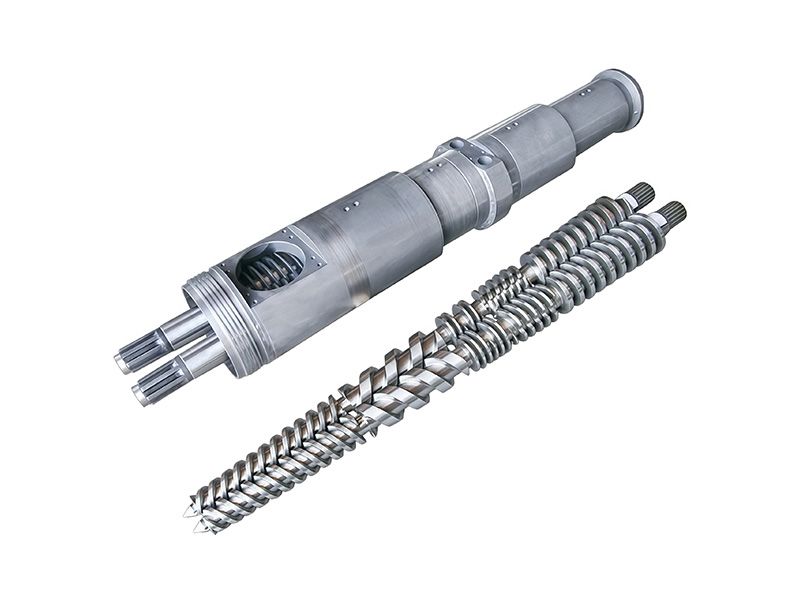
About PIPLL Engineering (www.pipll.com): PIPLL specializes in custom‑engineered screw and barrel assemblies built to withstand severe processing environments—from post‑consumer PET/PCR recyclates to ultra‑high CaCO3 mineral loadings. Manufactured leveraging Zhoushan's extrusion engineering hub and export facilities in Ningbo, PIPLL delivers precision component solutions worldwide.
Why Global Plastics Processors Partner with PIPLL:
- Centrifugally Cast Bimetallic Excellence: Our bimetallic barrels feature thick 2.0 mm to 3.5 mm alloy linings (PTA laser‑clad & Tungsten Carbide) with surface hardness up to 1800 HV, delivering 3x to 5x longer operational lifespan than standard nitrided components.
- Application‑Specific Geometry Customization: Every screw assembly is designed to match your specific polymer viscosity, melt flow index (MFI), filler ratio, and target output rates.
- Strict Quality Control & Global OEM Fit: Utilizing advanced 3D laser scanning and Coordinate Measuring Machine (CMM) inspection, PIPLL ensures tolerance matching within 0.02 mm for exact drop‑in fitment across global equipment brands.