How Extrusion Screws Work from Feeding to the Die
Think of an extruder as a steel digestive tract. The hopper takes a meal, the screw moves it forward, heat and mechanical work turn solids into a melt, and the die starts giving that melt its useful shape. When the line develops “indigestion,” the symptoms might be unmelted particles, bubbles or uneven output.
That analogy helps explain how extrusion screws work. For PIPLL, it also leads to a practical design question. What must this machine do to this particular material, at the required output, without damaging it? The answer guides the screw profile, barrel features and material specification. PIPLL custom screw and barrel service .
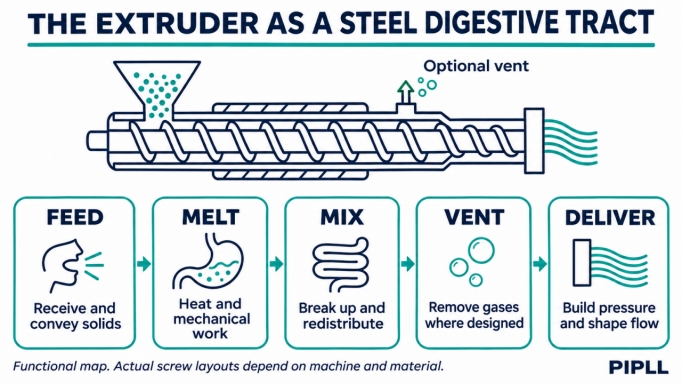
A Functional Map of the Steel Digestive Tract
Figure 1. A functional extrusion map. Mixing and venting features depend on the machine design.
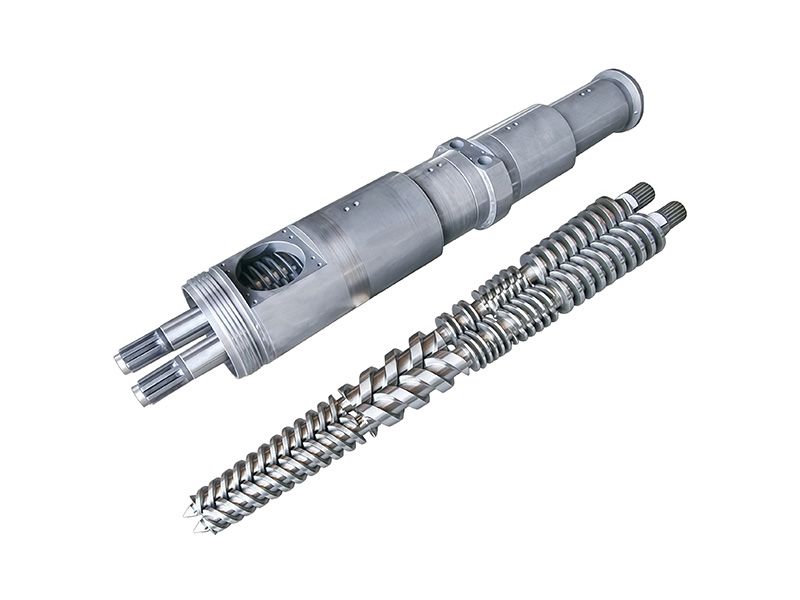
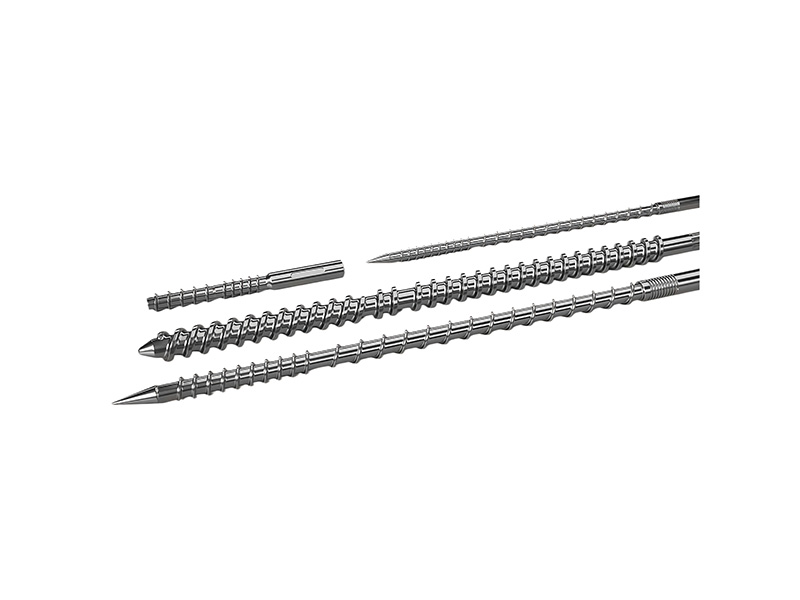
A conventional single screw commonly has feed, transition and metering sections. Mixing features and venting depend on the design. A modular co-rotating twin screw offers additional ways to arrange conveying, melting, mixing, side feeding and devolatilization.
The picture maps process tasks. Their locations and sequence must suit the actual screw and barrel, rather than follow an anatomical drawing.
Four Stops on the Journey Through the Barrel
Take In a Consistent Meal
The feed section receives the pellets or other feed and conveys them forward. In a conventional single screw it usually has a relatively deep channel. Feed form, bulk density, channel geometry and the frictional behavior at the screw and barrel determine intake.
Pellets sticking near a hot throat can interrupt feeding. Flakes and powders can bridge or feed inconsistently for other reasons. Check the cooling circuit and material condition before increasing rpm. Any blockage requires the machine's prescribed clearing procedure.
PIPLL's design review begins with what goes into the hopper. A uniform pellet feed and a variable regrind blend can require different intake geometry and thermal provisions, even when both carry the same polymer name.
Give the Melt Enough Time and Energy to Form
In the transition section of a conventional screw, channel depth usually decreases. The solids bed compacts while barrel heat and mechanical work develop the melt. The geometric compression ratio is commonly approximated by feed depth divided by metering depth when pitch and channel width are comparable.
PIPLL reviews that ratio together with transition length, rpm and required kg/h. A strong intake section can overwhelm the available melting capacity. A restrictive transition can raise load and melt heat. The profile must balance those tasks for the grade. The stomach comparison works here as a reminder to finish the melting job before demanding more downstream performance. Dynisco screw and barrel handbook .
Mix the Ingredients and Let the Gas Escape
Mixing has two jobs. Dispersive mixing breaks agglomerates or droplets into smaller sizes. Distributive mixing spreads material through the melt. Selected mixers on a single screw, or kneading and mixing elements on a twin screw, can contribute to these jobs with different stress and energy input.
A designed venting section gives gases a path out. In a twin screw vacuum section, channel fill, exposed melt surface, upstream sealing and downstream pressure generation must work together. A blocked or flooded port can defeat the intended removal. Coperion describes how screw pitch and operating conditions create partially filled devolatilization zones. Coperion devolatilization guide .
For moisture sensitive polymers, drying before processing protects the resin during melting. Later vacuum removal cannot restore molecular weight already lost through hydrolysis. NatureWorks makes that connection clear for PLA. NatureWorks Ingeo processing guide .
Deliver a Uniform Melt to the Die
The metering section aims to deliver melt steadily against downstream resistance. Its depth, length, running clearance and any mixing features influence output and temperature. The melt condition must be verified, especially if particles remain at the discharge.
The die starts forming the product. Drawing, cooling, inflation or cutting then completes the film, filament or pellets. If the strand grows thick and thin, compare feeding, melt condition, pressure and downstream speed. The whole line determines whether delivery remains steady.
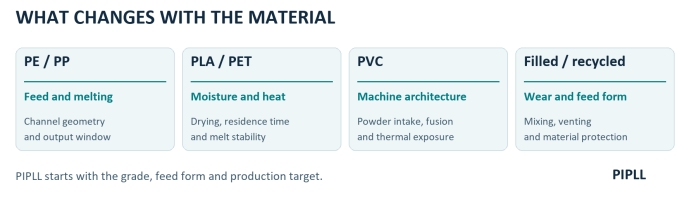
How PIPLL Changes the Design for Different Materials
Figure 2. The material and production duty guide the screw profile and barrel specification.
PE and PP Need the Melting Capacity to Match the Output
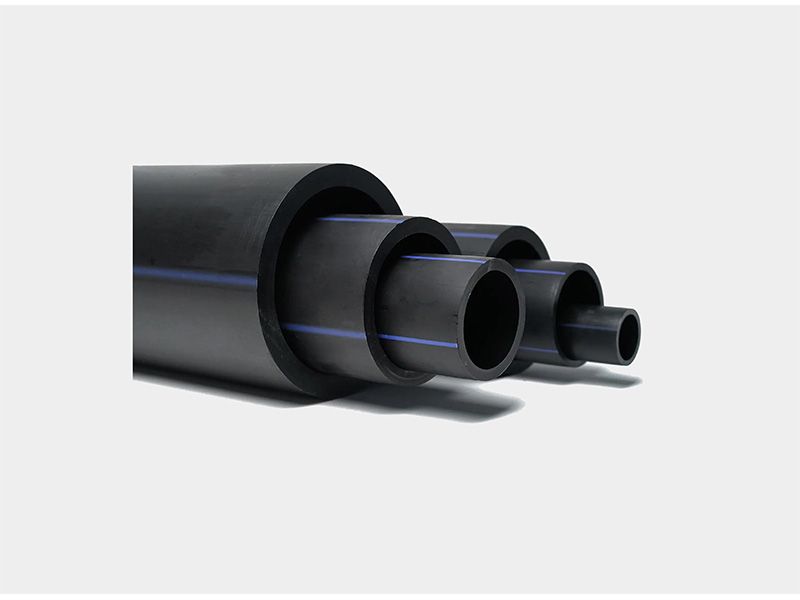
For polyolefin film or pipe, review the grade, melt flow characteristics, feed form and die resistance. PIPLL can assess feed channel geometry, a suitable transition or barrier arrangement, and metering and mixing requirements. On a high output line, the aim is acceptable melt quality at the required rate while keeping drive load and melt temperature within the operating window. PIPLL PE extrusion applications .
PLA and PET Need Control of Moisture and Thermal History
For PLA 3D printing filament extrusion, share the grade, drying data, output and diameter target. PIPLL offers screw geometry and surface treatment choices matched to the extruder. Evaluate melting and homogenization alongside residence time and downstream line control. PIPLL PLA filament screw and barrel .
When selecting a PET sheet extrusion screw barrel, add regrind content, drying or crystallization conditions, and the venting arrangement where fitted. Feed and melting design must suit those conditions. A larger vent by itself cannot establish a reliable drying and devolatilization process. PIPLL PET extrusion applications .
PVC Starts with the Machine Architecture and the Formulation
Rigid PVC dry blend is often processed on a counter-rotating twin screw. Establish that architecture before discussing the profile. PIPLL's conical twin screw barrel product provides a starting point for PVC applications. Review powder intake, fusion, thermal exposure and the formulation's wear or corrosion demands together. It calls for a different configuration from a co-rotating compounder used for intensive pigment dispersion. PIPLL PVC conical twin screw and barrel .
Filled and Recycled Materials Add Wear and Feed Challenges
Mineral filler, glass fiber, dust, variable particle size and contaminants can change both feeding and component life. PIPLL can review the relevant intake and mixing features, then match wear and corrosion protection to the duty. A bimetallic barrel lining is one option to assess. Confirm the geometry, alloy and mating screw clearance for the machine. PIPLL bimetallic extrusion barrel .
What a Customer Gets from a PIPLL Design Review
If your line has unmelted particles, PIPLL needs the grade, rate, rpm, measured melt temperature and a sample or photo. Those inputs help focus the review on intake, melting capacity and the transition or mixing section.
If the problem is yellowing or bubbles, add moisture results, run history, vacuum readings and any material changeovers. The review can then address thermal exposure, hang-up locations and vent design alongside material preparation.
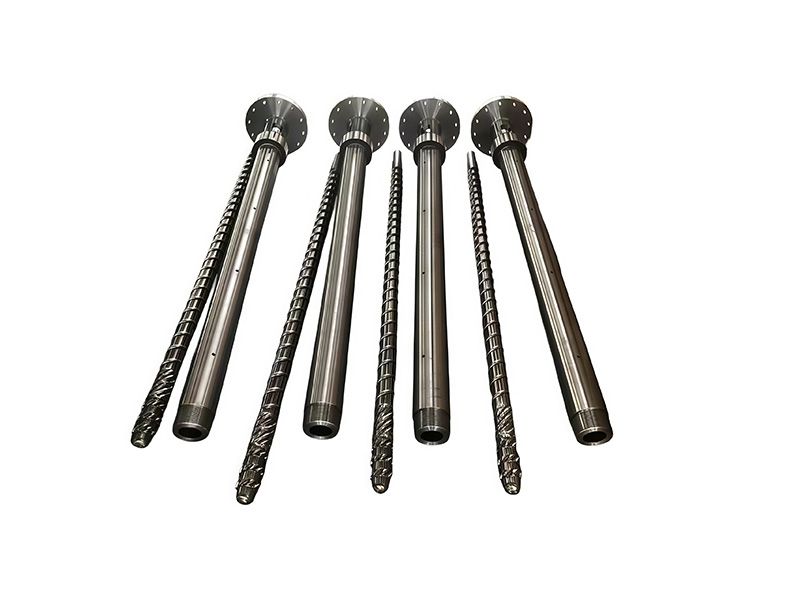
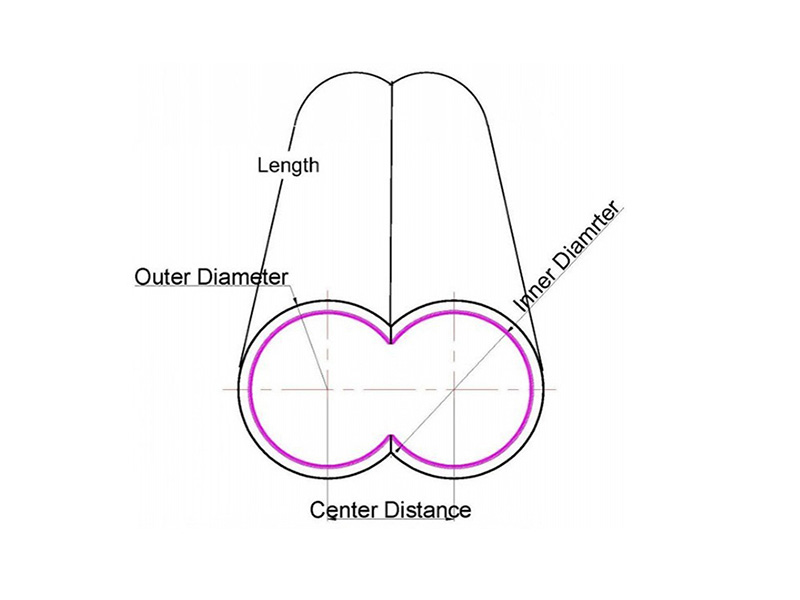
If a previously stable line has lost output, compare screw flight diameter and barrel bore at corresponding axial positions. Wear and geometry are different design questions. A matched replacement needs the original or agreed dimensions and interfaces.
Agree the Drawing and the Production Check
Ask for a proposed layout showing section lengths, channel depths, pitch, mixing features, vent positions where relevant and machine interfaces. Confirm the materials, treatments and running clearances. PIPLL's published process includes raw material checks, heat treatment monitoring and final dimensional inspection. PIPLL manufacturing and inspection process .
Agree what the acceptance run must demonstrate. Useful criteria include saleable kg/h, actual melt temperature, pressure and output consistency, dispersion, residual volatiles where relevant and the finished product requirement. Validate these on the specified formulation and line conditions.
Frequently Asked Questions
Does every screw have a vacuum vent? Venting is a designed function. A conventional unvented screw and a purpose-designed vented system have different layouts.
Does the metering section guarantee complete melting? It is intended to receive and deliver a suitable melt. Confirm that the upstream melting capacity and operating conditions support that aim.
Can one screw process several resin families? Some designs cover several grades. Each material still needs validation for feeding, melting, stability, pressure delivery and product quality.
Tell PIPLL What the Machine Needs to Process
Understanding how extrusion screws work turns “the machine has indigestion” into a useful engineering brief. Send PIPLL the machine model, screw drawing, resin grade, fillers or regrind, target output, current settings and defect history. We can discuss the profile, barrel features and material specification around that duty. Contact PIPLL .
Technical and Sales Contact
Harry Jiang | PIPLL
Email: harry@pipll.com | WhatsApp: +86 182 6854 1152
Website: www.pipll.com


+86 15267878906

1306 W building , NB-IoT Industrial Park, No. 199 Changxing Road, Jiangbei, Ningbo.
 Languages