Extruder Buying Checklist with Five Questions to Ask Before You Order
“How much is your 65 mm extruder?” is a starting question. It leaves out the details that determine whether the machine will earn its place on the factory floor. A line can look right on a quotation and still struggle with powder intake, melt quality, product tolerance or installation space.
This extruder buying checklist turns those concerns into five questions to ask before placing an order. It also explains where PIPLL can help specify the screw and barrel around your material and production duty. Start with a written process brief and a PIPLL custom screw and barrel review , then agree the whole line with the equipment supplier.
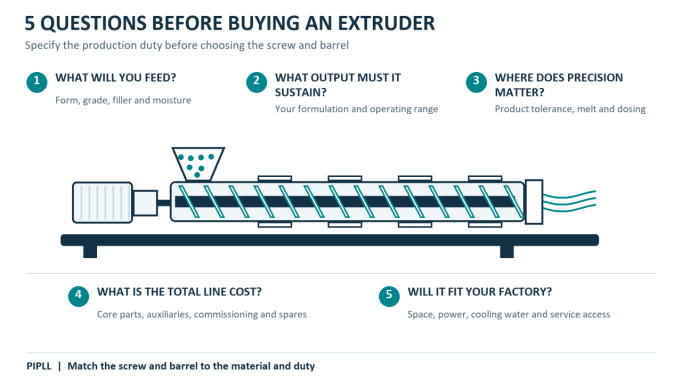
Figure 1. Five questions connect the material and process requirements to the complete line specification.
The useful comparison is what each proposed configuration can demonstrate on your formulation. Keep the five answers together when requesting quotations, so suppliers price the same requirements and identify their exclusions.
1 An Extruder Buying Checklist Starts with the Material
Ask What Will Actually Enter the Feed Throat
Ask the supplier: “Which feeding arrangement and screw configuration do you propose for these grades, physical forms and additive loadings, and how will intake be verified?”
“We process PLA” leaves important questions unanswered. Supply the resin grade, melt flow data with its test conditions, bulk density, moisture requirement and physical form. Identify pellets, powder, flakes, film regrind or liquid additions, together with filler type, loading and additive behavior.
A low bulk density powder can reach a feeding limit before the drive reaches its torque limit. Sticky or irregular material may bridge or feed intermittently. Side feeding, forced feeding and hopper agitation are options to evaluate. Their suitability depends on the material, required rate and process sequence. K-Tron's feeder guidance distinguishes free-flowing materials from powders and fibers that need different feeding arrangements. K-Tron feeder types .
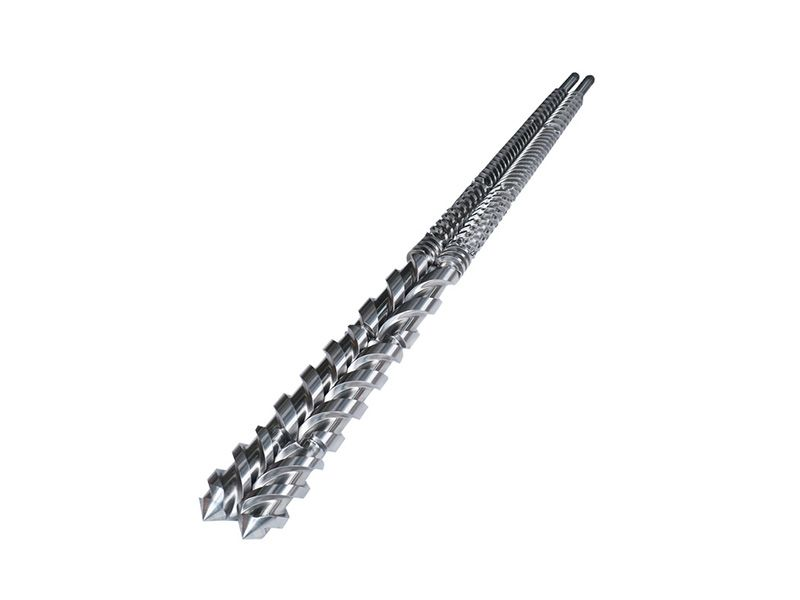
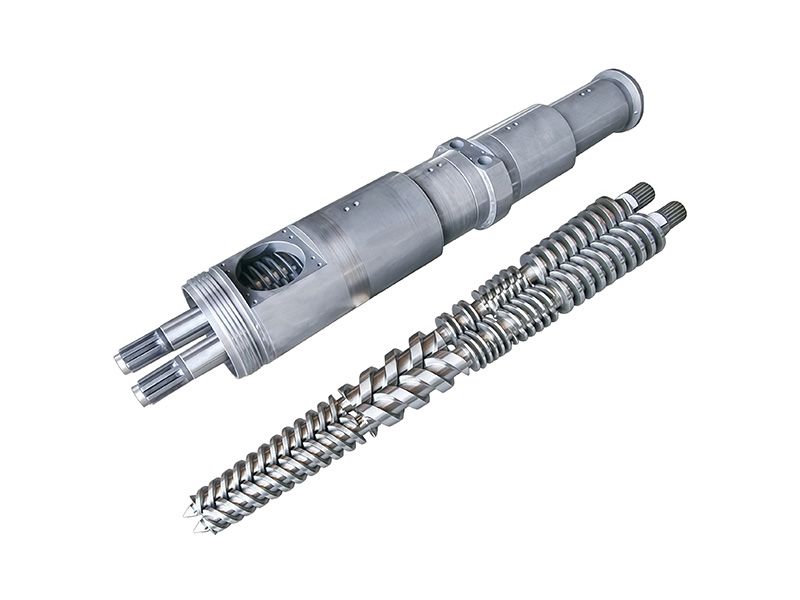
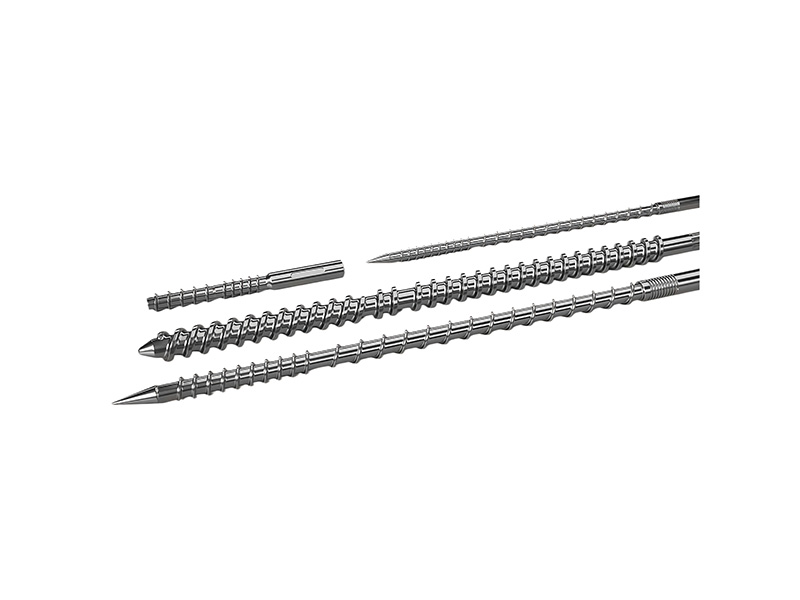
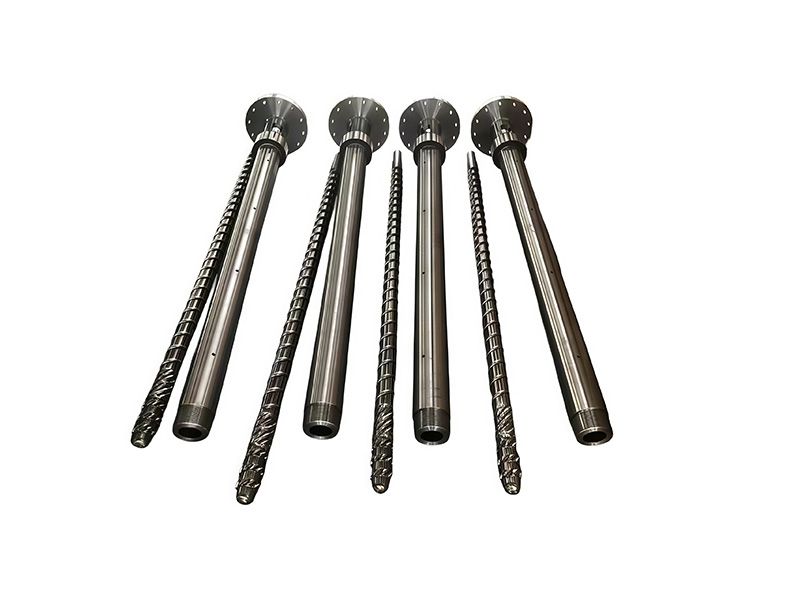
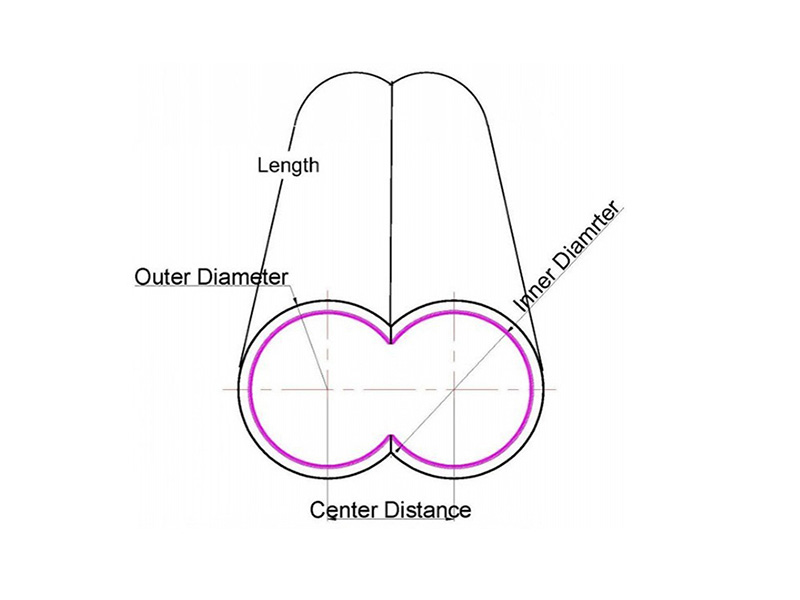
PIPLL's screw and barrel recommendation: Establish the architecture first. For pellet extrusion, assess intake, melting and pressure delivery. For a co-rotating compounder, review the mixing sequence, filler entry and vent positions. Keep that application separate from PVC dry blend processing. PIPLL's parallel twin screw for targeted compounding is a counter-rotating product, while its PVC conical twin screw and barrel offers another configuration to assess for the specified formulation.
2 Ask What Output the Line Can Sustain on Your Formulation
Ask the supplier: “What saleable output can this configuration sustain on our formulation, and what torque, melt temperature and quality results will demonstrate it?”
A brochure's maximum kg/h may use a different grade, filler loading, die or quality requirement. Ask for the proposed screw layout and a trial at your target rate, with your material or an agreed representative formulation.
Specify minimum, normal and maximum required output. At each agreed point, record saleable kg/h, rpm, continuous torque, melt temperature, pressure and product quality after stabilization. Ask what limits the rate: intake, melting, mixing, drive load, cooling, filtration or downstream handling. Coperion identifies free volume and specific torque as important parameters in twin screw scale-up. Coperion extrusion technology .
For illustration, 300 kg/h over 16 running hours at 95% saleable yield gives 4,560 kg per day. Planned stoppages and changeovers determine whether those running hours are realistic. Agree the operating reserve and continuous ratings with the supplier; a universal oversizing percentage cannot establish the right machine.
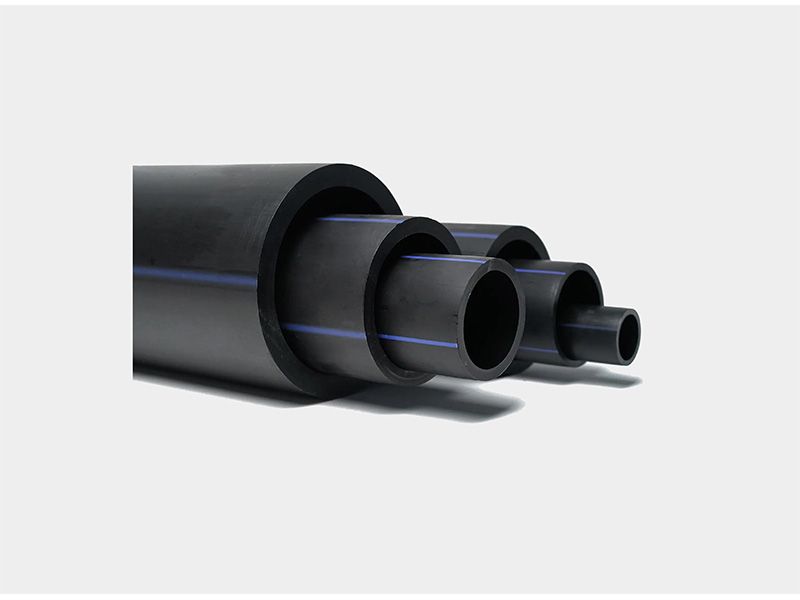
PIPLL's recommendation: Select diameter, L/D, channel profile and mixing features against that operating range. Extra length or a larger diameter alone does not establish capacity or residence time. For an HDPE pipe extrusion screw barrel, review the actual grade, pipe output and downstream resistance. PIPLL pipe and tube extrusion screw barrels .
3 Ask Where Precision Must Be Measured
Write Product Tolerances Before Selecting the Controls
Ask the supplier: “Where will each tolerance be measured, and which feeding, melt delivery and downstream controls are included to meet it?”
Define the finished product acceptance criteria first: filament diameter and ovality, pipe dimensions, film thickness, pellet quality or compound dispersion. Include the measurement method, sampling interval and acceptable variation. “High precision” has little purchasing value without those details.
For a filament target such as ±0.02 mm, assess melt delivery, measurement capability, cooling, haul-off and feedback together. A melt pump can help deliver a steadier stream and provide die pressure, as described by MAAG. Its need should be demonstrated for the process. MAAG extrusion pump applications .
Separate barrel temperature controller performance from actual melt temperature and its variation. For formulation accuracy, state each component's feed rate and allowed error. Gravimetric feeding can compensate for changes in bulk density; volumetric feeding may suit a consistent, calibrated feed. Check refill behavior during the trial. K-Tron feeding principles .
PIPLL's recommendation: Agree the metering or discharge geometry, running clearance, mixing requirement and barrel thermal features around the melt quality target. During PLA 3D printing filament extrusion, moisture control and thermal history also matter. PIPLL's PLA filament screw and barrel can form part of the specification; the completed line must demonstrate the diameter tolerance.
4 Ask for the Installed Cost and the Replacement Plan
Ask the supplier: “What is included in the installed line cost, and what materials, inspection records and replacement provisions are specified for the screw and barrel?”
Compare an itemized scope covering the core machine, feeding, drying, vacuum, filtration, die, cooling, haul-off or pelletizing, controls and utilities. Add transport, installation, commissioning material and initial spares. Identify what the supplier includes and what your factory must provide. Allocate the budget from that scope rather than assuming a fixed percentage for the main extruder.
Specify What the Screw and Barrel Are Made From
“Wear resistant” is incomplete. Ask for the proposed base steel, liner or hardfacing alloy, treatment, specified layer dimensions where applicable and the inspection records. Match wear and corrosion protection to the resin, filler and contaminants. Surface hardness alone cannot establish service life.
PIPLL offers bimetallic screw and barrel options . Assess the barrel lining against the duty and mating screw material. Where a through hardened screw barrel option is proposed, clarify which component is through hardened and what construction is used for the barrel. These descriptions are not interchangeable.
PIPLL's recommendation: Put agreed dimensions, clearances, materials and inspection requirements on the order. Confirm how wear will be measured, which parts can be replaced and what drawings or spare parts records will be supplied. PIPLL's manufacturing and inspection process provides a basis for discussing the component checks.
5 Ask Whether the Complete Line Can Work in Your Factory
Ask the supplier: “Can you provide the complete layout, service clearances and utility requirements before we approve the order?”
Obtain a general arrangement drawing covering every auxiliary and operator access area. Check the delivery route, doorway, floor loading, hopper height, lifting access and room to withdraw the screw. A line that fits during production can still be difficult to service.
Request the electrical supply and connected load, expected operating demand, cooling water flow and supply temperature, compressed air requirements, vacuum exhaust arrangements and drainage. Confirm these with the equipment supplier and your plant team before finalizing the order.
PIPLL's recommendation: Check shaft connections, barrel flanges, heater and cooling interfaces, feed opening and vent positions against the approved machine drawings. Include access for temperature sensors and component removal. Coordinate the screw and barrel specification with the extruder builder's gearbox, thrust bearing and pressure limits.
Bring PIPLL a Brief That Can Become a Drawing
Send the machine proposal or existing screw drawing, material grades and feed forms, filler or regrind content, required output range and product tolerances. Add processing limits, utility constraints and any known defects.
PIPLL can use that brief to discuss screw geometry, functional sections, barrel construction and wear or corrosion protection. The value is a component specification you can review against the machine and formulation. Agree the drawings and material documents, then define what the production trial must demonstrate.
Frequently Asked Questions
Is a longer screw always a better purchase? L/D provides space for process tasks. Its value depends on the layout, material and operating range. Ask how the proposed length supports melting, mixing, venting and melt delivery.
Must every powder enter through a side feeder? The correct entry point and feeder depend on powder behavior, loading and process sequence. Confirm intake and vent behavior during trials.
Can the screw and barrel guarantee finished product tolerance? They influence melt quality and delivery. The die, cooling, measurement and downstream controls also need to meet the agreed requirement.
Discuss the Screw and Barrel Before Approving the Machine
Use this extruder buying checklist to make the quotation specific. Share the five answers with PIPLL while the machine configuration is still open, so component selection and machine interfaces can be reviewed together. Contact PIPLL about your screw and barrel requirements .
Technical and Sales Contact
Harry Jiang | PIPLL
Email: harry@pipll.com | WhatsApp: +86 182 6854 1152
Website: www.pipll.com


+86 15267878906

1306 W building , NB-IoT Industrial Park, No. 199 Changxing Road, Jiangbei, Ningbo.
 Languages